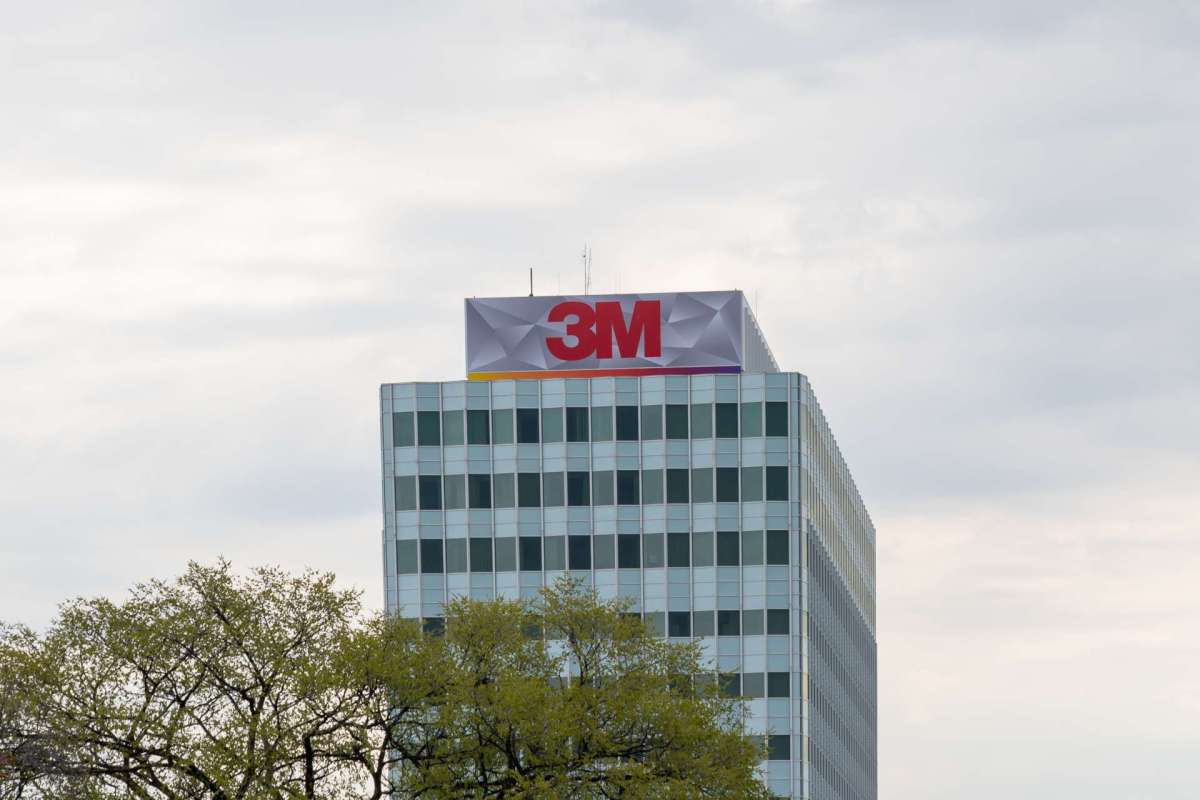
Australia's federal government says U.S. manufacturing conglomerate 3M kept selling firefighting foam for decades even though the company allegedly knew the chemicals in it could harm people, animals, and the environment.
Those allegations appear in extensive federal court papers tied to Australia's lawsuit seeking more than 2 billion Australian dollars ($1.4 billion) from 3M and its Australian subsidiary, according to The Guardian.
The accusations add to growing scrutiny of corporate decisions that can leave communities grappling with pollution long after the products themselves are gone.
Here's what to know
Attorney General Michelle Rowland confirmed that the government was taking 3M to court over PFAS pollution connected to 28 defense bases in Australia, The Guardian reported.
The government says 3M sold aqueous film-forming foam, or AFFF, that contained PFAS "forever chemicals," which then polluted soil and water and led to major environmental and economic harm.
The court papers argue that by 1973, 3M and its Australian operations should already have understood that the products posed potential dangers.
TCD Picks » Quince Spotlight
💡These best-sellers from Quince deliver affordable, sustainable luxury for all




The government alleges internal company documents discussed toxicity and the chemicals' ability to remain in the human body and also raised possible concerns about kidney function, the immune system, fertility, puberty, and infant birth weight.
The filing says that when defense personnel watched product demonstrations in 1967 and 1968, company brochures still described the foam as "non-toxic," The Guardian reported.
3M also said the products were "non-irritating" to humans, would not damage grass, were biodegradable, and were "not expected to adversely affect the ecology of receiving streams in the vicinity of [their] use."
If the government's claims are upheld, it would mean the company continued to promote a hazardous product in reassuring terms even as contamination risks spread into everyday places such as groundwater, drains, and nearby land.
More background
PFAS are used in a wide range of industrial and household products because they resist heat, grease, and water.
However, those same qualities also make them incredibly persistent in every sense.
Many do not break down easily, which is why they are often referred to as forever chemicals.
Australia banned three key PFAS chemicals in 2025 after years of concern over health risks and environmental contamination.
One of them, PFOA, has been identified as cancer-causing in humans.
The filing says affected sites have required contaminated soil to be removed and treated, and investigations around the bases have been underway since about 2011.
When companies describe products as safe or eco-friendly while concealing environmental concerns, the fallout can last for generations, part of a broader deceptive business practice known as "greenwashing."
What's being done?
The Australian government says it has already devoted substantial sums to addressing the contamination.
According to the filing, more than 214 million Australian dollars ($153 million) has gone toward investigations, monitoring, remediation, and mitigation, and over 51 million Australian dollars ($36 million) toward research and evidence gathering.
The documents also mention legal settlements worth hundreds of millions of dollars for loss and damage, according to The Guardian.
Defense began phasing out PFAS chemicals in 2004 and stopped buying 3M's AFFF in 2003.
Even so, the filing says the chemicals have continued to leach from concrete, asphalt, soil, and sediment into groundwater and surface water, suggesting cleanup will continue.
3M has denied the allegations.
A company spokesperson said that 3M never manufactured PFAS in Australia and had stopped selling the products at issue, while defense continued to use them.
During a hearing in Melbourne, Federal Court Justice Catherine Button commented on the scale of the dispute, saying she had "never seen a claim like this," The Guardian reported.
She added that describing the case as daunting "would be an understatement."

Get TCD's free newsletters for easy tips, smart advice, and a chance to earn $5,000 toward home upgrades. To see more stories like this one, change your Google preferences here.