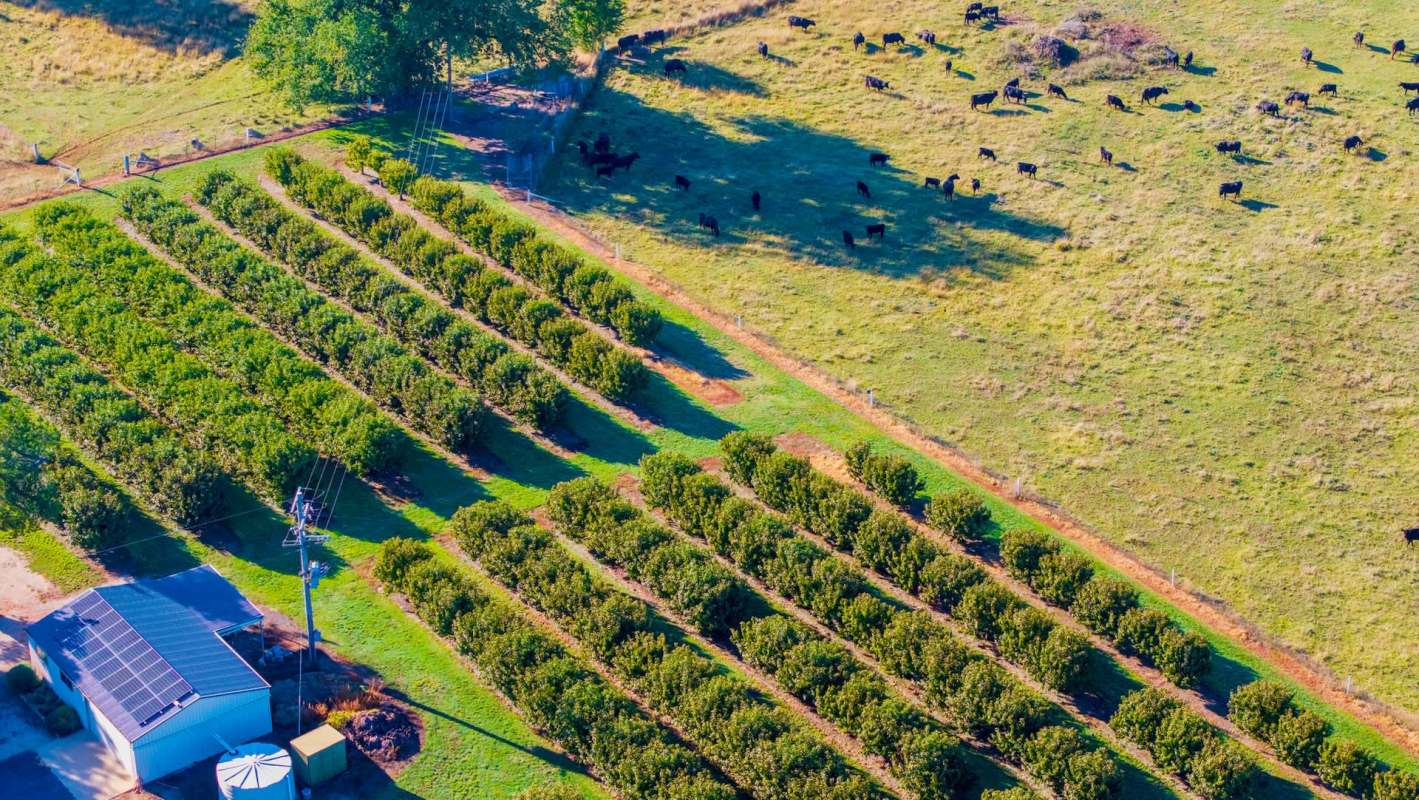
Rather than paying AU$500,000 (US$332,000) to connect to the power grid, Australian farmers Wes and Rita Hurrell chose instead to power their new dairy farm with solar panels and batteries. Their farm now has met its electricity needs with that system 90% of the time, avoiding expensive grid power.
Here's what to know
The South Australian Dairyfarmers' Association honored the Hurrells' family business with its 2026 Innovative Farmer of the Year award for work in animal welfare, renewable energy, livestock technology, and genetics, Dairy News Australia reported.
Wes Hurrell estimated a roughly four-year payback on the AU$700,000 (US$465,000) solar-and-battery system. Backup generation still consumed about 26.4 gallons (100 liters) of diesel during two to three hours of daily use, depending on the weather.
"South Australia has the most expensive power costs in the country and our goal is to mitigate that in the future," Hurrell said, per Dairy News Australia.
The dairy farm also paired six Lely robotic milking units with a compost barn for 400 cows, as well as maternity and calf facilities and a dedicated tourism area.
More background
The couple decided to build the dairy facility in 2020, but construction did not begin until 2023, after a two-year environmental approval process. Hurrell said the delay left the project exposed to rising prices and interest rates.
TCD Picks » Quince Spotlight
💡These best-sellers from Quince deliver affordable, sustainable luxury for all




But the challenges did not end there. Drought also added about AU$700,000 (US$465,000) to the farm's fodder bill, while the collapse of a dairy processor cost the business another AU$500,000 (US$332,000).
Beyond keeping the milking equipment running, electricity has been essential to keeping the barn comfortable for the cows. The barn's 42 fans have been drying the compost bedding in winter and cooling the animals in summer. Hurrell chose compost bedding partly because he wanted an alternative to stalls for the cows, according to Dairy News Australia.
Solar and batteries weren't the only high-tech elements of the farm. According to the Hurrells, the dairy's robotic system has created a better working environment for staff and helped to address the difficulty of finding labor. The Lely system has combined milking robots, collars, and milk quality data in one computer program, helping staff manage the farm's registered Rockwella Farm Holsteins herd.
Next steps
The Hurrells have already been looking to the future, weighing another AU$500,000 (US$332,000) investment to capture methane. The couple received the standard solar rebate, Hurrell said, but finding grant support for commercial-scale methane capture in primary production has proven difficult.
The couple hoped to earn carbon credits and make the business carbon neutral by turning the farm's pine trees into woodchips and biochar.
"Financially it has been very tough but a good season, increase in production and with energy and labour savings starting to come through, there is a little light at the end of the tunnel," Wes said, per Dairy News Australia.
For homeowners interested in upgrading their own energy systems, EasyHome uses the size of its audience to negotiate exclusive prices and deals with local partners — like Groupon for home energy — across products including solar panels, backup batteries, heating and cooling systems, and more.
Where can I learn more?
The Hurrells haven't been the only rural property owners weighing solar against a costly grid connection.
• For rural buyers, a half-mile utility hookup could cost more than off-grid solar.
• In Texas, a $35,000 solar setup kept a home off-grid 90% of the time.
• A Michigan couple considered going off-grid with solar after an $11,500 power connection quote.
• An Australian homeowner powered a 500-square-meter home off-grid for an estimated 13 cents per kilowatt-hour.
• A Texas ranch owner's off-grid solar plan hinged on powering two camper air conditioners.

Get TCD's free newsletters for easy tips, smart advice, and a chance to earn $5,000 toward home upgrades. To see more stories like this one, change your Google preferences here.