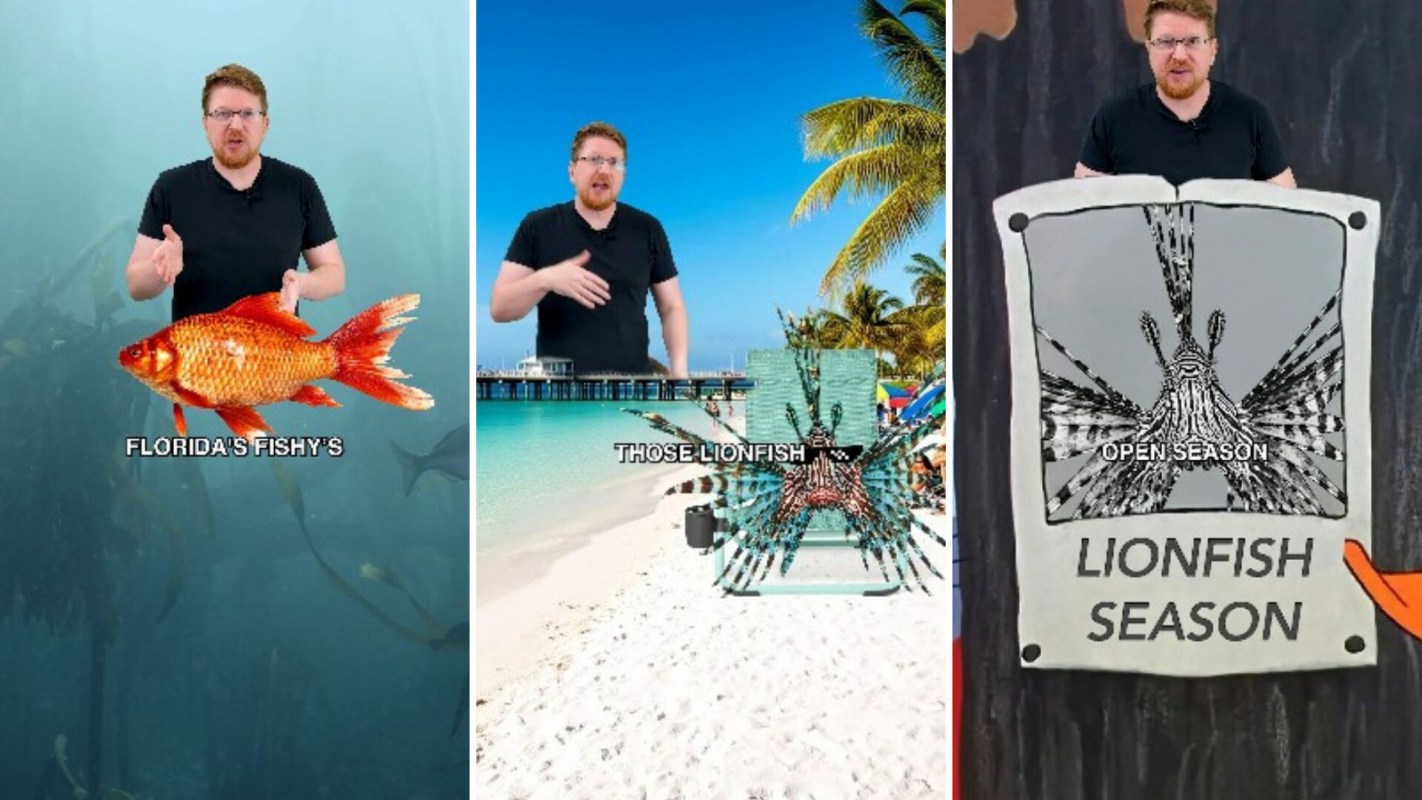
Hunters and restaurants in Florida have an opportunity to help protect native fish by taking invasive lionfish out of the sea and putting them on the menu.
Here's what to know
As EcoBits (@EcoBitsOfficial) host Justin Pack details in a YouTube short, the approach turns a troublesome species into something people want to buy and eat.
With few natural predators in the area, invasive lionfish have established themselves in Florida's waters, and their venomous spines make handling them difficult. Pack traces the first recorded sightings near Miami to 1985.
The video attributes a nearly 80% decline in native fish recovery to lionfish. Pack also says a single lionfish can release upward of 2 million eggs annually. With that sort of challenge, it's all hands (or stomachs?) on deck.
"Can we save Florida's fishes with forks?" Pack asks viewers in the video.
More background
Pack credits a Florida Keys hunter's sales to restaurants with helping establish a market for lionfish.
TCD Picks » Quince Spotlight
💡These best-sellers from Quince deliver affordable, sustainable luxury for all




According to the video, lionfish prices jumped overnight to $10 per pound from roughly $2 after Whole Foods began carrying them in 2016. The increase gave hunters a stronger financial incentive to catch the fish despite the challenge of handling their venomous spines.
One commenter on the video described a positive dining experience in Curaçao, writing, "Had some in Curacao and they're good!"
What's being done?
Hunters caught approximately 36,000 lionfish, worth about $90,000, in a competition described in Pack's video. The Florida Fish and Wildlife Conservation Commission ran the event as part of Florida's efforts to encourage removals.
"We're going hunting," an inspired YouTube commenter reacted.
The FWC is no stranger to these sorts of competitions, including a more famous one that takes aim at invasive Burmese pythons.
Pack explains that cutting an invasive species' population in half does not guarantee an equivalent reduction in its ecological damage. The jury is out on whether this sea to table approach can make a real dent in the lionfish problem.
"Experts say the real test isn't the number removed, it's whether the invasive population actually shrinks long term," Pack clarifies to close the video out.
Where can I learn more?
Florida is using demand for lionfish to help protect native fish. It's one of many creative initiatives to cut down on invasive species in the state.
• In Florida, divers removed 36,187 invasive lionfish from state waters in a record-setting sweep.
• In Florida, women are turning invasive Everglades pythons into luxury handbags for the fashion market.
• At a South Florida refuge, invasive Asian swamp eels are abundant and continuing to spread.

Get TCD's free newsletters for easy tips, smart advice, and a chance to earn $5,000 toward home upgrades. To see more stories like this one, change your Google preferences here.