


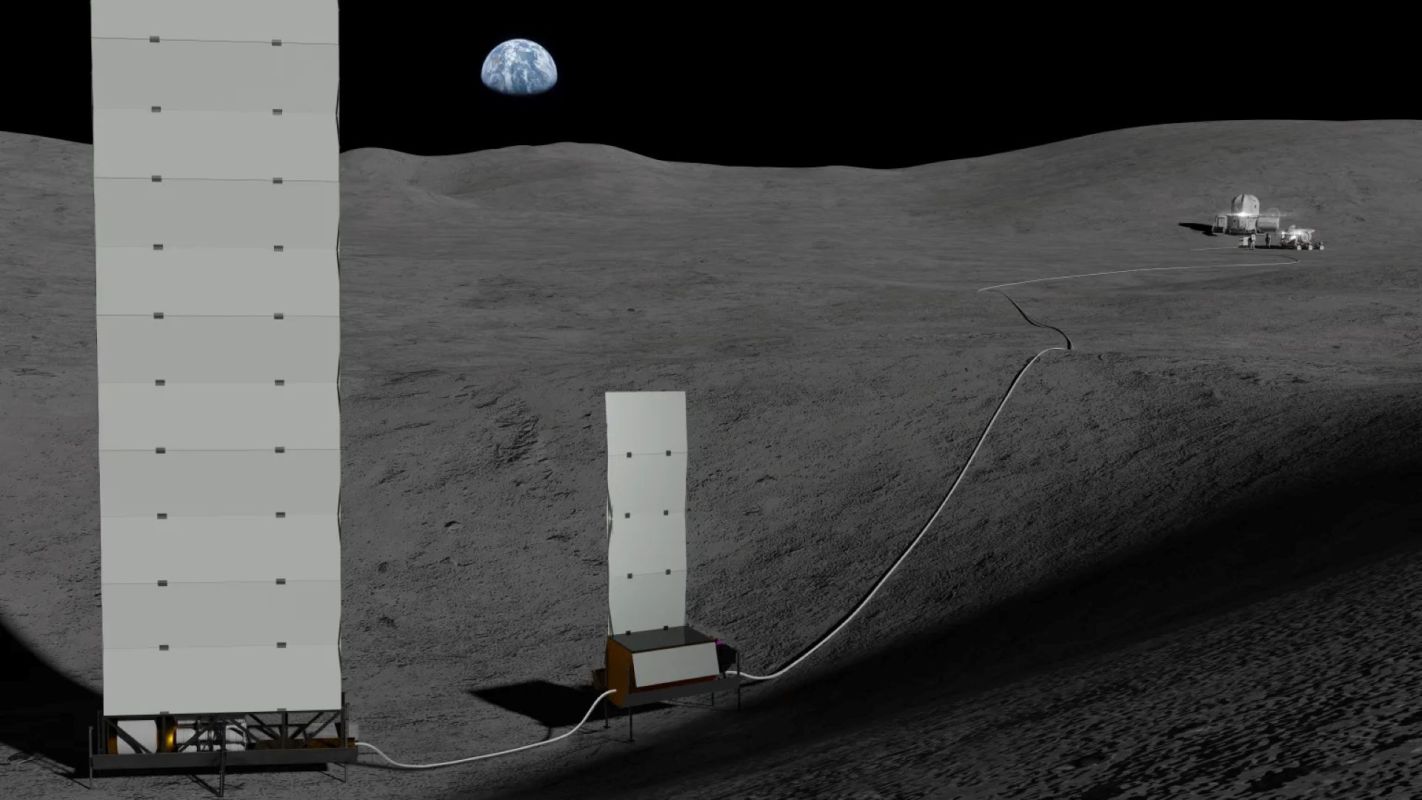
With the space-race revival underway, NASA announced that it is seeking industry partners to develop the moon's first electricity-generating nuclear reactor.
Here's what to know
The agency said it wanted the system ready for launch by 2030. Lunar Reactor-1 is expected to generate enough electricity over a year to meet the needs of 16 average U.S. households.
It is the first step to establishing a continuous human presence on the moon, according to the release, with 20 kilowatts of electricity supporting infrastructure including habitats, communications equipment, rovers, and scientific instruments. NASA plans to keep the reactor operating for at least five years after deployment on the lunar surface.
"This request for proposals represents an important step forward as NASA partners with industry to establish an enduring human presence on the lunar surface," Brian Giblin, NASA's Lunar Reactor-1 program manager, said in a press release.
"A reliable source of safe and abundant energy will be vital to future exploration of the lunar and Martian surface. Space nuclear systems will provide continuous power to NASA assets in any environment without dependency on sunlight."
More background
Lunar night lasts about 14 days, which is why solar-powered equipment is not an ideal solution despite its reliability on Earth.
TCD Picks » Quince Spotlight
💡These best-sellers from Quince deliver affordable, sustainable luxury for all




A fission reactor, on the other hand, would not face that limitation because it could continue producing electricity through the darkness and in locations with little or no sunlight.
The project could also lay the groundwork for future expeditions to Mars, where dust storms can block sunlight for months, NASA explained. Solar power also becomes "progressively less effective" at distances farther from the sun.
As the second-safest form of energy behind solar, nuclear fission is much safer than many believe, but the risks of reactor accidents and weapons proliferation are real concerns tied to the technology. Introducing nuclear power to space also introduces issues associated with launch failures or uncontrolled reentries. However, this wouldn't be the first nuclear-assisted mission.
NASA reported that radioactive sources have supported 21 planetary encounters, five Apollo missions, Mars landers and rovers, solar observations, and observation of planetary moons, along with other deep-space explorations. NASA's Office of Safety and Mission Assurance enforces strict protocols to reduce risk to the public, the environment, and staff prior to launches.
What's being done?
Industry representatives met at the Ohio Aerospace Institute in Cleveland in September, following NASA's release of a draft in August.
NASA said feedback from that process informed the solicitation. To satisfy the requirements under the Space Power and Reactor Capabilities request, the reactor must meet Department of Energy safety standards for nuclear operations. The deadline for industry proposals is Dec. 21.
"By investing in these technologies, NASA and DOE are helping secure America's leadership in space for decades to come," the agency concluded in the release.
Where can I learn more?
Nuclear reactors are being explored on Earth as well as in space.
• America's small reactor industry could gain momentum in 2026 after setbacks involving NuScale.
• In the U.S., small reactors may better serve industrial facilities than compete on the grid.
• Bill Gates' molten-sodium reactor could back up renewable power when wind and sunshine falter.
• Texas is seeking geothermal, nuclear, and gas projects on state land to improve grid reliability.
• China has broken ground on Helong-2, targeting hydrogen-boron fusion electricity by 2030.

Get TCD's free newsletters for easy tips, smart advice, and a chance to earn $5,000 toward home upgrades. To see more stories like this one, change your Google preferences here.






