


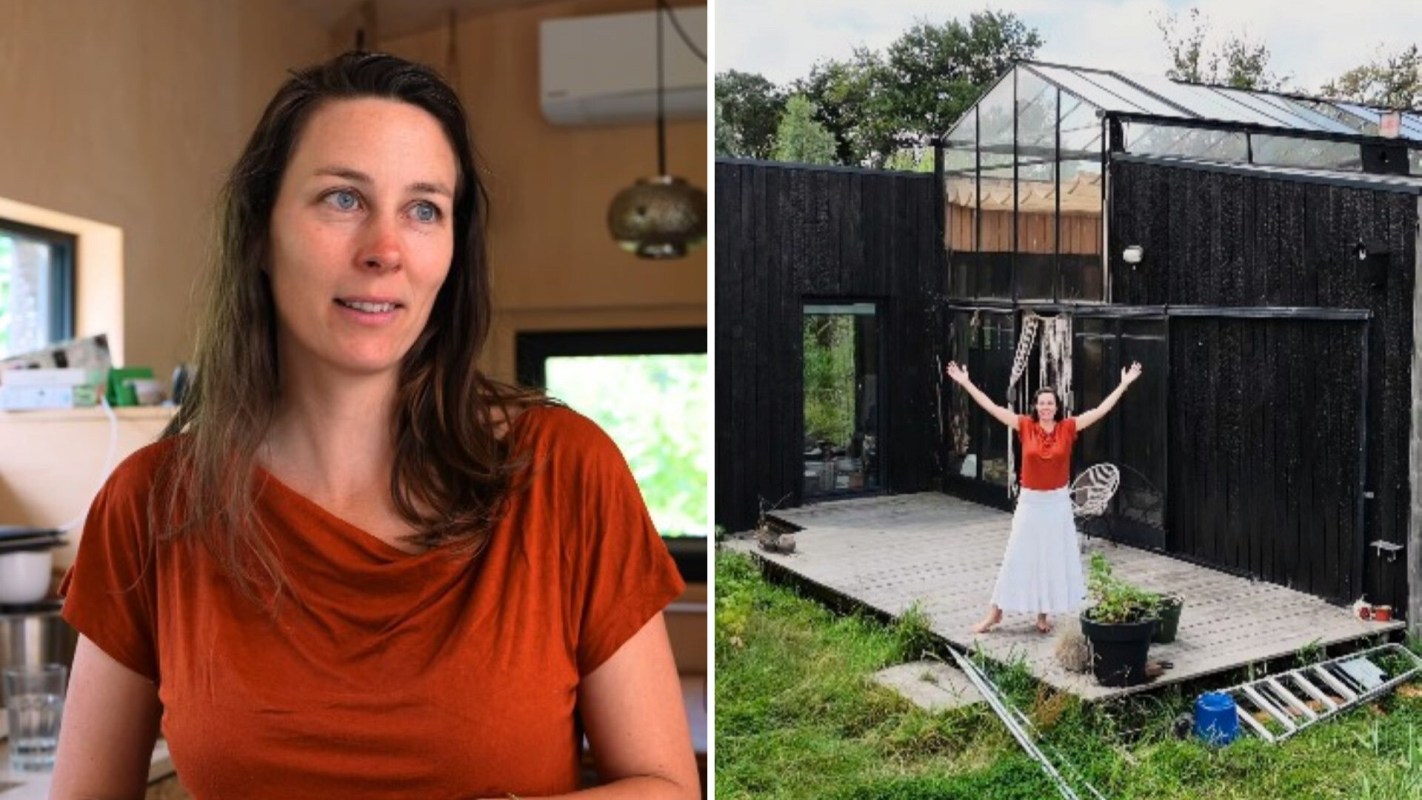
Dutch mother and homeowner Iris van Asselt has a ready response to children who ask if her tiny house means she is poor: "No, I feel so rich."
Here's what to know
Van Asselt shares a roughly 603-square-foot (56-square-meter) home with her husband, Roland, and their two daughters. The family left Amsterdam to build it.
In a tour shared on YouTube by Eutopia (@EutopiaEarth), van Asselt shows the home at LiberTerra, a community about 40 minutes from Amsterdam.
The couple discovered they didn't miss their belongings back home while spending seven months traveling in a camper van with few possessions. That experience prompted the change.
"I don't need a lot of time to clean up my house," van Asselt said of tiny-home living. "Actually, it feels, like, empty in your head."
A secondhand tomato greenhouse connects the two structures that make up their home.
TCD Picks » Quince Spotlight
💡These best-sellers from Quince deliver affordable, sustainable luxury for all




An opening between the daughters' separate rooms lets them chat in the evenings. Reused furniture and multipurpose features also help the home meet the family's needs.
More background
The couple used secondhand windows as the starting point for their house plans. A measuring error for another home had sent the unused windows to the resale market, where the family had the opportunity to put them to use.
The kitchen features building materials from another unexpected source: seaweed and discarded mussel shells.
According to van Asselt, the shell-based wall materials come from a company that cleans food residue from mussel shells collected at restaurants. She also agreed to try the seaweed material through a pilot examining how it performed in daily use.
The greenhouse, meanwhile, provides a sheltered place to sit during spring and autumn.
Fans couldn't easily bring the rising heat back down, frustrating the couple's hopes that the greenhouse would help warm the house. The space remains useful across seasons because it blocks the wind.
What's being done?
A vertical garden in the greenhouse gives the family a place to grow vegetables and tea plants.
The family doesn't have to water the plants by hand each day. An automated system draws from a large rainwater tank to water them at 9 a.m.
Beyond the home itself, the family benefits from a community where neighbors help one another and share energy.
Van Asselt welcomes companies, schools, and visitors during open days, giving them a chance to see how reclaimed materials and unusual kitchen surfaces hold up in a functioning family home.
Questions about whether a small home signals poverty also come up in van Asselt's lessons for children ages 10 to 12. She uses those questions to share a different perspective.
"Her home and the connection with nature as well as good neighbours reflects on her and she is shining … she is so rich in life!" one viewer wrote. "Very inspiring to create my own place."
"Anyone out there who is dreaming of doing anything like this - do it. Now," another person said.

Get TCD's free newsletters for easy tips, smart advice, and a chance to earn $5,000 toward home upgrades. To see more stories like this one, change your Google preferences here.






