


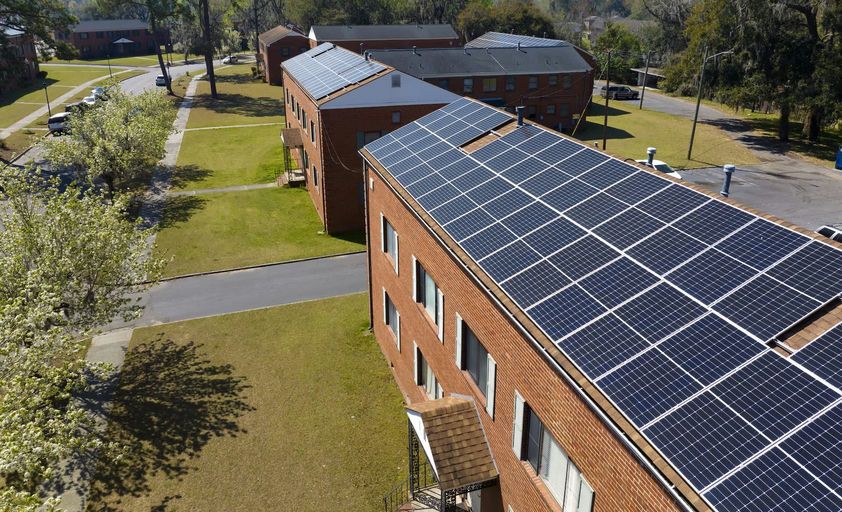
The Environmental Protection Agency's cancellation of a $49.3 million solar grant halted Rhode Island's plan to help low-income families lower their electricity bills. The initiative would have supported renters as well as homeowners whose houses needed roof or electrical repairs before solar panels could be installed.
Here's what to know
The EPA awarded the funding to the Rhode Island Office of Energy Resources on April 22, 2024, before terminating the Solar for All program on Aug. 7, 2025, according to Uprise RI. The state's initiative never moved beyond the planning stage.
The Rhode Island Equitable Access to Solar Energy plan combined solar incentives with assistance for roof repairs, electrical upgrades, batteries, and affordable-housing projects.
The office identified 61 disadvantaged census tracts with 97,892 households, including 66,421 renter households, according to Uprise RI. Community solar subscriptions would have allowed residents to benefit without needing a roof of their own.
For homeowners, going solar is one of the best ways to save money on home energy, and solar leases in particular can deliver hundreds of dollars in monthly savings without upfront costs. Homeowners can use EasyHome's free explorer tool to see potential savings from vetted installers in their areas.
More background
State estimates of the program's benefits differed. The Office of Energy Resources anticipated that more than 8,500 households would benefit, according to Uprise RI. Rhode Island Attorney General Peter Neronha's office projected that roughly 5,225 low-income households would benefit, with electricity bill savings totaling $48.5 million and the creation of 100 or more green jobs.
TCD Picks » Quince Spotlight
💡These best-sellers from Quince deliver affordable, sustainable luxury for all




Public Law 119-21 rescinded "the unobligated balances," but an EPA inspector general audit found that, by July 2024, obligations covered 99.7% of the national Solar for All funding, according to Uprise RI.
The EPA maintained that the law eliminated its authority and administrative funding. Plaintiffs argued that canceling grants that had already been obligated was unlawful, though that argument has not resulted in an order restoring Rhode Island's award.
What's being done?
Neronha joined a multistate challenge and a breach-of-contract case in response to the cancellation.
Solar United Neighbors, the Rhode Island Center for Justice, and the Rhode Island American Federation of Labor and Congress of Industrial Organizations were among those that filed a separate lawsuit Oct. 6, 2025, according to Uprise RI. Both the Center for Justice and AFL-CIO had helped develop EASE.
Rhode Island Commerce's Renewable Energy Fund offers grants covering up to 30% of installation costs, while bill credits are available through net metering and Renewable Energy Growth, according to Uprise RI. These options, however, do not replace the combined assistance EASE would have offered.
For homeowners considering their own systems, EasyHome can help with the exploration of backup battery storage options. Pairing solar with a battery allows homeowners to maximize savings and power their homes with solar when the grid goes down.
For renters, the Department of Energy's Clean Energy Connector pilot includes Rhode Island and looks to improve community-solar access for households participating in assistance programs including the Low Income Home Energy Assistance Program, according to Uprise RI.
The Office of Energy Resources said EASE funding would support expanding Rhode Island's community remote net metering pilot from 30 megawatts to 70. That expansion could benefit over 4,500 more customers through subscriptions requiring little commitment.
Where can I learn more?
Rhode Island's stalled solar plan shows how funding battles can affect efforts to lower household energy bills.
• A Rhode Island judge revived a $7 billion solar program President Donald Trump scrapped for low-income families.
• Boston sued the Trump administration over a canceled $20 million grant tied partly to EV chargers.
• U.S. households could pay $6,500 more for energy by 2040 as clean projects get axed.
• Virginia unlocked $67 million once withheld, helping 1,000 homes cut their energy bills.
• New Jersey lets renters and condo owners plug in solar without utility approval.

Get TCD's free newsletters for easy tips, smart advice, and a chance to earn $5,000 toward home upgrades. To see more stories like this one, change your Google preferences here.







