


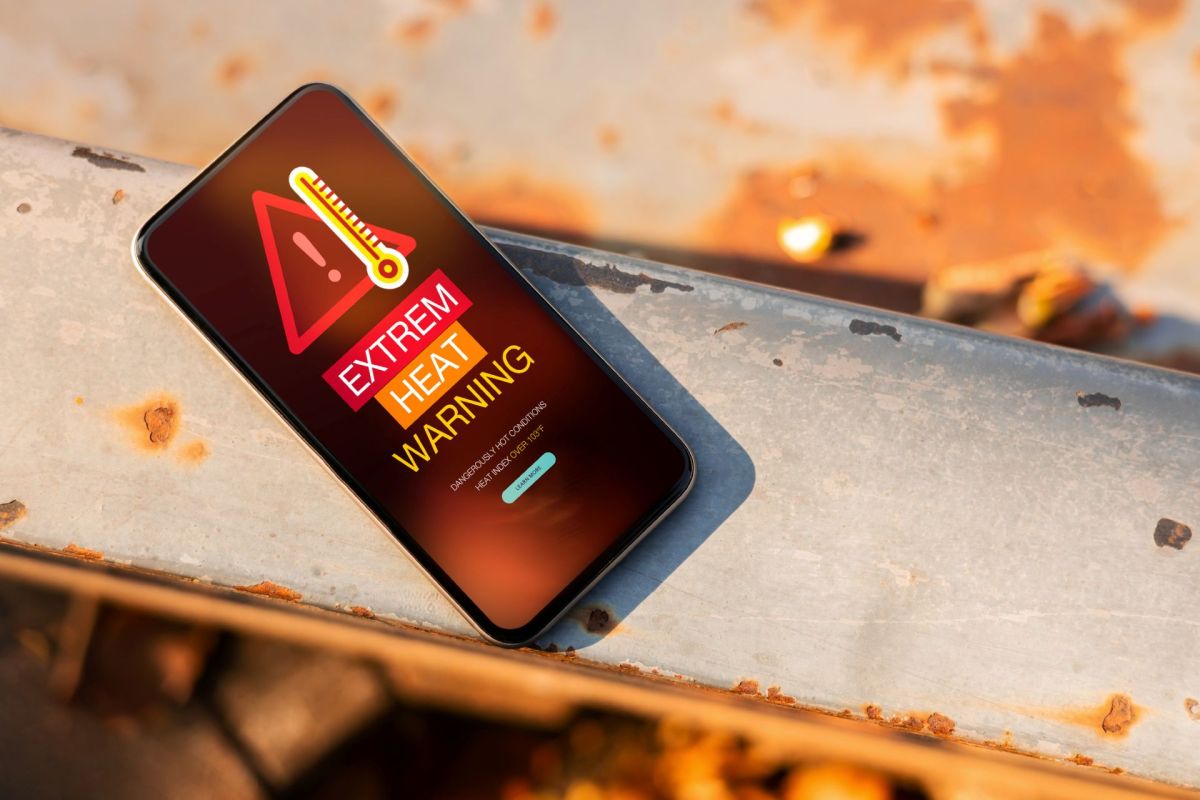
Rising electricity costs made it harder for many households to afford safe cooling during the hottest months of 2026, according to the Union of Concerned Scientists.
Nearly 95% of people in the lower 48 states faced major or extreme heat risk at least once during that six-month period.
Here's what to know
Moderate or greater heat risk covered as much as 63% of the contiguous United States during the May-through-October "Danger Season," the UCS reported on its blog, The Equation.
Seven episodes, each lasting several days, affected at least 30% of the region.
People without access to cooling or hydration face particular danger from major or extreme heat risk, the National Weather Service warns. Archived records from the agency's Heat Risk Tool put the share of the population exposed to those conditions at 94.6%.
An analysis by Climate Central found that 233 of 241 major U.S. cities had cooling degree days averaging 37% above their 1970s levels. The measure tracks temperatures above 65 degrees Fahrenheit to gauge cooling demand.
TCD Picks » Quince Spotlight
💡These best-sellers from Quince deliver affordable, sustainable luxury for all




Meanwhile, the U.S. Energy Information Administration estimated that residential electricity consumption in July through September exceeded the corresponding 2025 figure by 6%, partly because of hotter weather.
More background
Millions of households reported uncomfortably hot homes despite having cooling equipment.
The UCS cited census figures showing that roughly 9.2 million American households lacked air conditioning in 2023. Spending at least 6% of household income on home energy is considered a high energy burden.
A UCS analysis using 2022 figures that the Energy Equity Project prepared with the Department of Energy's Low-Income Energy Affordability Data tool found substantially greater average burdens among lower-income households.
Power failures compound the danger.
After an August 2026 derecho — a widespread storm with powerful straight-line winds — some residents of the predominantly Black city of Gary, Indiana, went without electricity for two to three weeks.
Without air conditioning, residents faced borderline-dangerous indoor temperatures nearing 85 degrees.
The EIA projects that average residential electricity prices will rise another 2.6% in 2027, bringing them nearly 8% above 2025 levels.
What can be done?
The Union of Concerned Scientists highlighted two existing federal programs that, if strengthened, could help more households.
The Weatherization Assistance Program helps lower-income households improve home efficiency and reduce energy costs, while the Low Income Home Energy Assistance Program helps households manage energy expenses.
The UCS also calls for expanded access to affordable cooling and community solar.
Combining renewable generation with energy storage can maintain essential electricity supplies for homes, community facilities, and microgrids during wider outages.
Stronger utility-disconnection protections could also help prevent households from losing power when a shutoff poses a health risk. Investment in the power grid is particularly important in communities that have received fewer infrastructure improvements.
UCS research points to carefully planned, climate-resilient electricity systems as a way to reduce disparities in energy burdens, with affected communities helping determine where investments go.
For housing and energy advocate Mary Wambui, the benefits of these investments extend beyond the households facing the steepest bills.
In a conversation recounted by UCS, she said, "Equity is for everyone."

Get TCD's free newsletters for easy tips, smart advice, and a chance to earn $5,000 toward home upgrades. To see more stories like this one, change your Google preferences here.






