


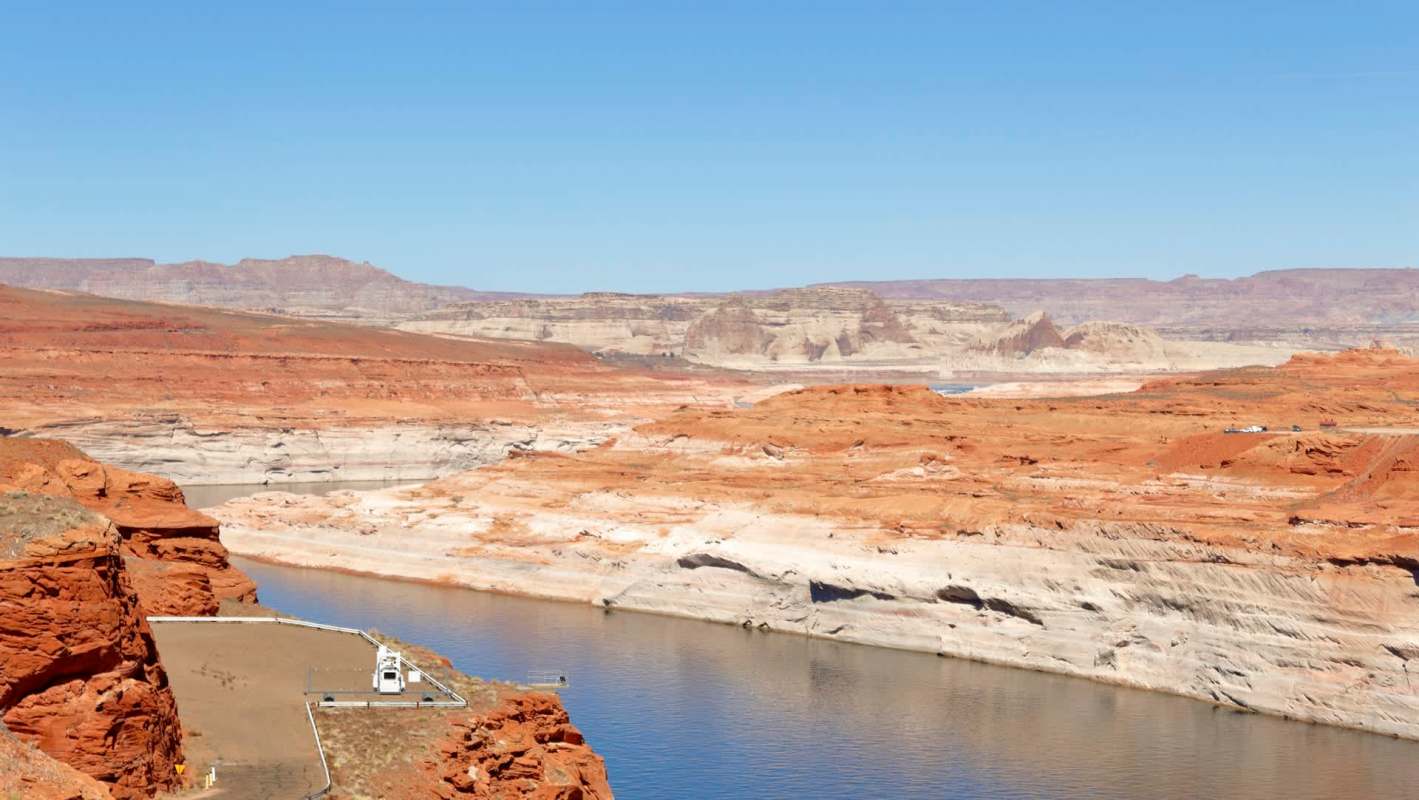
Prolonged drought has strained a river system serving millions of people in numerous ways.
At the end of September, the gap between Lake Powell's water level and its hydropower cutoff was just 28 feet, according to an agency operating under the U.S. Department of Energy.
Here's what to know
A new U.S. Energy Information Administration report put the Southwest's summer hydropower production at a record low.
The EIA put April-August electricity production 28% below the 10-year average and 19% below the same period a year earlier.
Lake Powell, located on the Colorado River across the border between Utah and Arizona, is Glen Canyon Dam's reservoir. The lake must remain at or above 3,490 feet for electricity generation, according to Newsweek's coverage of the agency report. The reservoir ended September at 3,518 feet.
Hoover Dam's reservoir — Lake Mead — sits on the same river and was 88 feet above its power-generation cutoff at an elevation of 1,038 feet.
TCD Picks » Quince Spotlight
💡These best-sellers from Quince deliver affordable, sustainable luxury for all




More background
Agriculture, municipal water systems, and electricity generation across the American West draw on the Colorado River Basin, which serves roughly 40 million people, according to Newsweek.
The river helps meet hydropower and other water needs across Wyoming, Utah, New Mexico, Nevada, Colorado, California, and Arizona.
Municipal water supplies support public health and community safety, while farms rely on water to sustain crops and livelihoods.
Meanwhile, reduced hydropower output leaves the West with less access to what has historically been one of its cheapest sources of electricity.
What's being done?
Federal and state officials have pursued a yearslong effort to protect electricity production at Lake Powell and Lake Mead by keeping water levels from dropping too far, Newsweek reported.
Reservoirs must hold enough water to provide the pressure needed to run hydropower turbines.
Solar power, natural gas, and electricity from nearby regions are among the alternatives identified in the EIA report as stakeholders consider how they will energize communities as water levels drop. Utilities will have to rely more heavily on those supplies as drought reduces dam output.
Hydropower's share of regional electricity generation reached a high of 8% in 2011. The EIA forecasts roughly 4% for 2026.

Get TCD's free newsletters for easy tips, smart advice, and a chance to earn $5,000 toward home upgrades. To see more stories like this one, change your Google preferences here.







