


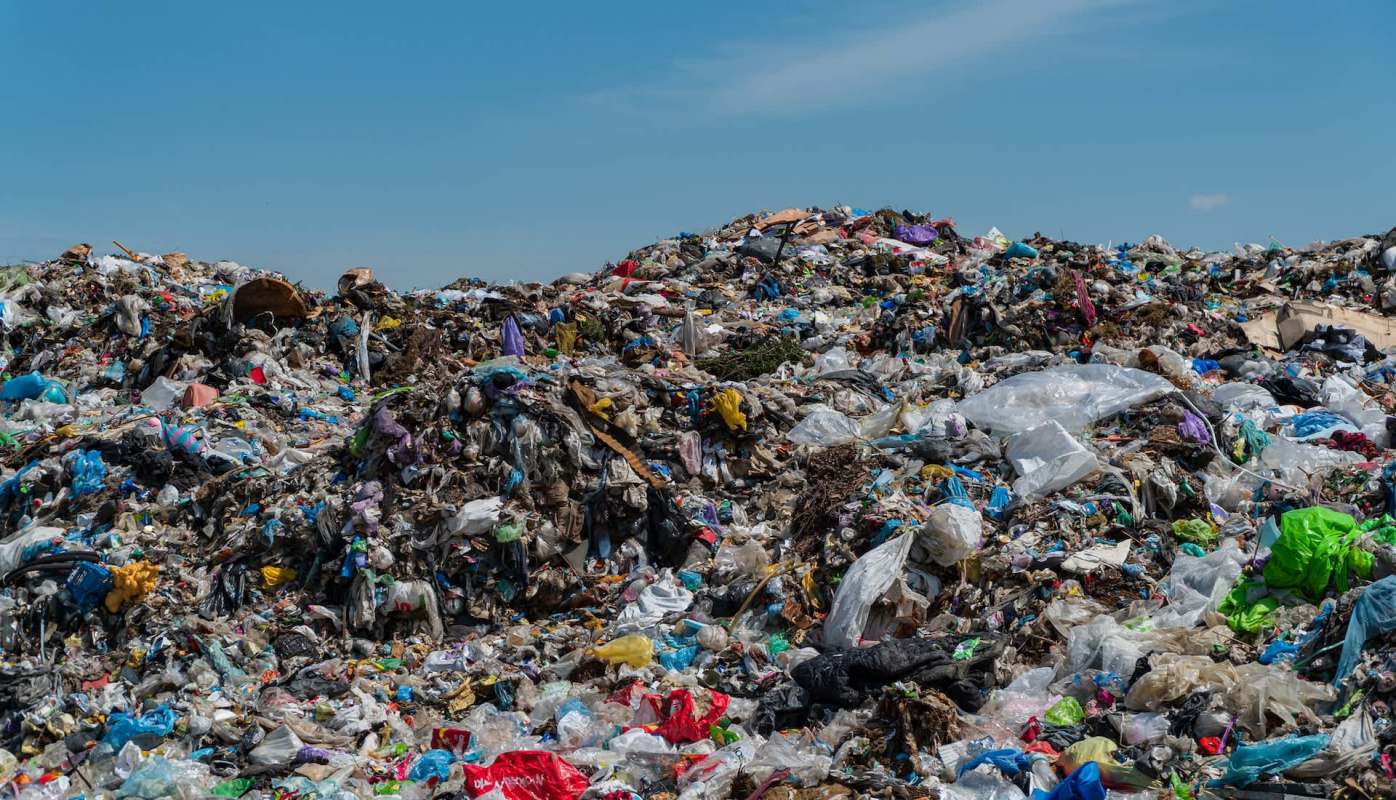
A 320-day study in South Korea raised concerns about biodegradable plastics, finding that some failed to break down in landfills.
Here's what to know
Researchers from the Korea Advanced Institute of Science and Technology and Ulsan National Institute of Science and Technology used liquid that seeps through buried waste, known as landfill leachate, to test three biodegradable plastics without oxygen, according to Intelligent Living.
The researchers measured breakdown by tracking microbial conversion of the plastics' carbon into gases, including methane and carbon dioxide. The experiment ran at 35 degrees Celsius (95 degrees Fahrenheit).
Polybutylene adipate terephthalate, or PBAT, reached just 2.7% conversion after 320 days. The flexible, carbon-based material is commonly used in compostable wraps and bags. Conventional low-density polyethylene, tested for comparison, reached 0.4%.
According to Intelligent Living, which cited the journal Nature Communications, polylactic acid, or PLA — commonly used in cups and food containers — reached 83.6% conversion by day 320 despite showing little change for about the first 20 days. Polyhydroxybutyrate, or PHB, took 17 days to reach nearly complete conversion, at 99.9%.
More background
Industrial composting generally operates at 55-75 C (131-167 F), with oxygen, moisture, and heat-loving microbes. Deep inside a landfill, however, oxygen is scarce, temperatures vary, moisture is uneven, and waste is compacted.
TCD Picks » Quince Spotlight
💡These best-sellers from Quince deliver affordable, sustainable luxury for all




PLA's structure becomes more mobile around 55-60 C (131-140 F), allowing water to enter more easily and expediting chemical breakdown.
Still, the landfill-liquid experiment showed that substantial conversion could occur at a lower temperature over several months.
The researchers also examined the plastics' surfaces and found that microbial layers known as biofilms clustered around cracks and damaged areas on PLA.
Gene activity associated with potential plastic-degrading enzymes was higher in these attached communities than among microbes floating in the surrounding liquid.
What can be done?
Professor Myung Jae-wook of KAIST's Department of Civil and Environmental Engineering, who led the work with UNIST professor Lee Chang-soo, emphasized the need to evaluate materials based on their likely disposal conditions.
Consumers should send certified industrially compostable packaging to organics collection only when the local program explicitly accepts it.
Compostable plastics should also stay out of conventional plastic recycling, where they can contaminate the stream. Labels identifying a disposal route and certification standard offer more useful guidance than the word "biodegradable."
For people without access to compostable packaging collection, reusing existing items and choosing plastic-free everyday products can help avoid the problem. Intelligent Living recommends putting items without a clear local recovery route in the trash rather than adding them to recycling.
Of 238 reconstructed genomes, 49 showed active candidate genes for PHB- or PLA-degrading enzymes, and 37 of those belonged to poorly studied lineages.
The researchers said follow-up work was needed to confirm which microbes and enzymes break down the plastics. They also cautioned that real landfills, with different temperatures, waste mixes, oxygen levels, and nutrients, will not produce identical results. PBAT's limited breakdown in this experiment does not prove it can never biodegrade, but shoppers should not assume a compostable bag will disappear in a landfill.
Where can I learn more?
The findings highlight the growing challenges surrounding plastic waste and the need to better understand how different materials break down and impact the environment. As alternatives to traditional plastics continue to emerge, questions remain about their effectiveness and long-term sustainability.
• South Korean researchers used E. coli to make biodegradable hot-melt glue from glucose.
• The plastics industry backed bills to override California's ban on misleading recycling labels.
• A Maine mother developed dissolvable kelp film for laundry pods after concerns about microplastics.
• Oak Ridge researchers turned shopping bag plastic into gasoline at temperatures compared to those used to cook chicken nuggets.
• An MIT spinout says its waterless plastic recycling technology turns bottles into building materials.

Get TCD's free newsletters for easy tips, smart advice, and a chance to earn $5,000 toward home upgrades. To see more stories like this one, change your Google preferences here.






