


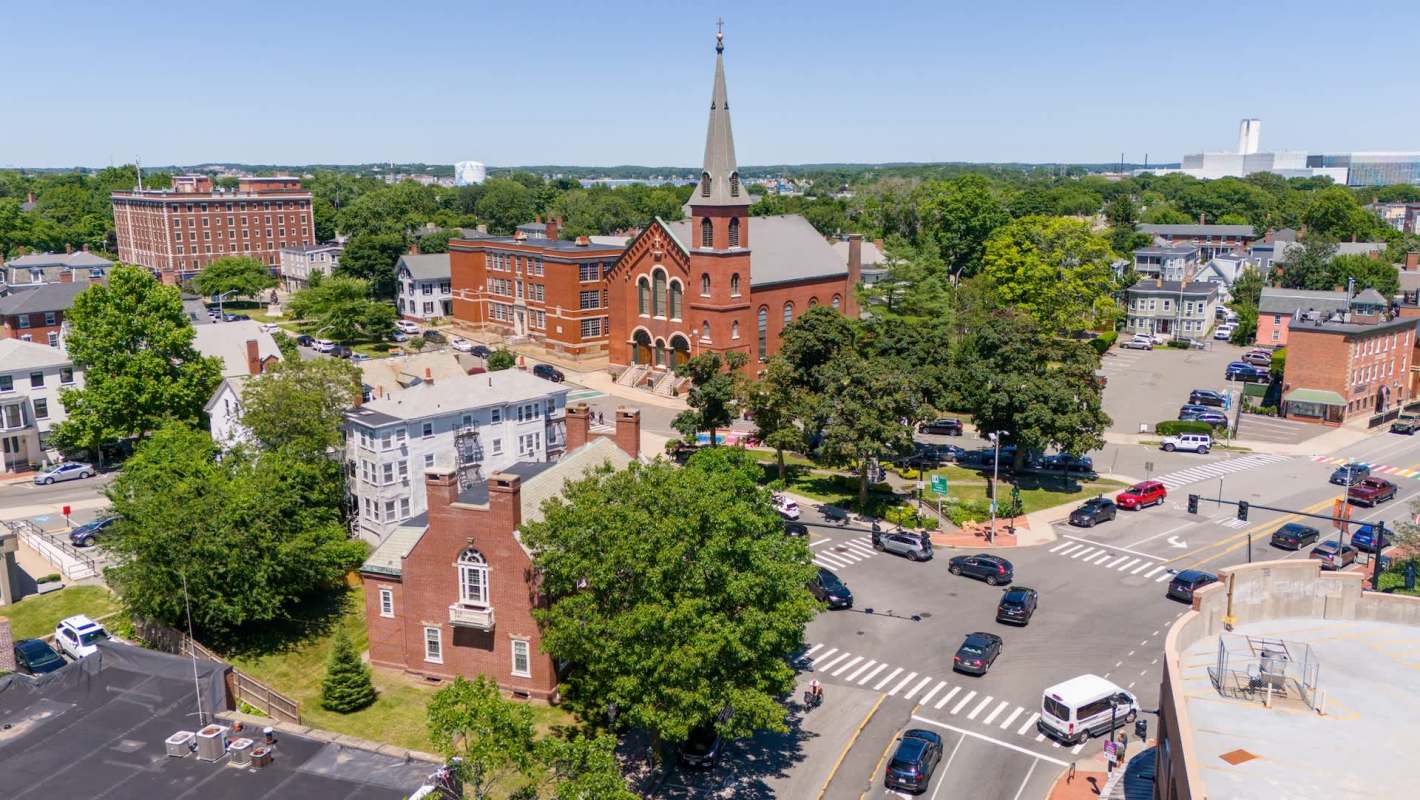
The Rev. Nathan Ives is pursuing a neighborhood-wide geothermal heating and cooling plan in historic Salem after a costly surprise at his Massachusetts church.
Here's what to know
WBUR reported that a utility's replacement of an aging gas meter sent the church's monthly winter heating charges from $100 to $3,000.
Affordable housing, museums, offices, and retail space are among the 20 properties that would share a geothermal network with St. Peter's-San Pedro Episcopal Church. The Heaven and Earth Project also calls for rooftop solar panels and a battery at the church, according to the outlet.
Ives enlisted residents, nonprofit leaders, and city officials to look for a way to address the higher heating costs. As WBUR noted, many participating buildings rely on natural gas or fuel oil and were built in the 1800s, which only adds to both the necessity and the challenge.
Geothermal heat pumps use electricity and underground pipes to transfer warmth from the ground into buildings during winter, reversing the process to provide cooling in summer. Underground temperatures remain around 55 degrees, providing a steady resource year-round.
By sharing the system across multiple properties, the project would use energy more efficiently than a church-only system, according to the station.
TCD Picks » Quince Spotlight
💡These best-sellers from Quince deliver affordable, sustainable luxury for all




More background
Salem has 1,700 registered historic buildings, and WBUR noted buildings are the city's largest source of planet-warming pollution. Its climate action plan prioritizes reducing their dependence on gas and oil.
St. Peter's-San Pedro is hard to heat, which explains the sky-high bills. Drafts, damaged or poorly sealed stained glass, and uninsulated granite walls all contribute to the problem. The outlet reported that its wooden box pews date to the original 1733 church, which was expanded in 1833.
Massachusetts designates the church's area as an Environmental Justice Community because residents face disproportionate climate and environmental risks. WBUR said the church serves a majority Hispanic congregation and neighborhoods where many residents have low incomes.
The planned solar panels and battery would help offset utility bills while allowing the church to offer refuge during blackouts or weather-related disasters.
What's being done?
The team must raise $30 million for the geothermal loop, which would require drilling 450 holes hundreds of feet deep, according to the outlet. One possible location is Salem's historic 8-acre common, where construction would temporarily disrupt the grounds before they are restored.
Mayor Dominick Pangallo acknowledged residents' concerns about the potential effects on daily life, events, and tourism.
"It's by no means a done deal," he told WBUR. "It's worth at least asking the question if that's the place we should be looking."
The team also hopes to put ownership of the infrastructure in residents' hands, giving them influence over their energy system, according to project manager Abigail Despres.
HEET, a thermal-energy advocacy group, assisted with a feasibility study paid for by the Massachusetts Clean Energy Center, according to the outlet. Further analyses will determine which upgrades each building needs.
For Ives, the effort is about preserving the church while preparing it to serve future generations.
"We need to find a way to adapt these structures to modern-day, green energy solutions and efficiency," he said. "We're making plans for another 300, the next 300, and so let's make sure we do it right."
Where can I learn more?
Elsewhere in Massachusetts, schools, towns, and homeowners are also turning to cleaner heating and looking for ways to cut energy costs.
• A Massachusetts high school is drilling 850 feet down to halve its carbon pollution.
• Seven Massachusetts towns stack clean-energy incentives, cutting one heat pump's cost to $2,000.
• Everett upgraded a fire station with a heat pump, saying residents paid nothing.

Get TCD's free newsletters for easy tips, smart advice, and a chance to earn $5,000 toward home upgrades. To see more stories like this one, change your Google preferences here.






