


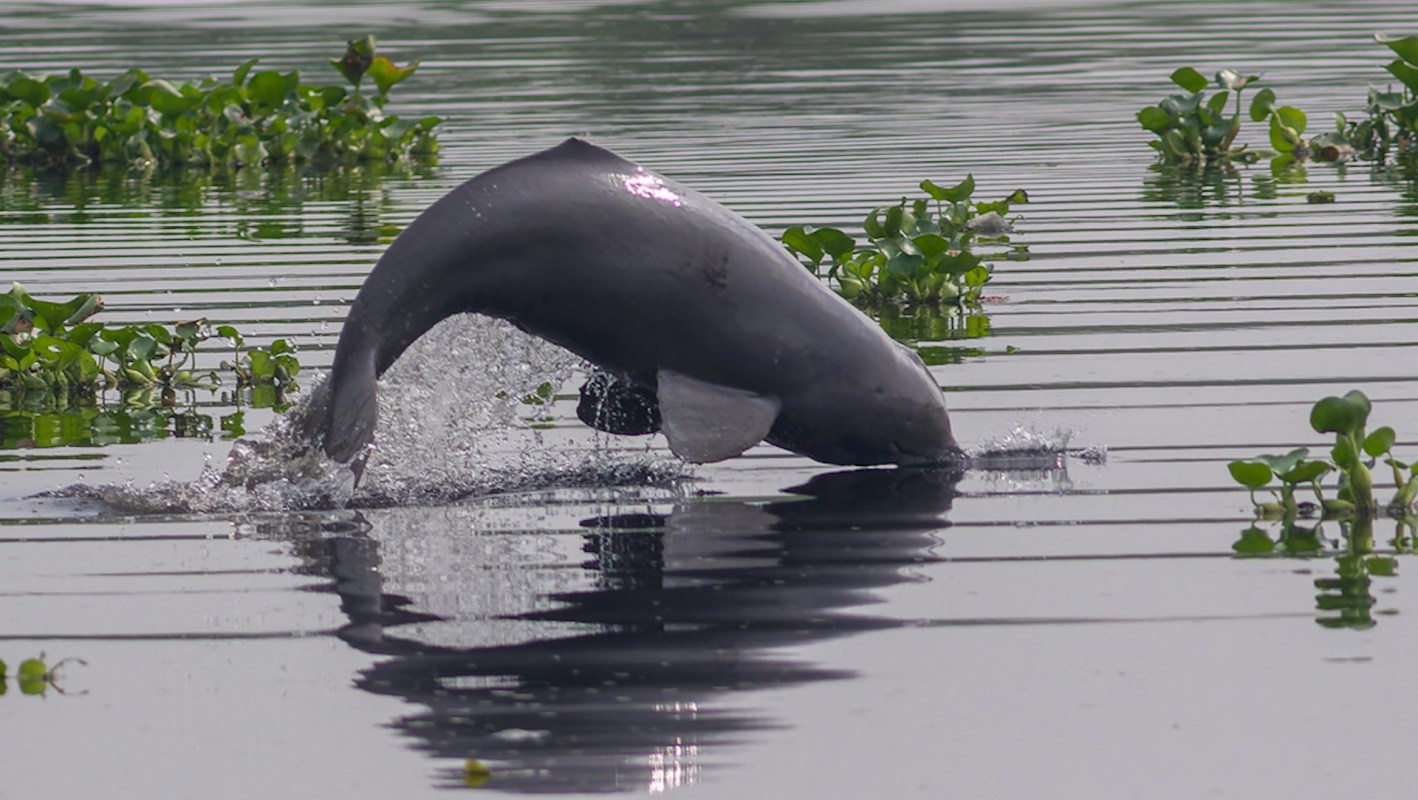
Severe pollution in Bangladesh's Buriganga River has nearly eliminated the river's native fish. Despite this, researchers found around 20 endangered freshwater dolphins surviving in the waterway.
Here's what to know
Researchers surveyed a 27-kilometer (16.7-mile) stretch of the Buriganga River, considered to be one of the world's most polluted rivers, along Dhaka city's southern edge from September 2023 through August 2024, according to Mongabay.
Ganges river dolphin groups averaged 4.18 individuals, exceeding sizes recorded in earlier reports. Sightings were most frequent during winter, peaking in December, and calves accounted for approximately 16% of all sightings.
With native fish largely gone, finding dolphins alive in the river was unexpected, researcher Md. Aminur Rahman told Mongabay. "When we found [the dolphins], we were amazed at how it was possible. Because the river is not livable for fish."
Mohammad Abdul Aziz, who teaches zoology at Dhaka's Jahangirnagar University, said pollution-tolerant suckermouth catfish may be feeding the dolphins. These invasive fish, which can breathe air at the surface, have become abundant in the Buriganga.
More background
The 18-mile Buriganga receives industrial wastewater from hundreds of factories, alongside waste from tanneries, raw sewage, and discarded solid materials.
TCD Picks » Quince Spotlight
💡These best-sellers from Quince deliver affordable, sustainable luxury for all




Contamination comes from dockyards and metal-processing facilities as well as textile producers and dye works. Battery manufacturers and pharmaceutical industries are also major sources of pollution for the river, according to a 2025 pollution review.
The review found that national standards and World Health Organization thresholds are routinely exceeded in both the river's water and its sediments. It identified chromium, lead, cadmium, arsenic, and mercury as the metals breaching those limits. During the dry months, dissolved oxygen levels often approach zero, making survival difficult for aquatic life.
The review described how pollutants accumulate in fish, vegetables, and water, exposing millions of people who live alongside or rely on the Buriganga to potential kidney injury, neurological illnesses, impaired development, and cancer.
What's being done?
In 2012, the government designated three areas of the Sundarbans mangroves as wildlife sanctuaries to safeguard Ganges river dolphins and Irrawaddy dolphins.
Aziz said illegal fishing nets can trap and kill dolphins, while vessels disrupt their movement. He also described dolphins traveling from the Buriganga through the Dhaleshwari River to reach the Meghna River before returning.
"If we want to conserve the dolphins in the Buriganga, the priority must be to stop the pollution. The number of vessels on the river is also excessive now. These vessels severely disrupt the dolphins' natural movement," Aziz said.
Where can I learn more?
The Buriganga dolphins offer a glimpse of how wildlife survives in a heavily polluted river.
• In Pakistan, fishermen freed a rare dolphin from a net and returned it to safety.
• In Bolivia, river dolphins spotted urinating into the air may have been communicating with each other.
• In Hungary, hundreds of tonnes of fish died as drought drained a protected wetland.
• In India's Bihar state, flooding affected 3.4 million people as the Ganges broke records.
• In Bangladesh, fishermen rescued a protected python measuring 12 feet from a fishing net.

Get TCD's free newsletters for easy tips, smart advice, and a chance to earn $5,000 toward home upgrades. To see more stories like this one, change your Google preferences here.







