


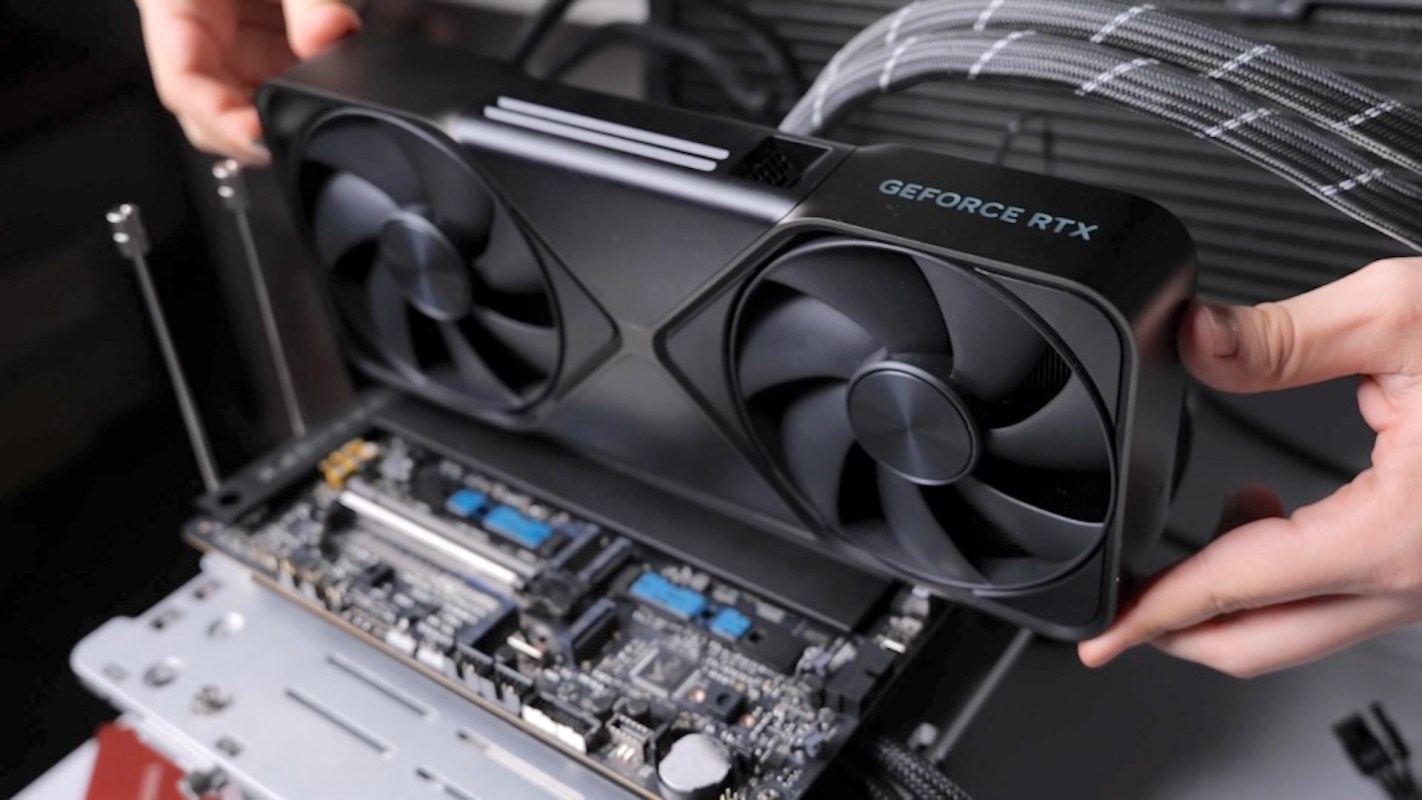
Nvidia's flagship RTX 5090 launched at a $1,999 retail price, but some off-the-shelf cards are selling for more than $10,000 as AI operators and PC gamers compete for the same limited supply.
Here's what to know
According to Tom's Hardware, footage shared online allegedly captures a sizable Chinese operation taking consumer RTX 5090s apart and refitting them for AI server racks. The reported conversion replaces the board and installs a turbine-style cooler, allowing the cards to be arranged more tightly inside server chassis.
【太精彩了吧 😱】近日,社交媒體 X 上流出多段顯示卡改裝工場內部影片,可以看到大量 GeForce RTX 5090 頂級遊戲顯示卡並未流向一般消費級零售市場,而是被整批運往大型改裝工廠。廠內工人在具備完整流水線的作業環境下,進行大規模拆解與改裝,將原本針對電競設計的三風扇散熱架構全數替換為 Dual Slot 渦輪散熱器,以符合 AI 伺服器機箱的高密度排列需求。 https://t.co/2wzPmweU3s 從曝光的工廠現場畫面可見,流水線工作枱上堆滿了來自各大廠商的 GeForce RTX 5090 零售彩盒包裝與全新裸卡,甚至連 NVIDIA 自家 GeForce RTX 5090 FE 也有。工人正以熟練的工序,迅速卸除原廠龐大的風扇與散熱鰭片模組,將完整的 PCB 電路板分離出來。隨後,GPU 與 VRAM 會被「吹」出來移植至另一片 PCB 上,再統一換裝上厚度僅有 2-Slot 的厚銅底座渦輪鼓風散熱系統。 改裝完畢後,廠方隨即將顯示卡送往專門的測試檢驗產線。在多組相連的開放式測試平台上,數十張已換裝渦輪散熱器的顯示卡正同步運行圖形效能負載與穩定性跑分測試,確保每張改裝後的繪圖卡皆能正常運作。通過嚴格檢測的顯示卡將被分層整齊陳列並重新裝箱,準備直接交付給相關客戶,流程非常專業。 傳統消費級高階顯示卡通常採用三風扇大型散熱設計,厚度普遍佔用 3 至 4 個插槽,且出風方向為機箱內部側吹,難以在 4U 伺服器或多卡並聯環境中並排安裝。換裝雙槽渦輪散熱系統後,散熱器能利用鼓風風扇將廢熱直接排出機箱後方,大幅提升多卡伺服器內部的散熱效率與空間相容性。 面對 AI 運算需求持續殷切,在算力緊缺的情況下,GeForce RTX 5090 遊戲顯示卡依然是 AI 算力市場的熱門替代品。目前,GeForce RTX 5090 售價已經被炒上接近一萬美元水平,這個價位遊戲玩家根本無力負擔。
— HKEPC (@hkepcmedia) October 23, 2026
In other words, a premium gaming card is being adapted into an AI infrastructure part; HKEPC said the redesign is intended to "meet the high-density arrangement requirements of AI server chassis."
Scarcity has become part of the problem too: even Nvidia's own online marketplace doesn't list the RTX 5090, and top-tier cards like it are hard to track down and costly.
More background
Rather than relying only on purpose-built systems, companies chasing AI growth are competing for hardware already on the market, and the video offers a snapshot of that broader electronics trend.
Because intermediaries sit between the refitting facilities and end buyers, it is hard to determine where the modified cards ultimately go.
TCD Picks » Quince Spotlight
💡These best-sellers from Quince deliver affordable, sustainable luxury for all




For consumers planning a new build or an upgrade, that can mean settling for aging components that may not be powerful enough. Companies, by contrast, may be more willing to absorb steep markups if they expect AI compute to pay off.
AI is also directly connected to the energy grid. AI tools can help optimize clean energy systems and improve planning, but the data centers and server farms behind them require massive amounts of electricity and water. Rapid buildouts can also raise concerns about security, misuse, and higher costs being passed on to communities.
Demand for AI computing power is intense enough to reshape where consumer GPUs end up.
Even with availability scarce and asking prices far above MSRP, Nvidia has disputed claims that production ended, saying the RTX 5090 is "alive."
Jeff Fisher, a senior vice president at Nvidia, described the RTX 5090 as supply-chain "constrained," indicating the shortage extends beyond reseller activity.
No obvious market-wide solution has emerged as AI buyers keep soaking up premium GPUs faster than typical shoppers can get them.
Where can I learn more?
These stories add more context on AI demand, Nvidia's ambitions, and the pressure spilling into gaming and power infrastructure.
• At Nvidia, pain and suffering may precede any climate upside from AI.
• On Steam, AI costs pushed its team into debt after a breakout demo.
• Nvidia's CEO said we've achieved AGI, then brushed the milestone off as senseless.
• Across the U.S., higher electric bills could follow as AI data centers expand.
• North America's grid regulator issued a top alert over destabilizing power swings.

Get TCD's free newsletters for easy tips, smart advice, and a chance to earn $5,000 toward home upgrades. To see more stories like this one, change your Google preferences here.







