


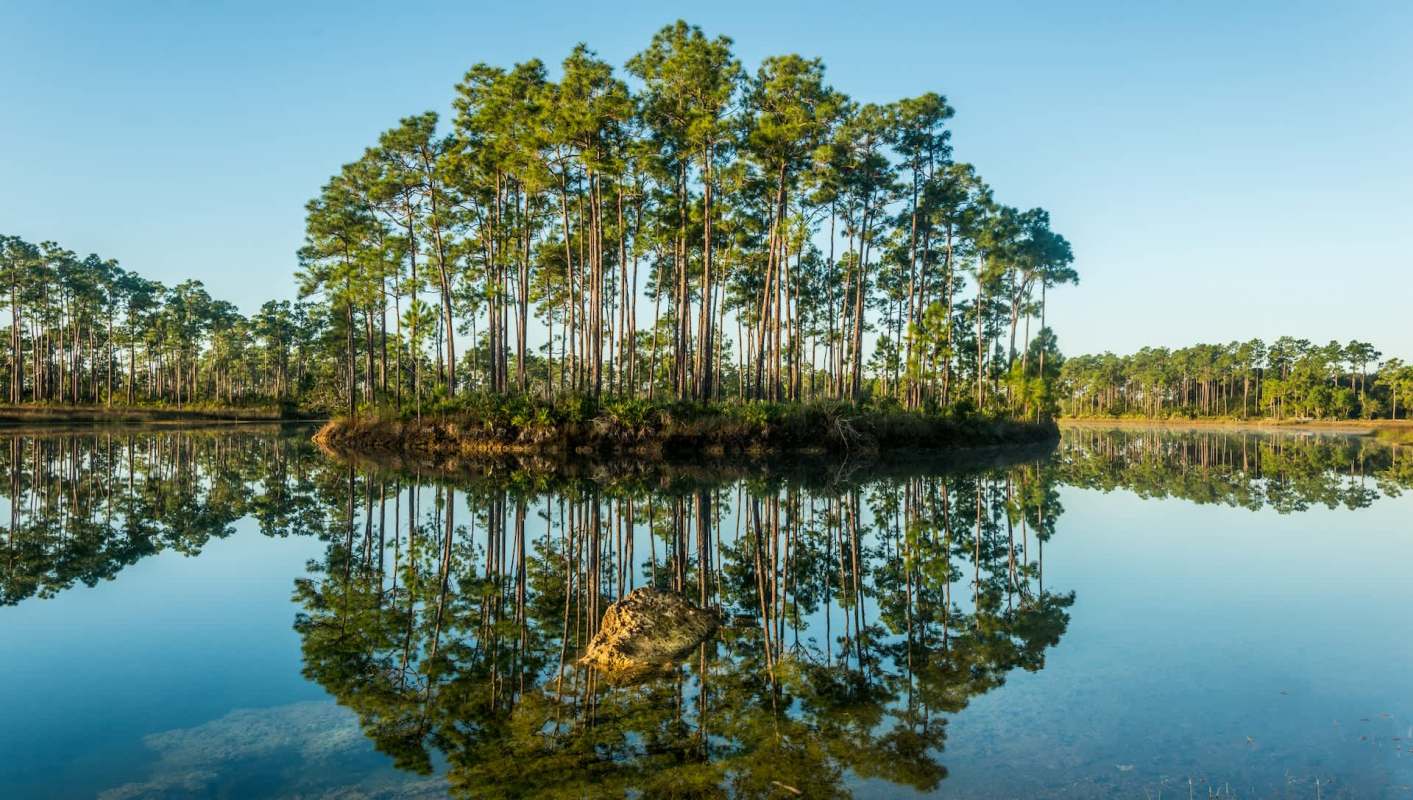
An Everglades scientist is drawing attention to "tree islands," explaining that these pockets of higher ground provide shelter for alligators, birds, mammals, and plants that cannot withstand too much water, while also mitigating planet-warming pollution and restoring biodiversity in one of Florida's most distinctive wetland landscapes.
Here's what to know
In a TikTok video, Jordon (@kidflamesss) explained the role of tree islands while on location.
"This is a tree island," Jordon said, describing it as "an elevated patch of land with trees and vegetation."
@kidflamesss Protect tree islands in the Everglades. #biologist #wetlands #stem ♬ original sound - Jordon
Because these spots sit slightly higher than the surrounding wetland, they can support plants that would struggle with too much water. Jordon said the vegetation then provides food and shelter for wildlife, including alligators, birds, mammals, and more.
Animals also help keep tree islands functioning through processes such as pollination, nutrient recycling, and energy flow through the food web.
Jordon also warned: "It's important that we protect these tree islands because climate-related changes such as droughts, fires, and changes in water levels can negatively affect the plants and wildlife that live on them."
TCD Picks » Quince Spotlight
💡These best-sellers from Quince deliver affordable, sustainable luxury for all




More background
The video illustrates climate risk through a small patch of dry ground surrounded by wetland water.
In Jordon's telling, even a small elevation difference can affect which plants survive and whether animals can use the area for food or shelter.
Because tree islands depend on being high enough for certain trees and vegetation to grow, drought, fire, and shifting water levels can upset the conditions that let them support alligators, birds, mammals, and other wildlife.
The video connects wetlands, invasive species, and field-based science. It also argues that protecting habitat and avoiding toxic gas releases can go hand in hand.
What's being done?
Jordon framed one answer as climate-smart forestry, saying it "involves using management practices to combat these changes."
In this case, the video focuses on practical steps to protect tree islands as climate pressures intensify.
One measure the video highlights is keeping peat hydrated to prevent "massive greenhouse gas releases." This frames wetland management as both habitat protection and pollution prevention.
Jordon also mentioned planting native hardwoods "like gumbo limbo and saltberry" to counter invasive species while restoring biodiversity on the islands.
Where can I learn more?
These stories focus on the Everglades and nearby Florida ecosystems, where alligators, invasive reptiles, and climate pressure are reshaping habitats.
• In the Florida Everglades, rising temperatures are changing how alligators survive future climate swings.
• Across Everglades wetlands, alligators help keep ecosystems balanced in ways many people overlook.
• Near the Everglades, invasive caimans are moving from canals into marsh habitat.

Get TCD's free newsletters for easy tips, smart advice, and a chance to earn $5,000 toward home upgrades. To see more stories like this one, change your Google preferences here.






