


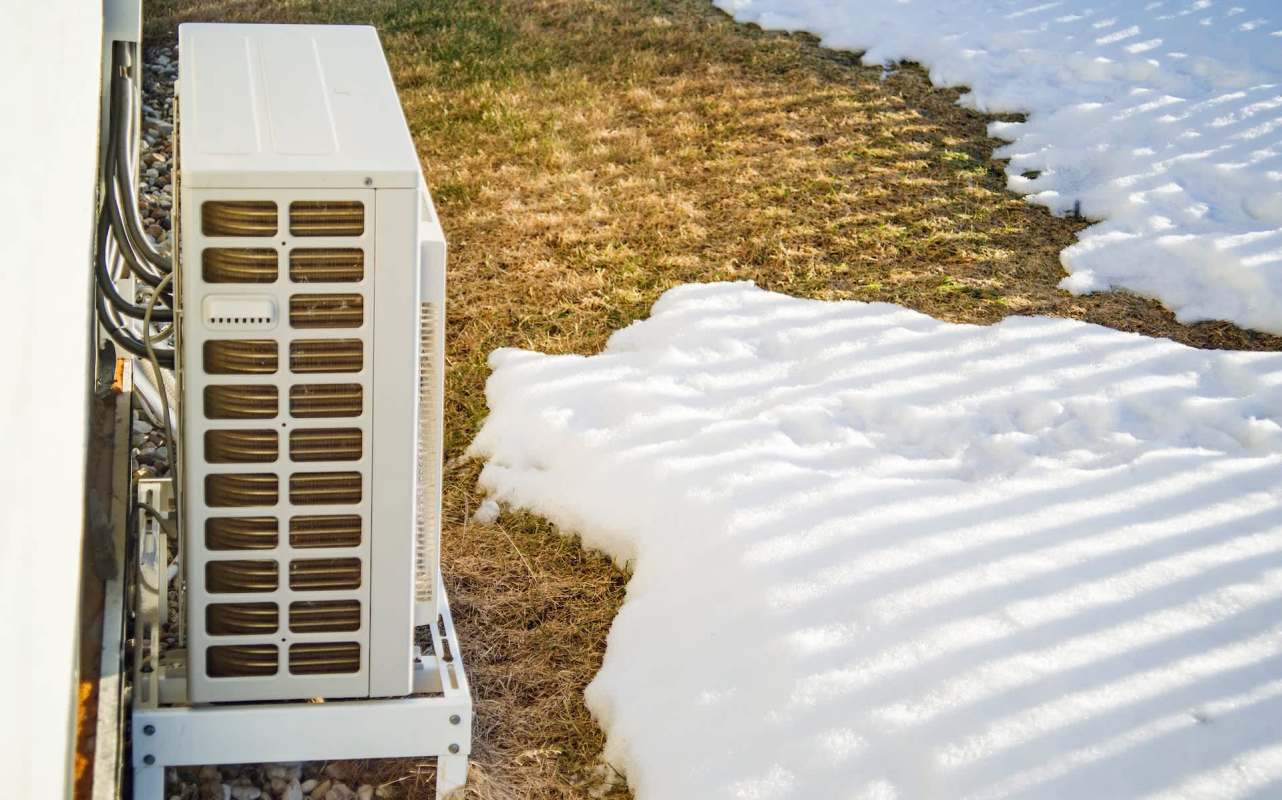
For a rural family in a 50-year-old house without access to natural gas, replacing their electric furnace wasn't straightforward.
The family's adult son took to Reddit's r/HeatPumps forum to ask the community, "Is there any practical reason to install a new electric furnace over a forced air heat pump that uses the existing ducting?"
Here's what to know
The man noted that his parents live in a frigid climate where average winter lows dip below minus 4 degrees Fahrenheit, making the furnace replacement both critically important and confusing.
In the thread, commenters overwhelmingly recommended a cold-climate heat pump with electric backup over another resistance furnace that could keep power bills high for years.
They argued that during the most extreme cold, the comparison would essentially come down to electric resistance heat either way, while a heat pump would still offer better efficiency for the rest of the year and provide summer cooling.
Replies were close to unanimous that the heat pump would be cheaper to live with. One commenter was especially direct, writing, "Do not. And I repeat, do not get an electric furnace. Your bills will be through the roof."
Several others pointed to the arrangement many people use in harsh climates, suggesting, "Cold climate heat pump with resistive heating for backup when the temperature drops."
Upfront cost was also part of the equation, but the original poster noted, "There are some sizable [heat pump] rebates available to cover a large chunk of the capital cost."
Save $10,000 on solar panels without even sharing your phone number Want to go solar but not sure who to trust? EnergySage has your back with free and transparent quotes from fully vetted providers in your area. To get started, just answer a few questions about your home — no phone number required. Within a day or two, EnergySage will email you the best options for your needs, and their expert advisers can help you compare quotes and pick a winner. Solar panels can save you more than $50k over their 25-year lifespan, and EnergySage can help you save as much as $10k on installation. Which begs the question — isn't that worth an email or two? |

More background
Because the house is roughly 50 years old and the existing furnace dates back to when it was built, this is not a minor equipment tweak. Whatever gets installed next could affect the home's heating costs for a long time.
Cooling would be a new perk as well, since their parents, the OP said, "don't currently have A/C."
Several commenters argued that a handful of bitterly cold days should not outweigh how the system would perform the rest of the time. One commenter put it this way, "Heat pumps have evolved. Some of them work down below -20. Most of the time [it] is over -20, right? Take the rebates."
Another commenter was unequivocal about fuel choice, writing, "Do not go propane. Get a heat pump with [a] backup electric heater." A different commenter emphasized the comfort upgrade in simple terms, adding, "They will love it and have a/c in the summer!!!"
What can be done?
The thread's most practical advice was to gather quotes before deciding. That matters even more in a two-story house with a basement, where the OP was unsure whether zoning changes or ductwork modifications might be necessary.
One reply highlighted that uncertainty directly, adding, a "heat pump will be much cheaper to operate. Ductwork might need some modification [though]. Nobody will know until you get estimates." The same commenter added, "Suggest the heat pump and keep electric heat as auxiliary."
Homeowners comparing newer, more efficient HVAC systems and heat pumps can use Palmetto to better understand their options, and Palmetto's Comfort Plan network can connect them with vetted installers and efficient heating and cooling solutions for their home.
For homeowners who like that direction but aren't ready to spend up front, Palmetto's Comfort Plan also offers $0-down HVAC subscription options that can lower heating and cooling costs by up to 50% and include 12 years of free maintenance.
Where can I learn more?
These stories look at how other homeowners handled the same cold-climate heat pump decision.
• After two HVAC quotes, a homeowner weighed a cheaper crossover heat pump for subzero winters.
• In Massachusetts, owners shared their honest takes on whether heat pumps kept up in cold weather.
• Across cold regions, winter performance myths kept homeowners from saving about $1,000 a year.

Get TCD's free newsletters for easy tips, smart advice, and a chance to earn $5,000 toward home upgrades. To see more stories like this one, change your Google preferences here.






