


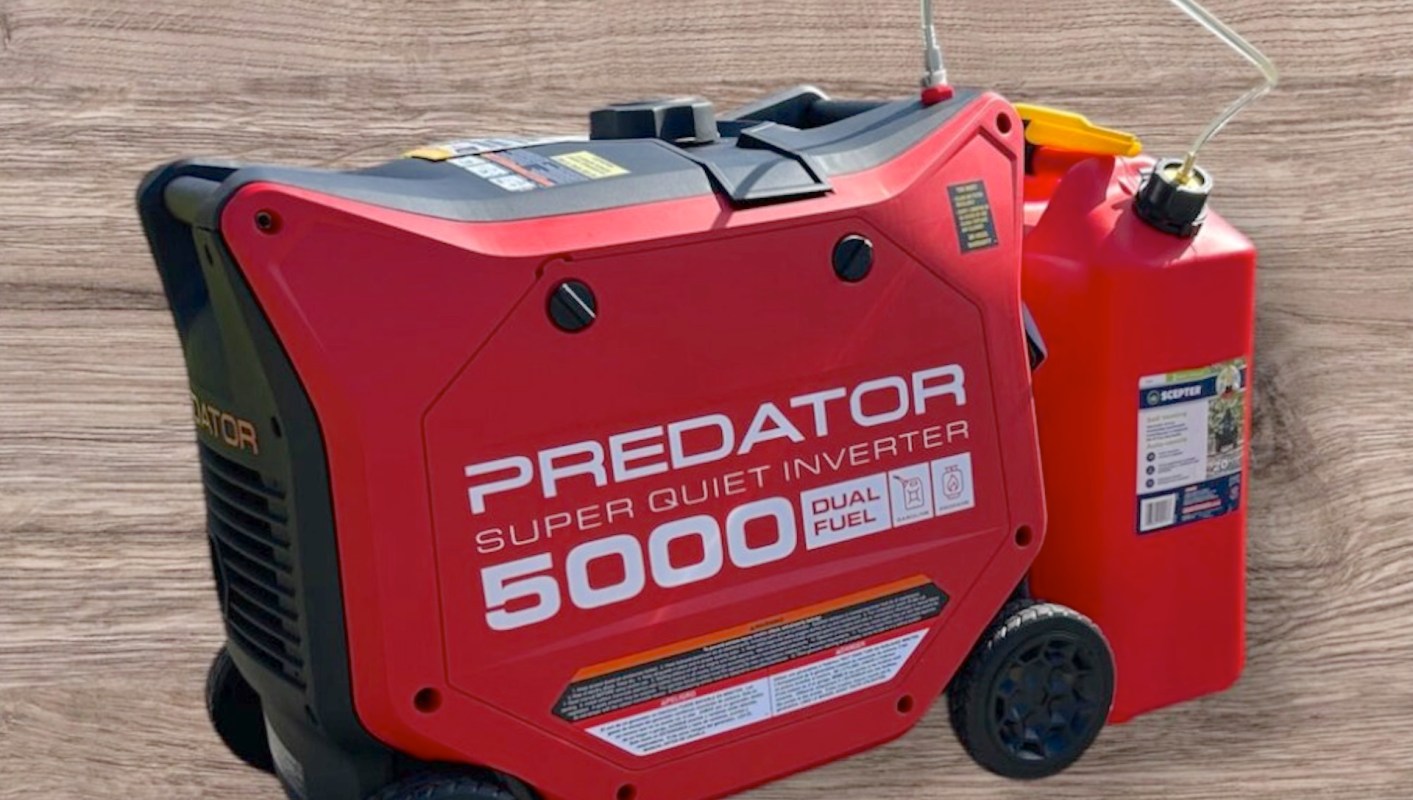
After concluding that their home did not require as much backup power as they had once assumed, a homeowner considered replacing a 10,000-watt tri-fuel generator with a 5,000-watt inverter model. Before pulling the trigger, they turned to Reddit for advice.
Here's what to know
Posting to Reddit's r/Generator, the original poster explained that they owned a 10,000W Firman tri-fuel generator and a 3,600W Pecron power station. After concluding that 10,000W was overkill for their needs, the original poster was considering selling the Firman and replacing it with a Predator 5,000W inverter generator.
The OP described that the generator would be used as backup, primarily to recharge the battery station. Other powered loads include a refrigerator, lights, Wi-Fi, and a few other small items.
One commenter backed the idea, saying, "If efficiency and quiet operation are your priorities it sounds like you would be well served by making this change. Agreed 5000w appears to be plenty of power for your needs."
In addition to being more power than their home needed, the noise from the 10,000-watt generator was another significant drawback for the OP.
They said that when they ran the Firman in their neighborhood, "it was very loud," and added that the belief that "a bigger generator is always better" is "not always the case."
TCD Picks » Quince Spotlight
💡These best-sellers from Quince deliver affordable, sustainable luxury for all




Several commenters saw the unit as more generator than this setup required. Their view was that a smaller machine could still cover the essentials and recharge the power station without wasting as much fuel.
More background
When considering your home's backup power needs, it is important to consider which appliances and electronic devices you will actually need to power in the event of a blackout.
The OP, for example, made clear that high-demand appliances were not part of the plan, naming the water heater, furnace, and dryer as examples.
Given the OP's specific needs, and with the generator being used primarily to recharge the home battery, most commenters agreed that the OP should downsize.
"Smaller inverter generators are more fuel-efficient, quieter, and cleaner power," said one.
"Your electronics will be happier running behind an inverter," said another.
Another important consideration had to do with fuel options. Although the Firman was tri-fuel, and the Predator accepted only propane and gasoline, the OP said they did not have natural gas in their area, so this was not an important consideration.
Bigger is not always better
Commenters repeatedly urged the OP to choose a generator based on actual usage rather than worst-case capacity. As one person put it, "Bigger is not necessarily better. Often it is worse, especially during long outages when fuel supplies may become tight."
Done well, that kind of right-sizing can cut both fuel trips and the cost of running output that is never really needed.
"Many people think (in error) that a larger gen can be more efficient if you don't load it up," noted one commenter. "In other words, if you are pulling 4kw, it will be nearly as efficient as a 4 kw machine."
"This is of course incorrect," they continued. "Big is nice … but 'right-sizing' is among the best things you can do."
Ultimately, the OP shared that they had placed the 10,000W generator for sale and had purchased the 5,000W unit.
"I just pulled the trigger on the Predator 5000W inverter generator and am going to list my Firman," the original poster wrote. "I love the Firman and it's an absolute beast, but it's also wasteful and extremely loud for what I need."
Where can I learn more?
These stories look at the trade-offs around generator noise, fuel use, and other backup power options. They include homeowners trying to cut generator noise, switching to battery-based systems, and comparing safer outage setups.
• Homeowners weighing generator noise reduction options ran into trade-offs over airflow and warranty concerns.
• Across the U.S., homeowners found backup solar systems could deliver resilience without constant fuel costs.
• Families replacing gas units with home battery backups gained quieter power and avoided fume risks.
• Installers say next-gen home backup systems are winning over households tired of noisy generators.
• After Hurricane Beryl, experts warned carbon monoxide poisoning remained a deadly generator risk indoors.

Get TCD's free newsletters for easy tips, smart advice, and a chance to earn $5,000 toward home upgrades. To see more stories like this one, change your Google preferences here.






