


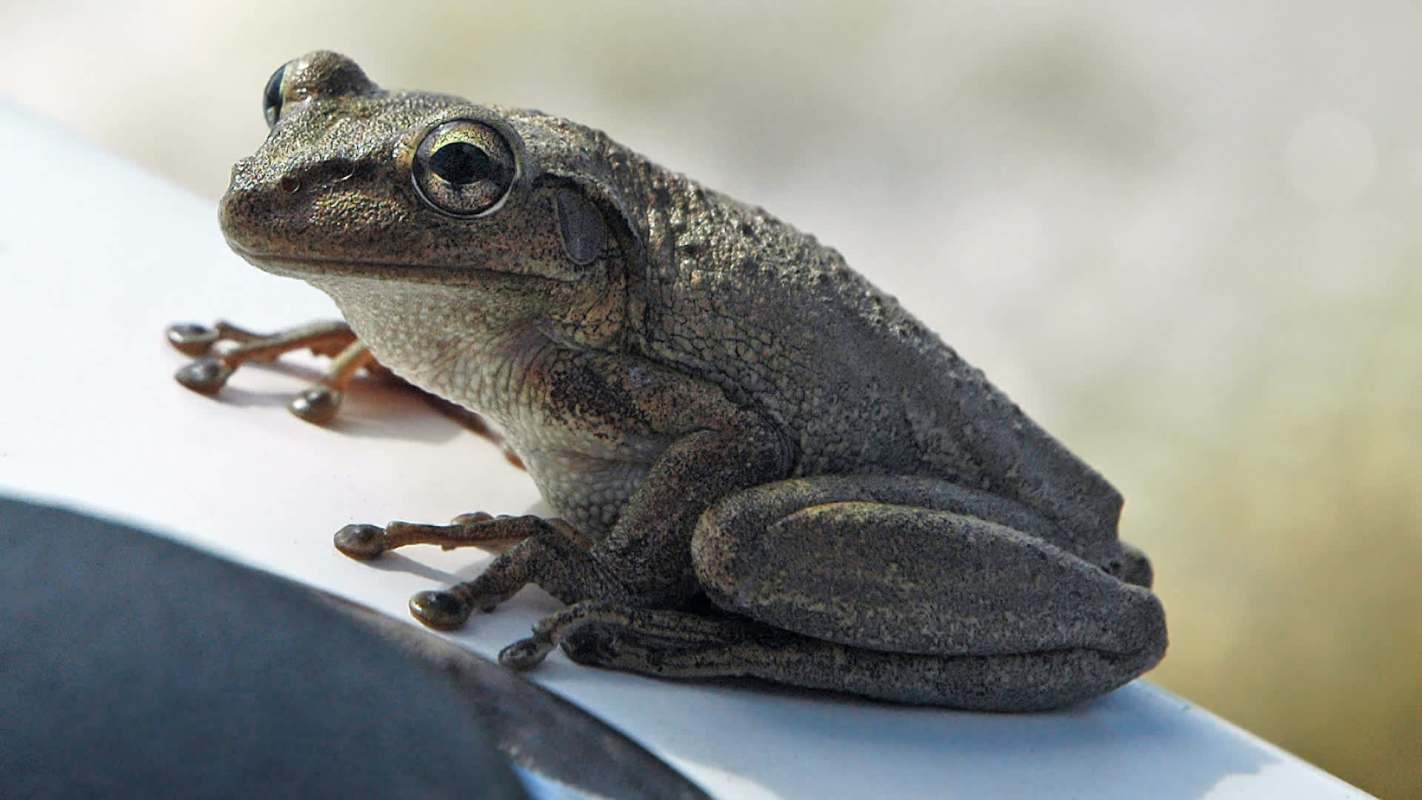
What first looked like dark specks stuck to the outside of an Orlando, Florida, home turned out to be dozens of tiny froglets clinging to the walls after several days of rain.
Here's what to know
Before she understood what she was looking at, DeGregory thought the scattered marks on her home were just small dark spots, Fox 35 News reported. She later realized they were tiny frogs, and neighbors told her similar froglets were appearing on nearby properties, too. The animals are thought to be Cuban tree frogs, an invasive species found across Florida.
The Florida Fish and Wildlife Conservation Commission says Cuban tree frogs can damage the local ecosystem by competing with native frogs and sometimes preying on them.
Ron Magill, a wildlife expert with the ZooMiami Foundation, said residents should not confuse the suspected froglets with the far more dangerous large cane toads. "If your dog bites one or eats one, it's not going to die," Magill said. "It might get a little upset stomach, it might vomit a little bit, but this is not the toxic substance that is found in the large cane toads."
Because the frogs are so young and experts could not examine them in person, they could only make a provisional assessment, though Cuban tree frogs remain the most likely explanation.
Invasive species do not simply appear in places like Florida on their own; their spread is closely linked to human movement and environmental disruption.
TCD Picks » Quince Spotlight
💡These best-sellers from Quince deliver affordable, sustainable luxury for all




What can be done?
Magill said people should avoid touching the frogs when possible. Even very small froglets can carry a substance on their skin that may irritate a person's skin or eyes.
He also said these clusters of young frogs usually do not stay in one place long. After a few days, especially as the froglets become more mobile, they typically spread out instead of continuing to cover a single home.
If the frogs remain a problem, homeowners can contact the Florida Fish and Wildlife Conservation Commission for help with identification. If the animals are confirmed to be invasive Cuban tree frogs, FWC can also advise residents on humane euthanasia.
"Once they become more agile, they'll disperse, and you won't find them in those concentrated numbers," Magill added.
Where can I learn more?
The following stories cover habitat stress for tree frogs, toxic toads in Florida, urban tadpoles, climate threats to frogs, and a surprising backyard sighting in Tallahassee.
• In the Amazon, drought and habitat loss are putting tree frogs under new pressure.
• Across Florida, toxic invasive toads are spreading and posing a greater risk to pets.
• In urban areas, city life is reshaping how túngara frog tadpoles grow and survive.
• Worldwide, wider temperature swings are emerging as a major threat to frogs.
• In Tallahassee, a homeowner found a 3-foot amphiuma where a snake seemed more likely.

Get TCD's free newsletters for easy tips, smart advice, and a chance to earn $5,000 toward home upgrades. To see more stories like this one, change your Google preferences here.







