


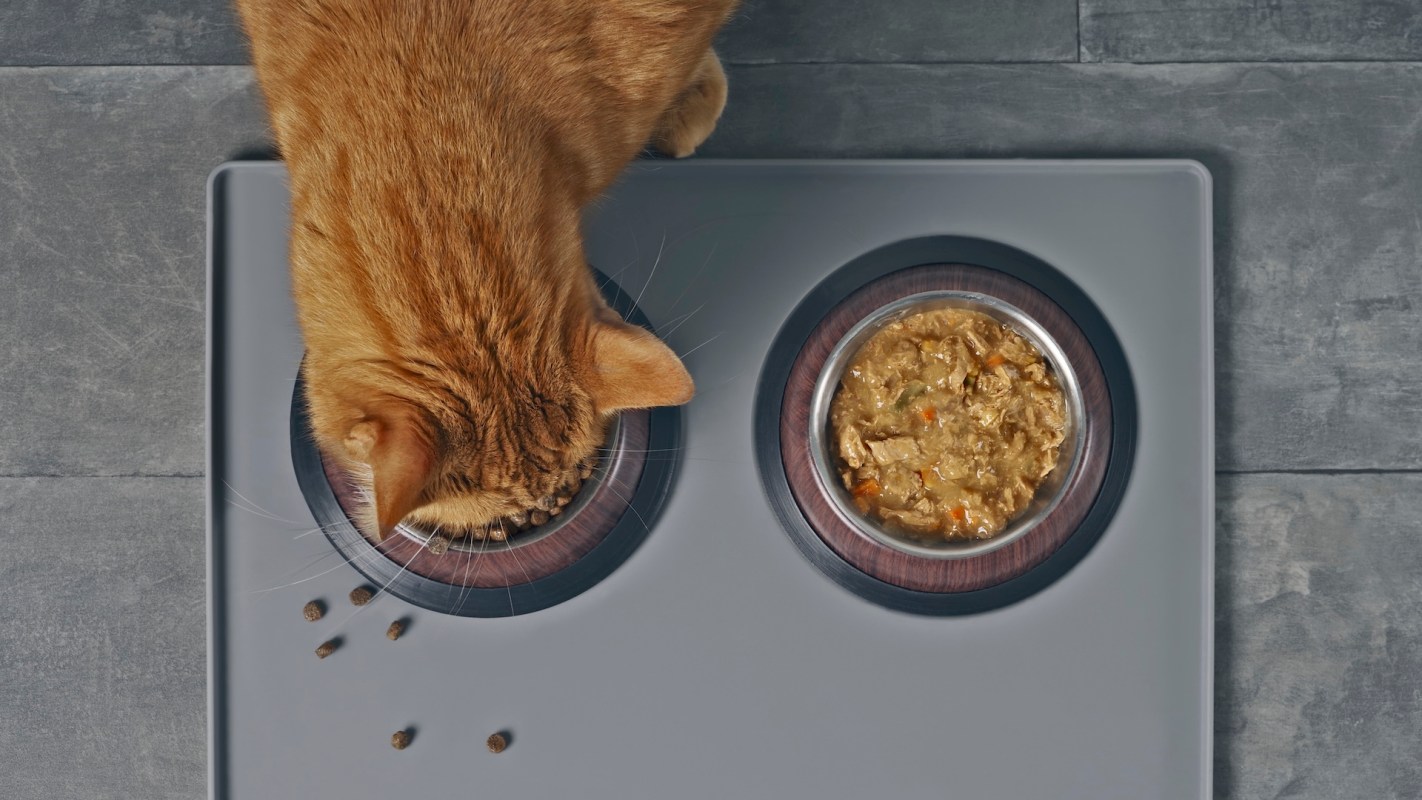
The food in your cat's bowl may contain a lot more than just meat and vitamins.
Even cat foods sold as premium, natural, or nutritionally superior were flagged in a new analysis, which found heavy metals, glyphosate, and plastic-related chemicals in nearly every product tested.
Here's what to know
The Clean Label Project, a Colorado nonprofit that tests consumer products for contaminants, examined 100 top-selling cat foods from 62 brands and screened them for more than 122 substances, including heavy metals, pesticides, herbicides, and phthalates, CNN reported.
The results showed lead in 99% of samples, cadmium in 96%, and arsenic in 94%.
Molly Hamilton, the Clean Label Project's executive director and the report's author, said the results stand out because many cats stay on the same formula every day.
"The contaminants are an ongoing exposure that may accumulate in cats' bodies over their lifetimes," Hamilton said. "For example, chronic kidney disease is among the most common causes of death in older cats — the kidneys play a major role in filtering heavy metals."
TCD Picks » Quince Spotlight
💡These best-sellers from Quince deliver affordable, sustainable luxury for all




The review included all types of cat food, including wet, dry, and air- or freeze-dried products. Hamilton also told CNN, "Cat owners increasingly choose premium meats, organic vegetables and cleaner labels, assuming higher prices and quality ingredients mean healthier food. That's not necessarily the case."
More background
The report found that contamination patterns varied by protein source.
Fish- and seafood-based foods showed mercury levels about 18 times higher and cadmium levels around 2.5 times higher than foods made with other proteins. Among wet foods, seafood products had nearly 28 times the mercury found in wet foods made with other meats.
Dry food had about three times the lead levels of wet or air-dried options. Hamilton said that difference matters because small animals can absorb more contaminants, while many contaminant guidelines were developed for farm animals rather than housecats or kittens.
The testing also found glyphosate in 37% of products, with higher levels in foods that listed more plant ingredients among the top 10 on the label.
Di(2-ethylhexyl) phthalate, or DEHP, appeared in about half of the tested products, especially in canned and pouch foods. Ryan Babadi, science director for Toxic Free Future, called that a "very concerning finding."
Each food came from a single batch, so the report could not assess batch-to-batch variation.
In comments to CNN, Elise Fennig, CEO of the Pet Food Institute, said pet food companies use measures such as ingredient specifications, supplier verification, testing protocols, traceability systems, and preventive controls intended to keep products safe and consistent.
What can be done?
The report suggested rotating chicken or other proteins alongside seafood formulas to reduce daily exposure to mercury and cadmium.
Nearly 85% of poultry-based foods met Clean Label Project's purity standard, compared with 25.7% of fish and seafood products.
The report also said wet or air-dried foods may be preferable to dry food for lower lead exposure. To reduce pesticide exposure, it may help to avoid products with several plant ingredients among the top 10 listed on the label.
Hamilton said shoppers also should not treat the first ingredient as a shortcut for safety. CNN reported that in more than one-third of tested products, the first ingredient did not accurately predict which contaminants were present at the highest levels.
Hamilton also recommended contacting manufacturers directly to ask whether they test for contaminants and how often. Even a label such as "wild salmon," she noted, does not tell buyers which parts of the fish were used, and organs and skin can hold more pollutants than other parts.
Where can I learn more?
Here are a few more stories on contaminants and chemical exposure in pet food and the broader food supply. They cover microplastics in pet meals, plasticizer contamination in groceries, and recalls tied to plastic in dog food.
• In the U.K., microplastics in most pet foods raised fears that large dogs ingest thousands daily.
• Consumer Reports found plasticizers in everyday foods as evidence grew that chemicals can harm us.
• The FDA warned AllProvide customers after plastic contamination in a chicken-based frozen dog food product prompted a nationwide recall.
• Tesco pulled Lily's Kitchen tins after harmful pieces in dog food were discovered inside.
• The FDA flagged BeefiBowls after visible plastic contamination in food bowls suggested possible health consequences.

Get TCD's free newsletters for easy tips, smart advice, and a chance to earn $5,000 toward home upgrades. To see more stories like this one, change your Google preferences here.







