


A homeowner's photo of two newly installed outdoor condensers, set facing opposite directions with just a few inches between them, quickly kicked off a lively debate.
Even commenters who did not see it as a fatal flaw said this is the kind of installation detail worth pressing on before the job is finished.
Here's what to know
In a post on Reddit's r/hvacadvice, the original poster shared a photo of the rooftop layout and wrote, "Must have been done on purpose, but I am questioning the logic." The installers were expected to return later to attach the indoor heads, according to the Reddit thread.
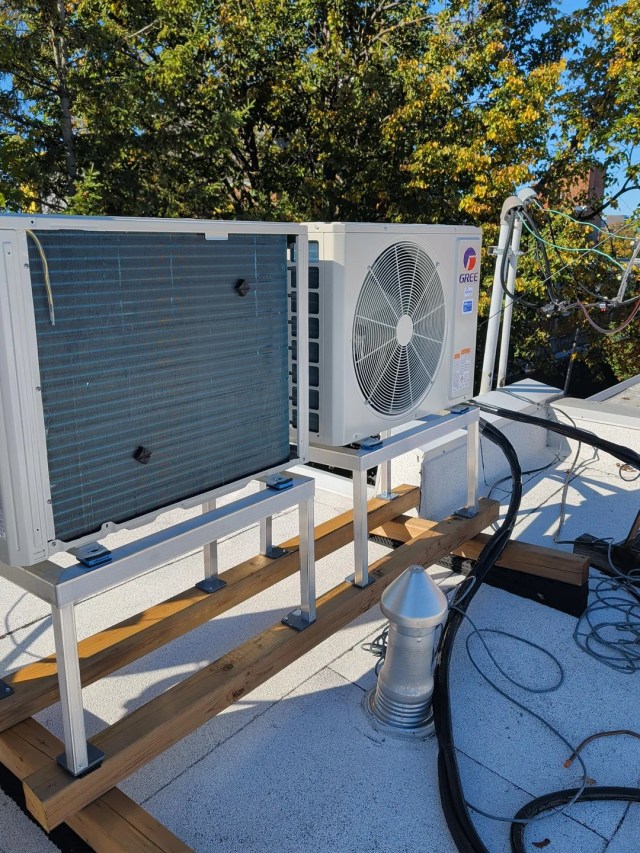
Some readers saw a possible reason for the unusual positioning. One commenter attributed it to "Service port accessibility." Another replied, "This right here." Others zeroed in on airflow, required clearances, and whether the tight spacing could affect performance.
Heating and cooling upgrades are one of the clearest ways homeowners can cut utility bills and protect themselves from rising energy costs — especially when they are paying for new equipment and expecting efficient performance for years. For people exploring replacements or heat pumps, Palmetto's Comfort Plan network can help you find efficient heating and cooling solutions for your home and connect you with vetted installers.
More background
Bringing up spacing questions before the heads are attached is usually much easier than fixing the issue after the system has been fully commissioned.
Several people pointed back to the manufacturer guidance. One commenter wrote, "Right in the instruction/install manual it will list minimum clearances around the units," and said the likely downside would be only "a very small loss of efficiency." Another got more specific, arguing the left unit needed 20 inches on one side and 12 on the other and that both units should be repositioned.
What can be done?
The main recommendation was for the installer to confirm the manufacturer's minimum clearances before wrapping up the work. Based on the layout shown, commenters said the units may need to be shifted, even if the nearby roof vent and platform setup make that harder.
Save $10,000 on solar panels without even sharing your phone number Want to go solar but not sure who to trust? EnergySage has your back with free and transparent quotes from fully vetted providers in your area. To get started, just answer a few questions about your home — no phone number required. Within a day or two, EnergySage will email you the best options for your needs, and their expert advisers can help you compare quotes and pick a winner. Solar panels can save you more than $50k over their 25-year lifespan, and EnergySage can help you save as much as $10k on installation. Which begs the question — isn't that worth an email or two? |

For homeowners comparing options rather than fixing an active install, Palmetto can also help with cost. Through Palmetto's Comfort Plan, homeowners who are not ready to spend up front can access $0-down options that can lower heating and cooling costs by up to 50%, and the plans include 12 years of free maintenance.
Homeowners can also drive bills even lower by pairing solar panels with electric appliances such as efficient HVAC systems and heat pumps. EnergySage makes it easy to find the best solar system and installer for your home and budget, with potential savings of up to $10,000 on installations.
Where can I learn more?
These stories cover the same homeowner concerns raised here, including condenser placement, airflow, and whether an installer got the details right. They follow real questions about outdoor AC setup, vent habits, questionable add-ons, confusing performance readings, and contractor pressure.
• During a heat wave, a homeowner questioned a 'backward' outdoor unit and exposed copper after AC replacement.
• An HVAC specialist warned that closing your a/c vents can disrupt airflow and raise long-term costs.
• In Florida, HVAC pros urged a hard pass on the viral AC saver homeowners hoped would cut bills.

Get TCD's free newsletters for easy tips, smart advice, and a chance to earn $5,000 toward home upgrades. To see more stories like this one, change your Google preferences here.






