


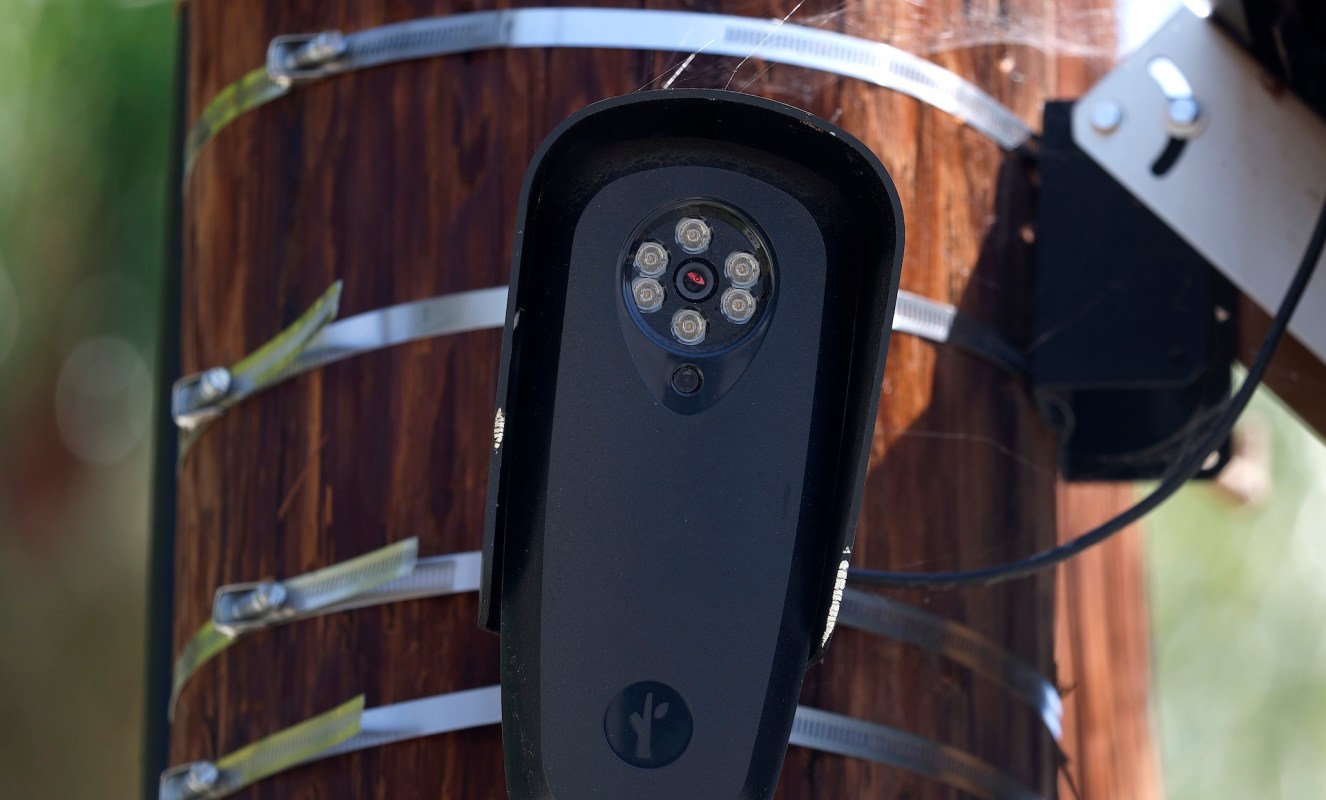
A plan to remove controversial Flock license plate readers in St. Lucie County, Florida, exposed an even bigger issue: Officials discovered 14 more cameras than their records showed, and 11 still had no publicly known owner.
In St. Lucie County, Florida, crews found 14 Flock license plate readers that had never been permitted, and 11 still had no publicly known owner.
Here's what to know
During the county's removal effort, as The Washington Post reported, officials learned their inventory was incomplete. They had believed 52 Flock cameras were installed along major roads, but the sweep turned up 14 additional devices that had not gone through St. Lucie County's Planning and Development Department.
Once county officials shared a list of those unpermitted cameras, the St. Lucie County Sheriff's Office said three were its own. The county's other two law enforcement agencies said the rest did not belong to them. Flock cameras capture license plates from passing vehicles, along with the time and place of each sighting.
Eleven devices, then, still have no public owner. County spokesperson Erick Gill said staff posted notices giving whoever installed them 30 days to take them down, with deadlines falling between October 16 and October 20. Until then, county workers planned to cover the cameras with plastic bags.
"That makes me feel very unsafe," said Ty Grant, who lives near one of the cameras in Fort Pierce.
TCD Picks » Quince Spotlight
💡These best-sellers from Quince deliver affordable, sustainable luxury for all




More background
Founded in 2017 and based in Atlanta, Flock says it now has more than 120,000 automated license plate readers operating nationwide, excluding Alaska. The company says the cameras help find stolen cars, missing people, and criminal suspects.
In Fort Pierce, former police officer Josepher Crutchfield was jailed after officials found he had used the Flock database 382 times to follow his ex-girlfriend while off duty. Incidents like that have fueled privacy concerns and fears of abuse around the technology. At least 50 law enforcement officials around the country have been accused of using Flock systems to track people in their personal lives.
Municipalities were given until September 30 to remove automated license plate recognition systems from state highway rights-of-way after the Florida Department of Transportation, in late August, revoked those permits and cited "concerning reports of misuse" and "data privacy concerns."
What's being done?
For now, St. Lucie County is trying to identify the devices, alert whoever installed them, and limit their use as much as possible while the deadlines run. By the time The Post visited one site in Fort Pierce, that unpermitted camera had already been removed.
Flock spokesperson Paris Lewbel said the company applies for permits "where required, but permitting requirements vary by jurisdiction and are not necessary in every location." Lewbel also said Flock had reached out to county officials and was willing to review the cameras in question.
Questions about Flock installations have surfaced elsewhere, too. Palm Bay, Florida, suspended its Flock system in September over permit and installation questions. In Cambridge, Massachusetts, two Flock cameras reportedly appeared in December without the city's knowledge after the system had already been taken down, and in September another was found on city property in Millcreek, Utah, with no clear owner.
"I'm not happy about it unless I know who it is," said Todd Richter, who has long managed a fishing supply shop near a Fort Pierce camera, "and I don't."
Where can I learn more?
Questions about Flock and other surveillance systems have surfaced far beyond St. Lucie County. Elsewhere, disputes have centered on false alerts, contested traffic stops, and oversight of the technology.
• In Los Angeles, police ended Flock's deal after one in three stolen-car alerts proved false.
• In Toledo, Ohio, a traffic stop tied to surveillance camera systems ended in a settlement.
• In Russellville, police used damning evidence of illegal activity from cameras to make an arrest.
• In one community, officers caught residents red-handed with home surveillance footage after repeated illegal dumping.

Get TCD's free newsletters for easy tips, smart advice, and a chance to earn $5,000 toward home upgrades. To see more stories like this one, change your Google preferences here.






