


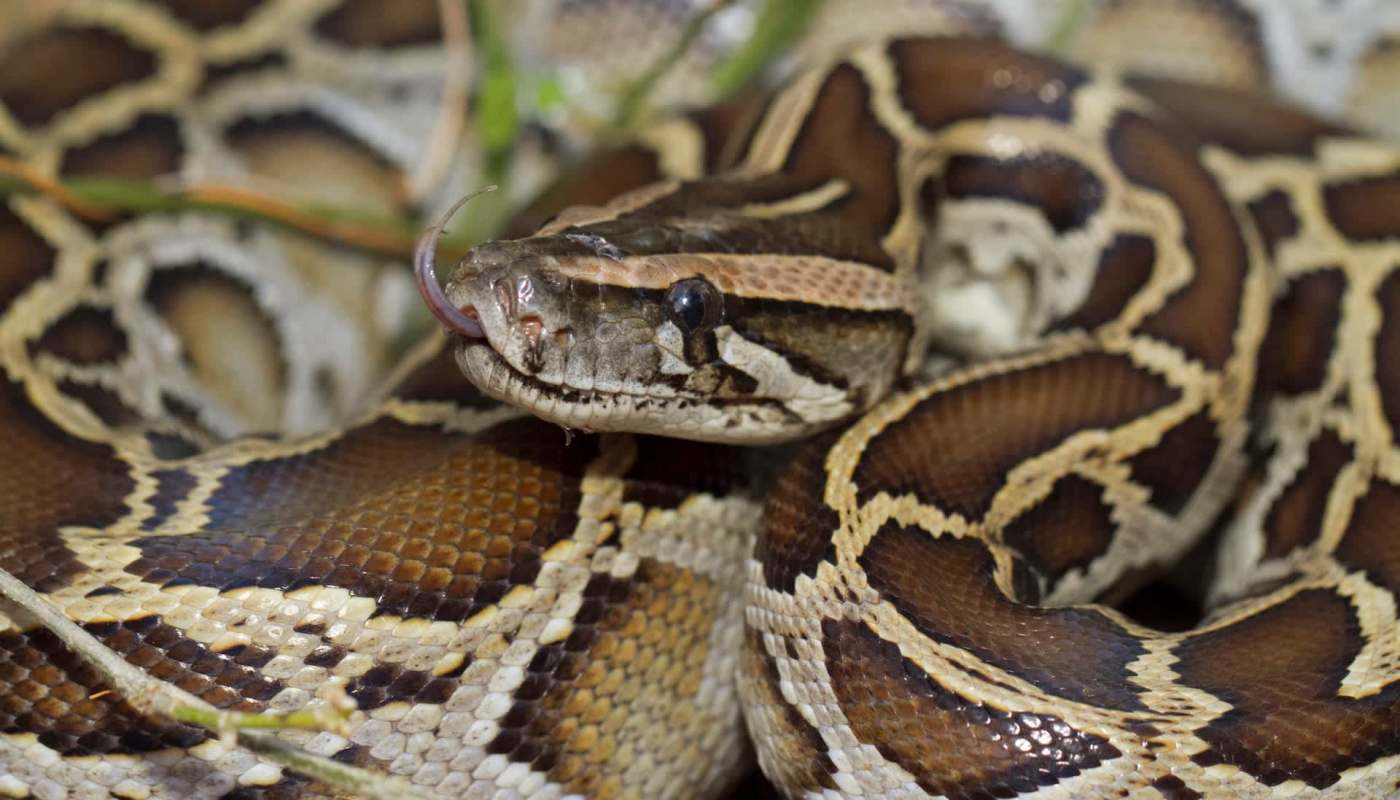
A yearslong tracking effort in South Florida is offering scientists a clearer picture of one of the region's most destructive invasive species. Burmese pythons are not just moving through wetlands but also spending significant time in trees.
That matters because a better understanding of where these snakes hide, rest, and reproduce could help wildlife managers curb damage to fragile ecosystems that local communities rely on.
Here's what to know
According to Discover Wildlife, the project followed more than 350 Burmese pythons in southern Florida between November 2017 and December 2024. Researchers implanted VHF radiotelemetry transmitters in the snakes to record movement and habitat use, conducting weekly checks on 188 adults and 168 juveniles at locations that included Big Cypress National Preserve.
In the Journal of Herpetology, published by the Society for the Study of Amphibians and Reptiles, researchers reported that tree use was common in both age groups. But the patterns differed: adults were most often associated with cypress species and coastal plain willows, while juveniles turned up repeatedly in cypress trees and cabbage palms.
The study also linked body size to the kind of perch used, with heavier pythons more often occupying sturdier trees such as Brazilian peppertrees and oaks. Their time above ground also shifted seasonally, rising during Florida's cooler dry months.
More background
Originally from Southeast Asia, Burmese pythons can grow longer than 16 feet and weigh about 330 pounds. The International Union for the Conservation of Nature lists them as vulnerable in their native range. However, the snakes have remained common in the pet trade, and escapes along with intentional releases helped establish them in Florida.
TCD Picks » Quince Spotlight
💡These best-sellers from Quince deliver affordable, sustainable luxury for all




Florida records of the species go back to the 1930s, though a breeding population was not recognized until 2000. As the snakes expanded afterward, declines were documented in numerous native species.
The authors said their findings reinforce earlier research showing that the Burmese python is a habitat generalist, meaning it can make use of a wide range of environments and refuges.
What's being done?
Knowing that arboreal activity rises during the dry season and that different age groups favor different tree species, could help make surveys and removals more precise.
Control is complicated by the snakes' behavior and biology since they are mainly active at night, can remain concealed for long periods, and reproduce quickly. Plus, females generally lay 30 to 60 eggs every other year.
Improved tracking data could also help conservation teams prioritize high-risk habitat, particularly in areas where native species are already under strain. Rather than treating every patch of land the same, managers can focus attention on the tree types and seasonal conditions most closely linked to python activity.
"We observed adult pythons basking, resting, aggregating with other pythons, or brooding eggs in arboreal habitat," the authors wrote in the study, "whereas we observed juvenile pythons resting, basking, or moving between tree limbs."
Where can I learn more?
Burmese pythons are reshaping South Florida in ways that extend well beyond wetland habitat. These stories look at removal tactics, new ecological impacts in the Everglades, and signs of the snakes' continued spread.
• In the Everglades, pythons are eating Nile monitors, further complicating control efforts.
• In southwest Florida, biologists used scout pythons to remove a record 8,080 pounds of snakes.
• In the Florida Keys, collared opossums are guiding efforts to protect Key Largo woodrats.
• Across the Everglades, giant pythons are spreading seeds across wetlands as they move.
• Florida's record python hunt removed 294 snakes in 10 days, barely slowing expansion.

Get TCD's free newsletters for easy tips, smart advice, and a chance to earn $5,000 toward home upgrades. To see more stories like this one, change your Google preferences here.






