


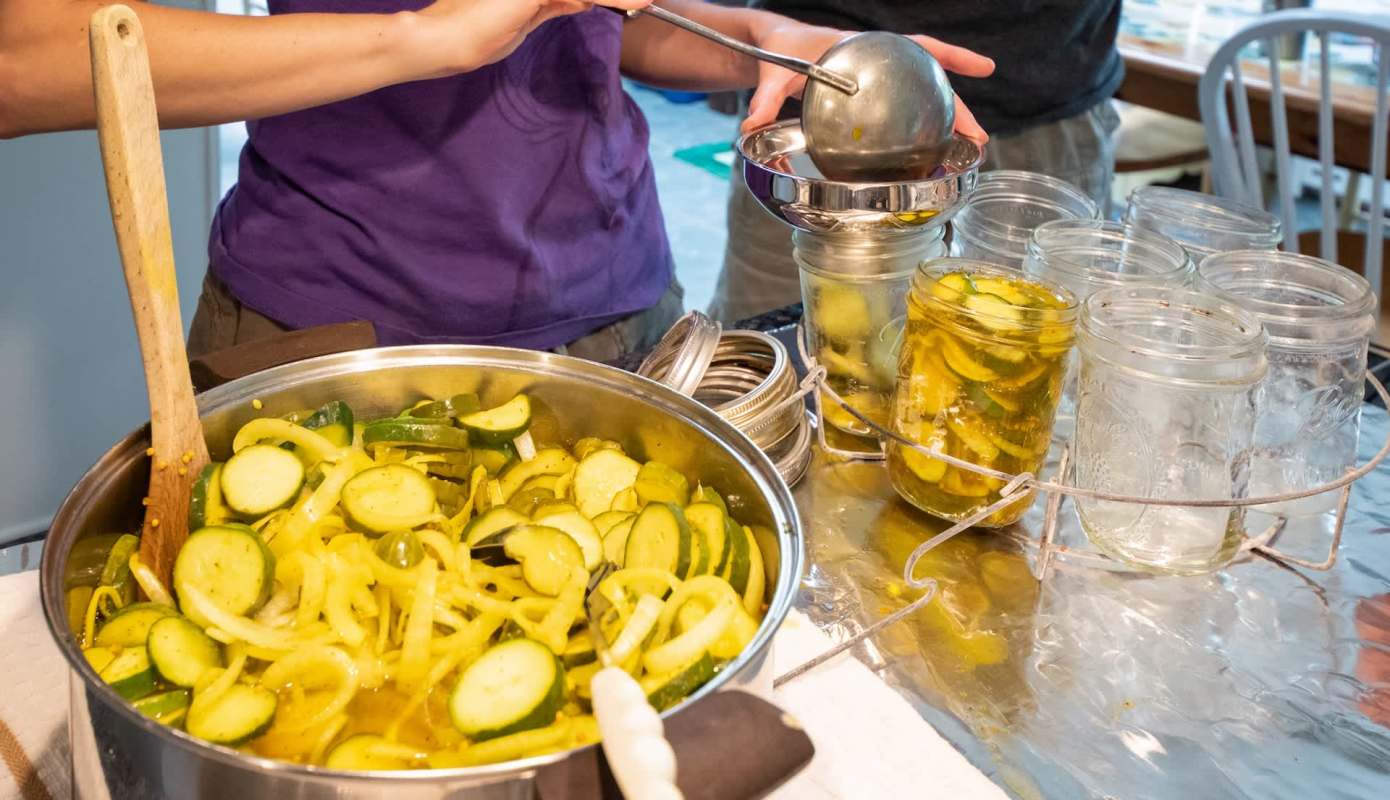
When gardens and orchards start producing more tomatoes, peaches, beans, or cucumbers than a household can use fresh, another option besides buying a complete home-canning setup or watching extra produce go to waste is a community canning kitchen.
In some parts of the U.S., these shared kitchens give residents access to larger-scale equipment and guidance on safe food preservation, allowing them to process much more food than most home kitchens can handle alone.
Here's what to know
A Reddit user shared a long-running resource that suggests these facilities are more common than many people realize, listing local canneries, county canning centers, shared commercial kitchens, and community food business incubators around the country.
The listings include examples in Florida, Georgia, Virginia, Ohio, Wisconsin, Utah, and other states, though the directory also said the information is still a draft.
Rather than purchasing pressure canners, oversized burners, and other specialized tools — and then finding space to store them — people bring their produce, jars, and ingredients to a supervised kitchen where that equipment is already available.
According to the directory, a typical community canning kitchen is "a self-help facility equipped for the preparation, preservation, and heat processing of seasonally available fruits and vegetables, pickles and relishes, sauces and syrups, and of course jams and jellies."
TCD Picks » Quince Spotlight
💡These best-sellers from Quince deliver affordable, sustainable luxury for all




Some sites have trained staff or volunteers who guide users through the canning process, and some also operate as approved kitchens for microbusinesses making products for resale.
More background
Part of the appeal is financial: canning can help families save money and waste less food, but the initial expense may be hard to justify for people who preserve food only during certain seasons. Shared facilities spread those costs across a wider community.
The directory also makes clear that no single model fits these kitchens. Some are county-run facilities for local residents, some are tied to high schools or agricultural education programs, and others serve as commercial kitchen incubators for both food entrepreneurs and committed home preservers.
What can be done?
A county extension office is often the best place to begin.
It may be able to point you to a nearby canning center, and universities sometimes offer canning classes too.
It can also be worth checking with commercial kitchens, food business incubators, agricultural programs, and church-run canneries. Before visiting, ask whether the site permits glass jars, whether it supports pressure canning, what fees may apply, and whether approved recipes are required.
For people without a nearby center, home canning remains an option, especially for high-acid foods. However, low-acid items require a pressure canner and proper safety practices.
The resource also includes startup information for launching a local cannery.
One visitor said about the Citrus County Canning Center in Florida: "This is an AWESOME facility. Has EVERYTHING anyone would need. This is also where I first learned how to can. The people there are so pleasant and helpful also!"
Where can I learn more?
For more ideas on getting the most out of jars and other food-storage staples, these stories cover practical ways households reuse containers, store food, and cut waste. They include turning canning rings into garden markers, keeping jam jars in use, switching to freezer-safe glass storage, and reducing plastic bag waste.
• Gardeners are turning lid rings into plant markers to save money outdoors.
• Bonne Maman fans keep their perfect-size glass jars in circulation after the jam is gone.
• Home cooks are using glass jars for freezer storage to cut waste and save space.
• More households are seeking plastic-bag alternatives in the freezer to reduce kitchen waste.

Get TCD's free newsletters for easy tips, smart advice, and a chance to earn $5,000 toward home upgrades. To see more stories like this one, change your Google preferences here.







