


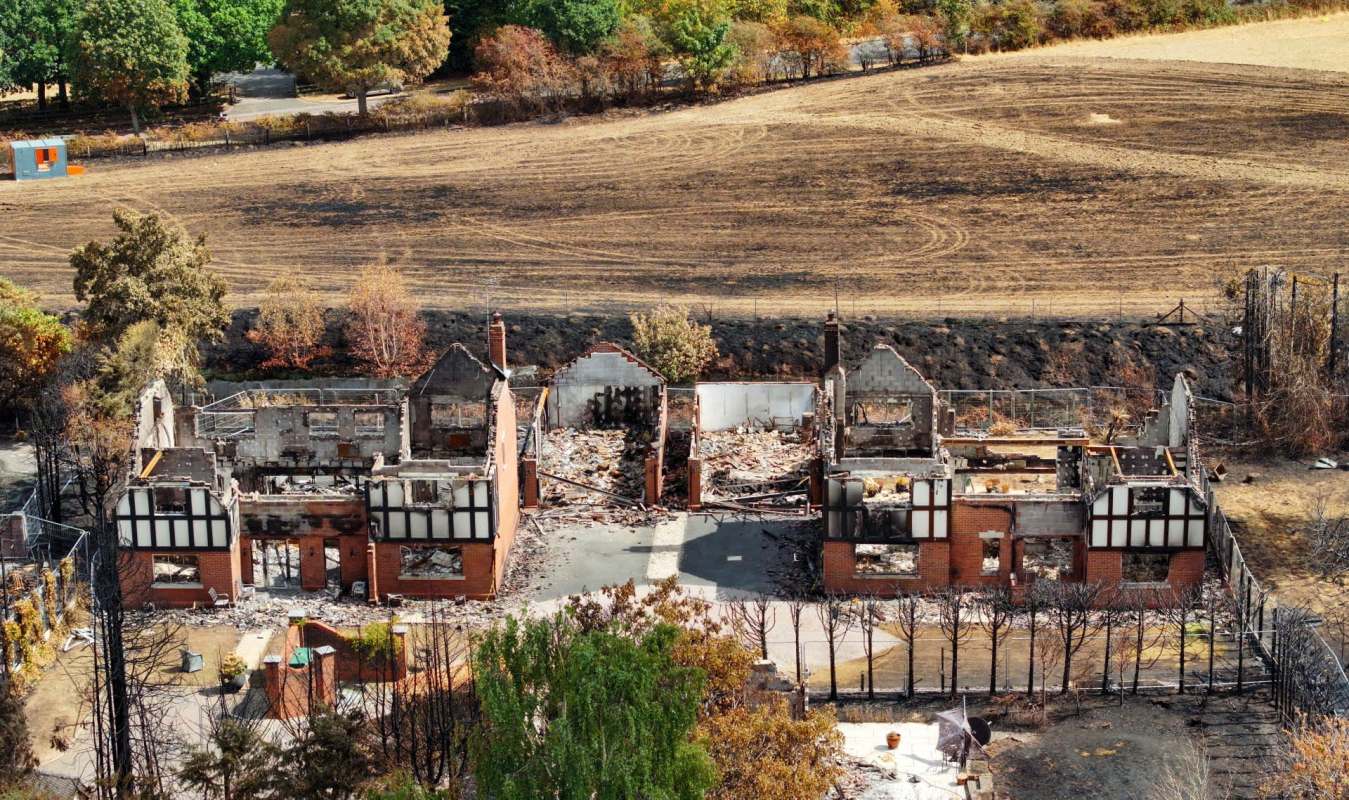
Wildfires that tore through parts of England's Midlands left behind such severe destruction that even veteran firefighters said they had never witnessed anything like it before. In Stourbridge alone, 19 homes were destroyed, and resident Ann Talbot lost two chihuahua puppies to smoke inhalation.
Here's what to know
Exclusive footage and interviews shared by ITV News Central showed how quickly the flames moved on August 13, the hottest day of the year. Officers went door to door telling residents to leave, while Staffordshire and West Midlands Fire Control received nearly 2,000 calls that afternoon — about four times the total from the same date a year earlier.
"I've never seen that in my career," West Midlands Chief Fire Officer Simon Tuhill said.
Tuhill said he had been driven around the outer edge of the incident to gauge how far the fire was spreading, and he described what he saw as "a scene of utter devastation. It took my breath away."
@itvnews The West Midlands saw wildfires like never before in the summer. One of the places affected was Stoke-on-Trent, with some homes completely destroyed. For Ann Talbot, the fire also brought the loss of two of her chihuahua's puppies, which died from smoke inhalation after she initially tried to tackle the blaze herself.
♬ original sound - ITV News
Other Midlands communities were also hit. Crews dealt with homes burning in Warstock near Kings Heath, a fast-moving blaze on Cannock Chase, and another fire in Stoke-on-Trent that began with a disposable barbecue.
Police stopped resident Uttam Shiralkar from going back once the danger became clear.
TCD Picks » Quince Spotlight
💡These best-sellers from Quince deliver affordable, sustainable luxury for all




After he and his wife, Sandy, were shown a photo of their destroyed home, he said, "My mouth was dry. I became numb. I didn't know what to say... And I was horrified."
More background
Hotter, drier conditions can turn grass, woodland, and even backyard gardens into fuel, allowing fires to move with terrifying speed through neighborhoods.
With call volumes described by fire control staff as "constant," "intense" and "relentless," officials activated Operation Willow Beck to route overflow calls to other control rooms around the country, while crews from Yorkshire and the South West were brought in to preserve fire cover.
After first trying to fight the blaze, Ann Talbot said two of her chihuahua's puppies died from smoke inhalation.
"I can't eat, I can't sleep," she said.
Firefighters stayed in Stourbridge for nearly a week, first battling the main blaze and then returning to deal with hotspots.
What can be done?
At the community level, the response depended on emergency coordination. Overflow call handling, mutual aid from other regions, and rapid police evacuations were all part of it.
As wildfire risk grows, stronger planning around heat, drought, and local fire readiness will likely become more important for towns not traditionally associated with major wildfires.
Knowing evacuation routes, following local emergency guidance, and clearing dry vegetation near homes where possible can help households respond faster and reduce immediate danger.
The ordeal has also changed how some families who lived through the fires think about future hot weather.
Sandy said the prospect of another warmer year leaves her worried: "I understand that next year is going to be warmer than this year. And if it is going to be warmer, it just makes me worried that are there going to be more events like this."

Get TCD's free newsletters for easy tips, smart advice, and a chance to earn $5,000 toward home upgrades. To see more stories like this one, change your Google preferences here.






