


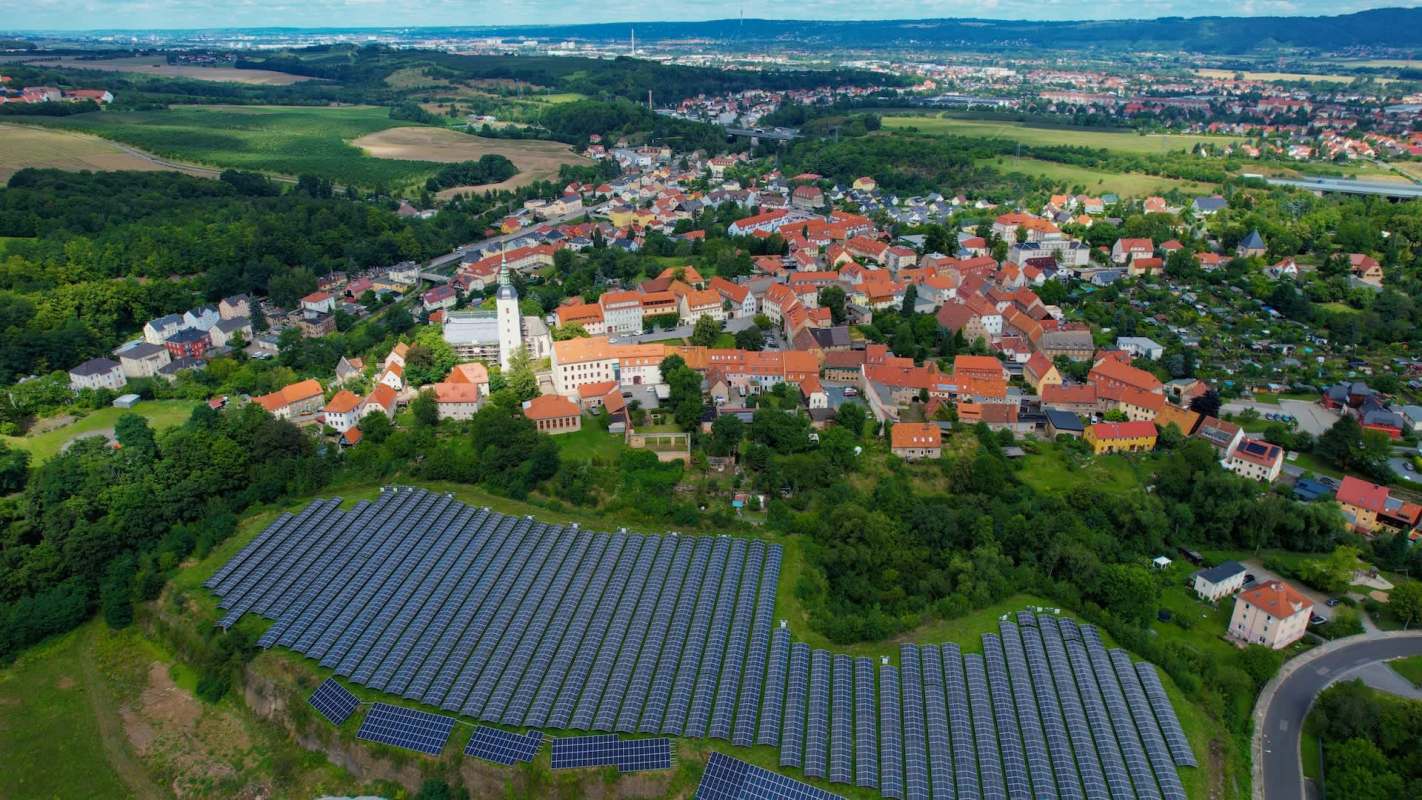
Germany has now formally committed to ending its use of fossil fuels, setting 2045 as the deadline for moving beyond oil, gas, and coal, The Guardian reported.
For Europe's largest economy, that signals a clearer shift in strategy: instead of focusing mainly on emissions bookkeeping, the government is now directly naming the fuels it plans to replace.
Here's what to know
Germany's new government roadmap includes the first explicit fossil-fuel phaseout.
Earlier commitments focused on carbon neutrality rather than a stated end to coal, oil, and gas.
On electricity, the government set a stronger clean-power goal for 2030. Germany wants renewables to supply 80% of its power by 2030, up from 55%, while also adding 12 gigawatts of new onshore wind and reaching 215 gigawatts of solar capacity.
Germany kept its existing coal timetable in place, with 2038 remaining the official phase-out year, while leaving room to bring that date forward to 2035.
TCD Picks » Quince Spotlight
💡These best-sellers from Quince deliver affordable, sustainable luxury for all




It also indicated that methane emissions would fall 30% by 2030 under the global methane pledge signed in 2021.
Andreas Sieber, head of global political strategy at 350.org, acknowledged that the roadmap was a "notable shift" because it turned a fossil-fuel exit into an openly stated policy objective.
More background
Because Germany is one of the world's biggest industrial economies, its energy policy can influence investment, infrastructure decisions, and political momentum across Europe.
The roadmap arrived after years of public and political fighting over how quickly Germany should cut its reliance on fossil energy.
Campaigners said stronger clean energy goals don't eliminate those tensions; Sieber argued that the ministry for economic affairs and energy was still aggressively backing more gas use.
"The economic ministry keeps sabotaging the transition away from fossil fuels," he noted.
Sieber argued that dependence on fossil fuels left households and businesses in Germany and elsewhere exposed to volatile prices, market instability, and geopolitical risk. By contrast, he observed, domestic sources such as wind and solar can gradually improve energy security.
That tension was already on display in 2023, when Germany's effort to replace gas boilers with heat pumps became a political flashpoint after a heating law drew attacks from the far right.
The episode showed how difficult it can be to turn long-term climate goals into changes people feel in their homes and on their utility bills.
What's being done?
At the government level, the roadmap points to more renewable power, lower methane emissions, and the eventual end of coal use.
Together, those steps are meant not just to cut pollution but to build an energy system that depends less on imported fuels.
Former German climate envoy Jennifer Morgan said the country's next task is to hasten the electrification of transport and heating. That would mean linking the expansion of wind and solar to cleaner cars, heat pumps, and other technologies powered by renewable electricity.
"Accelerating the shift from coal, oil and gas to clean renewables will bolster energy independence and insulate consumers from price shocks at a critical moment. However, a roadmap is only the starting line," she remarked.
Where can I learn more?
These stories add context to Germany's phaseout pledge and the broader shifts underway in energy policy and power generation. They cover Germany's rising renewable output, international coal deadlines, and the broader clean-energy transition.
• Germany has produced so much renewable power for the grid that records keep falling.
• G7 governments have made a historic decision to phase out coal power by 2035.
• The International Energy Agency expects clean energy to overtake coal.

Get TCD's free newsletters for easy tips, smart advice, and a chance to earn $5,000 toward home upgrades. To see more stories like this one, change your Google preferences here.






