


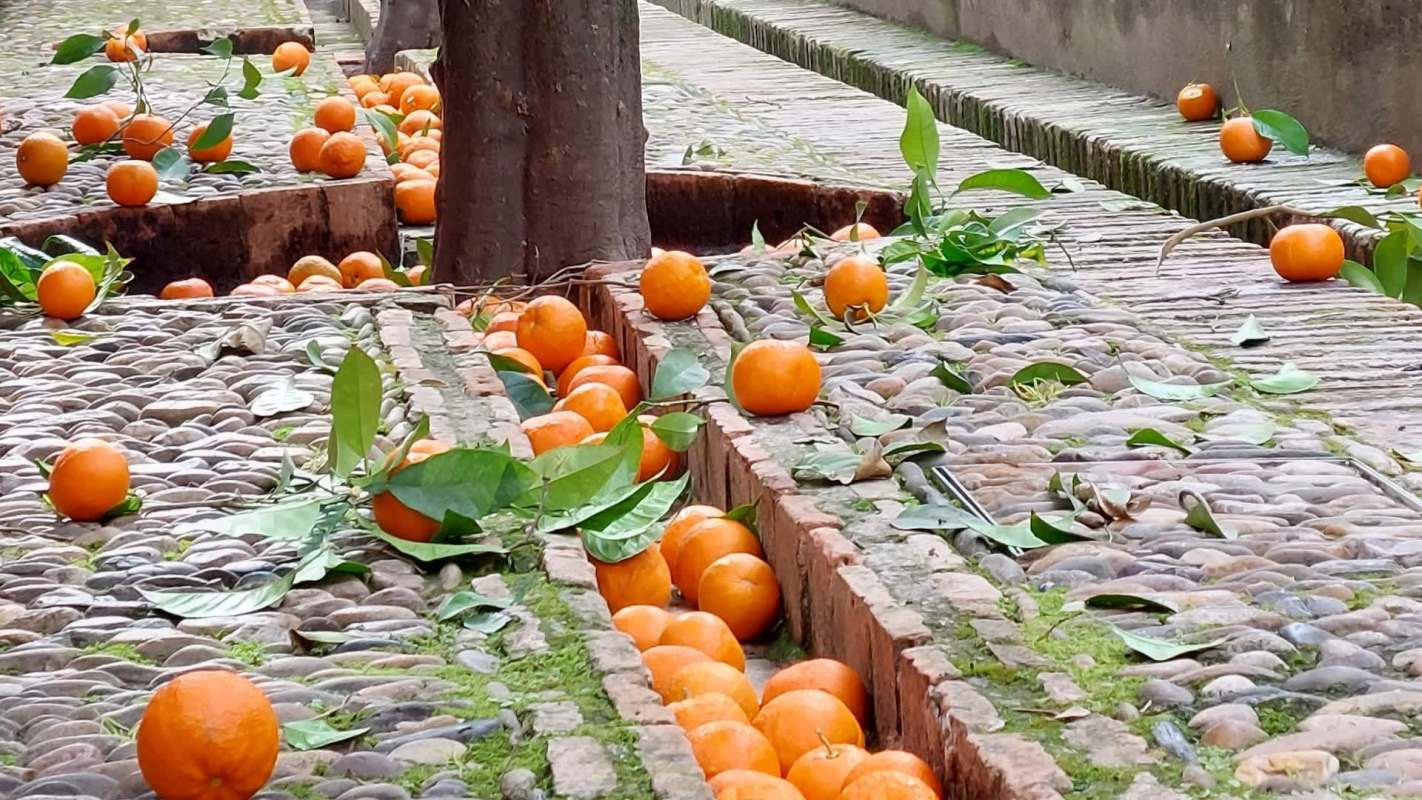
Most cities treat fallen fruit as little more than a street-cleaning problem. In Seville, it has become an energy opportunity.
Rather than being treated as food, nearly 13.2 million pounds (six million kilos) of bitter oranges in the Spanish city are used to produce electricity.
Here's what to know
Instagram creator @grantonsoil shared what the city does with its oranges based on reporting by Euronews and Good News Network.
Seville oranges are bitter and too sour to eat straight from the tree, so they drop and become street litter.
Emasesa takes about 38.6 US tons (35 tonnes) of the collected oranges to its Copero facility for juicing, where methane from the digester powers a generator, and the remaining peel is made into compost.
More background
This is not a case of diverting edible food from people. These oranges are largely ornamental city fruit that are poorly suited to eating fresh, so the main choice is not between feeding people and making energy. It's a choice between wasting the fruit and putting it to use.
TCD Picks » Quince Spotlight
💡These best-sellers from Quince deliver affordable, sustainable luxury for all




Organic waste can attract pests, drive up cleanup costs, and release planet-warming gases as it decomposes. Capturing methane in a controlled system and using it for power is a better outcome than allowing that material to break down unmanaged.
Cities everywhere generate overlooked waste streams, and projects like this show how local governments and utilities can ease disposal burdens while getting more value from what they already collect.
What's being done?
The city is using a municipal waste-to-energy setup in which the fallen oranges are collected, juiced, turned into power, and ultimately composted.
That type of process will not look identical everywhere, but the model can be adapted. Other communities can assess whether yard trimmings, food scraps, or other organic waste could be redirected into composting or anaerobic digestion instead of being thrown away.
If you're looking for fruit to eat rather than ornamental plantings, buying directly from growers can help reduce waste and support local food systems.
Where can I learn more?
Plenty of other examples show food scraps being put to use in unexpected ways. These stories cover banana peels, rotting food, peanut shells, leftover orange peels, and disease-resistant citrus trees.
• Communities are using banana peels for biochar to create a useful energy-rich material.
• Researchers are zapping rotting food with electricity to make industrial chemicals instead of waste.
• One teenager built a device using peanut shells to generate electricity from farm waste.
• At home, cooks are finding uses for leftover orange peels instead of tossing them.

Get TCD's free newsletters for easy tips, smart advice, and a chance to earn $5,000 toward home upgrades. To see more stories like this one, change your Google preferences here.






