


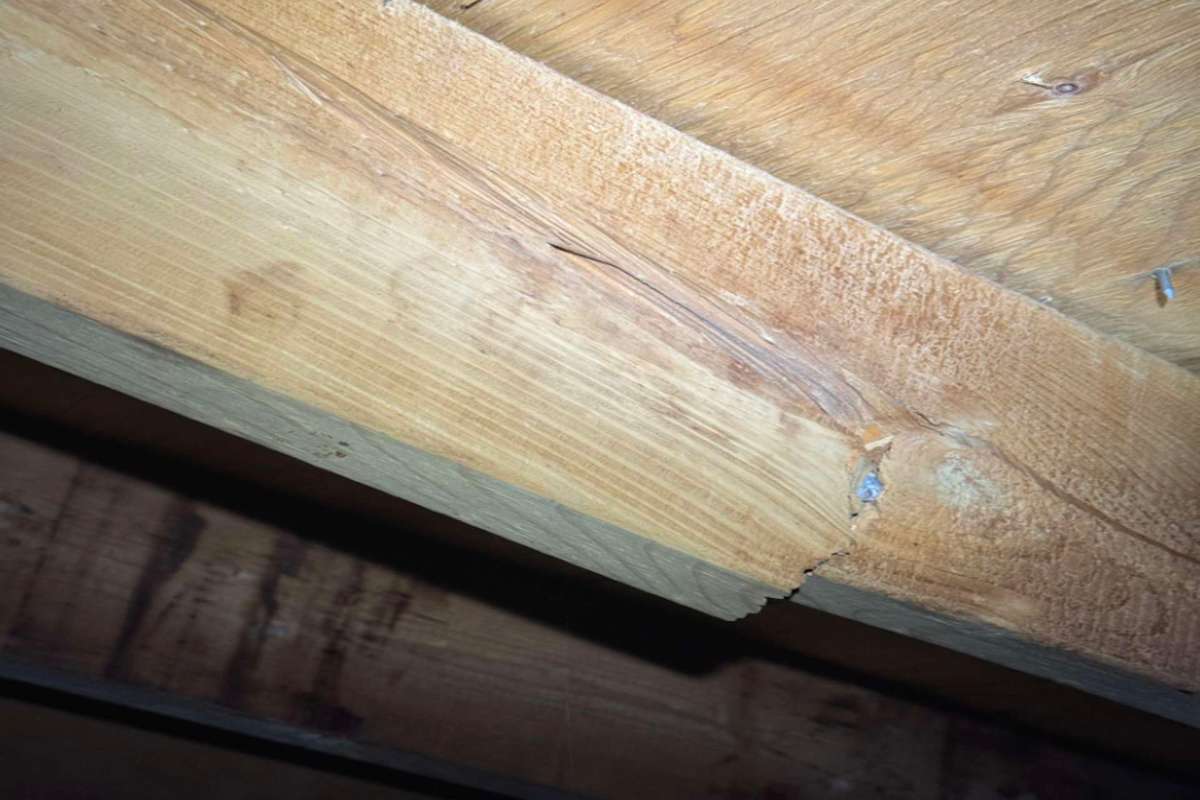
A new homeowner went into the attic for a casual look and came away with a question many buyers dread: Is that crack in the roof framing just cosmetic, or the start of an expensive repair?
The answer they got was divided between a calm home inspector and a far less relaxed internet.
Here's what to know
After buying the house, the owner said in a Reddit thread that a routine trip into the attic revealed what looked like a crack in one rafter. They relayed the inspector's opinion that it resembled ordinary checking around a knot.
"From the photos, there doesn't appear to be significant separation, displacement or deformation of the rafter," the inspector concluded, per the original poster.
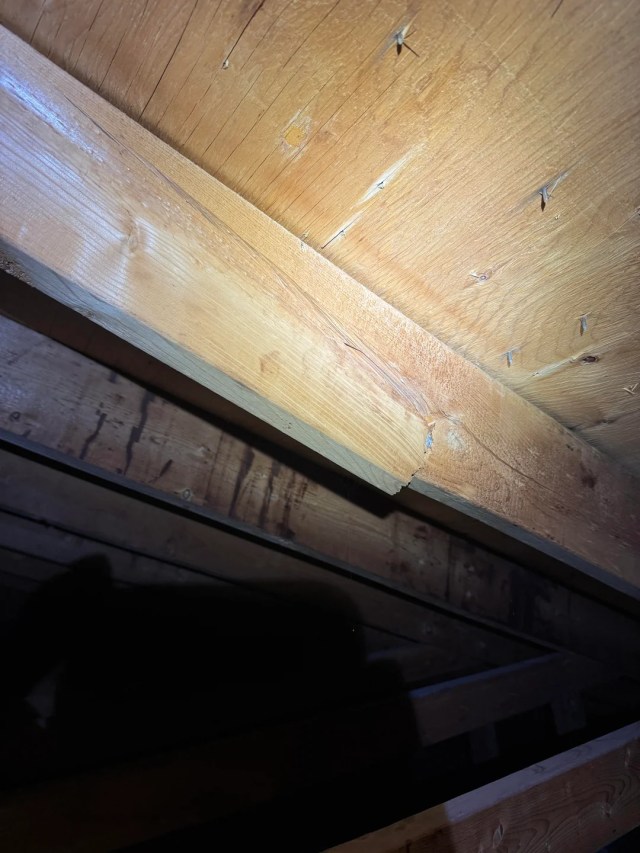
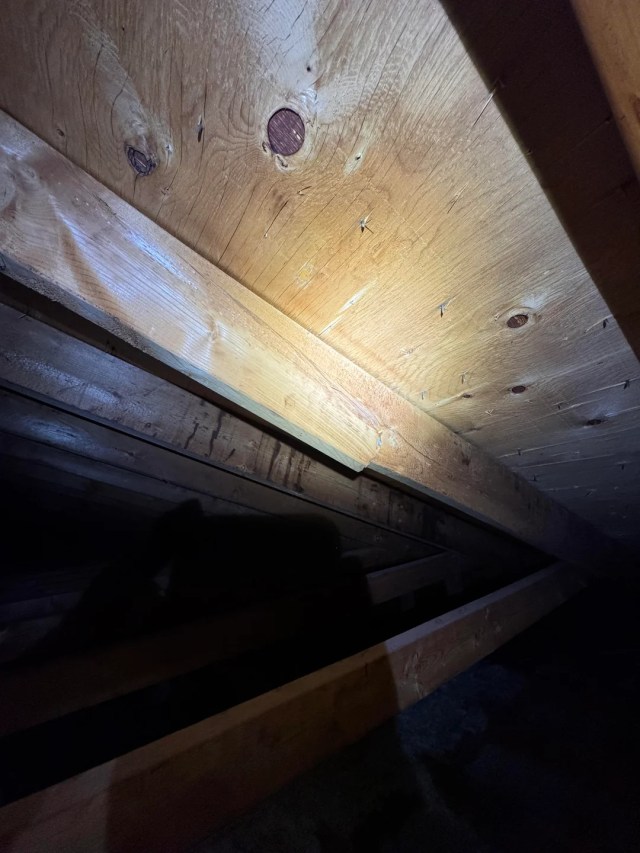
Replies quickly centered on reinforcement rather than observation alone.
"Sister it for sure," one commenter wrote, referring to the process of attaching a new piece of wood along a damaged or weak structural area, like giving it "a sister" to help. A targeted reinforcement job is usually far less disruptive than waiting for a framing problem to start affecting the roof deck, ceiling, or shingles.
TCD Picks » Quince Spotlight
💡These best-sellers from Quince deliver affordable, sustainable luxury for all




Another added, "Jack back into place, sister 2x4's on both sides, call it a day."
More background
The inspector's guidance was straightforward: "I would simply keep an eye on it for any noticeable change or progression."
When commenters asked what might have caused the damage, the homeowner responded, "No idea, just bought home, no trees though, just roof."
From there, some people blamed a defect around the knot, while others thought the rafter may have been hit during roofing work.
Catching a framing issue in the attic before it turns into a sagging roofline, cracked drywall, or a leak can help homeowners avoid a much larger repair bill.
Once a roof issue spreads, it can also disrupt insulation and moisture control, driving up maintenance costs and leading to even more expensive repairs.
What can be done?
The first step in dealing with a problem like this is to document it. Take clear photos, note the location, and watch for changes such as widening cracks, sagging, or movement in nearby framing.
If there is any doubt, getting a second opinion from a licensed roofer, contractor, or structural engineer can help.
One commenter who identified themselves as a structural engineer cautioned, "Wrong, you need an engineer to state length and fastening pattern."
If a professional does recommend reinforcement, sistering with properly sized lumber and structural fasteners is a common fix. Still, internet consensus is no substitute for an on-site inspection, especially when the concern involves roof framing in a newly purchased home.
Checking the attic and dealing with a single damaged member early could save homeowners money compared with broader roof, ceiling, and water damage repairs later.
Where can I learn more?
These stories cover similar homeownership surprises and repair questions that can come up when a roof or framing issue turns up.
• One buyer paused after spotting a red flag roof before closing on the house.
• A tenant recoiled when a landlord's duct tape home repairs raised basic safety questions.
• In the U.K., buyers were warned to keep an eye out for knotweed.
• In Texas, one homeowner fought to get hurricane-proof roofing approved despite HOA resistance.

Get TCD's free newsletters for easy tips, smart advice, and a chance to earn $5,000 toward home upgrades. To see more stories like this one, change your Google preferences here.






