


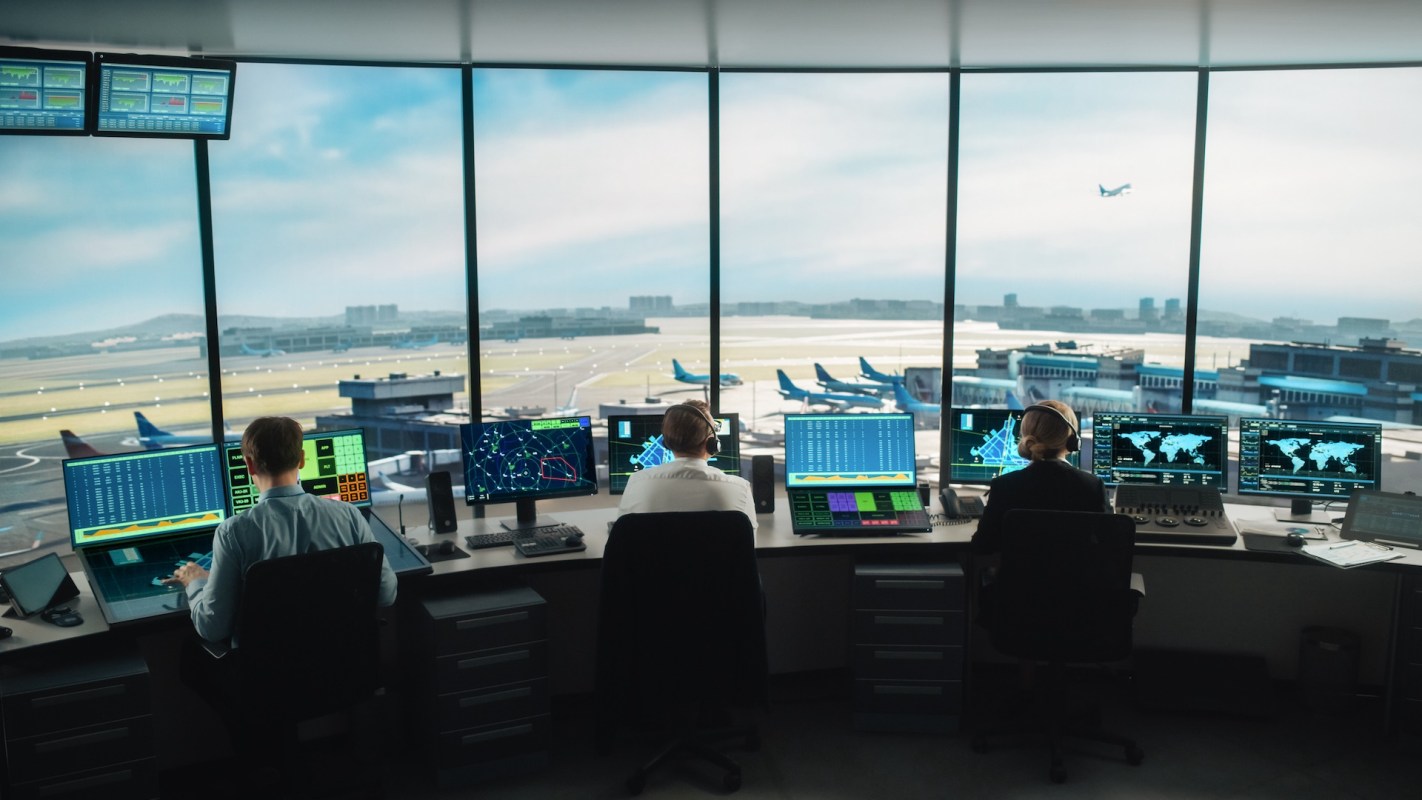
Artificial intelligence may soon take on a role in managing one of the country's most crowded air corridors.
In the Washington, D.C., region, federal aviation officials are preparing to deploy a system to cut down on delays and cancellations that can affect vacations, work trips, and freight movement well beyond the capital.
Here's what to know
According to The Wall Street Journal, Washington will be the first area to use SMART before the software is used nationwide. The name stands for Strategic Management of Airspace, Routes, and Trajectories.
The tool is designed to compare airline schedules with factors including weather, runway availability, and other operating limits so conflicts can be identified in advance. At the start, the Federal Aviation Administration will use it to support decision-making when disruptions occur.
That initial deployment is narrower than some aviation officials had anticipated. The plan is to begin with a limited version before moving into broader testing and additional features.
Federal officials also plan to establish a central office for the tool at Department of Transportation headquarters.
TCD Picks » Quince Spotlight
💡These best-sellers from Quince deliver affordable, sustainable luxury for all




More background
Aging infrastructure and staffing shortages have put long-term pressure on the FAA's air traffic system. When weather problems or other constraints emerge, delays can spread from one airport to another.
For travelers, that can mean missed connections, long airport waits, and mounting uncertainty. For communities and businesses, it can mean delayed deliveries, disrupted work trips, and strain on a system that already struggles during peak travel periods.
"The way we manage traffic today is chaotic, and we can do better. We need to manage that at the FAA, rather than rely on commercial airlines to simply schedule however they want," FAA Administrator Bryan Bedford, a former regional airline executive, said in Senate testimony, per the Journal.
What's being done?
SMART is one piece of a larger federal effort to modernize aviation. The Trump administration has directed billions of dollars toward updated air traffic technology while also trying to expand the hiring and training of controllers.
Air Space Intelligence received a 12-year, $875 million government contract to build SMART and a related system. Once the software is deployed nationwide, it is expected to help the FAA and airlines spot conflicts, spread out arrivals more effectively, and plan routes further in advance.
The FAA has also been talking with airlines about coordinating schedules. That is a sensitive area because carriers compete intensely for departures at certain times of day.
Airlines for America, the trade group for major U.S. carriers, said SMART could improve safety, increase capacity, and boost efficiency in ways that would benefit travelers and shippers.
Where can I learn more?
Transportation and forecasting systems offer a look at how AI is being used to ease congestion and plan around disruptions.
• In China, high-speed rail is fully autonomous, showing how AI can coordinate packed networks.
• Google says AI-timed traffic lights are easing congestion in cities by smoothing vehicle flow.
• Microsoft rolled out an AI weather model that could sharpen storm planning.
• Google DeepMind says its weather algorithm can predict conditions with unusual speed and accuracy.
• Planette launched an AI-backed forecasting tool to extend long-range weather visibility for travelers.

Get TCD's free newsletters for easy tips, smart advice, and a chance to earn $5,000 toward home upgrades. To see more stories like this one, change your Google preferences here.






