


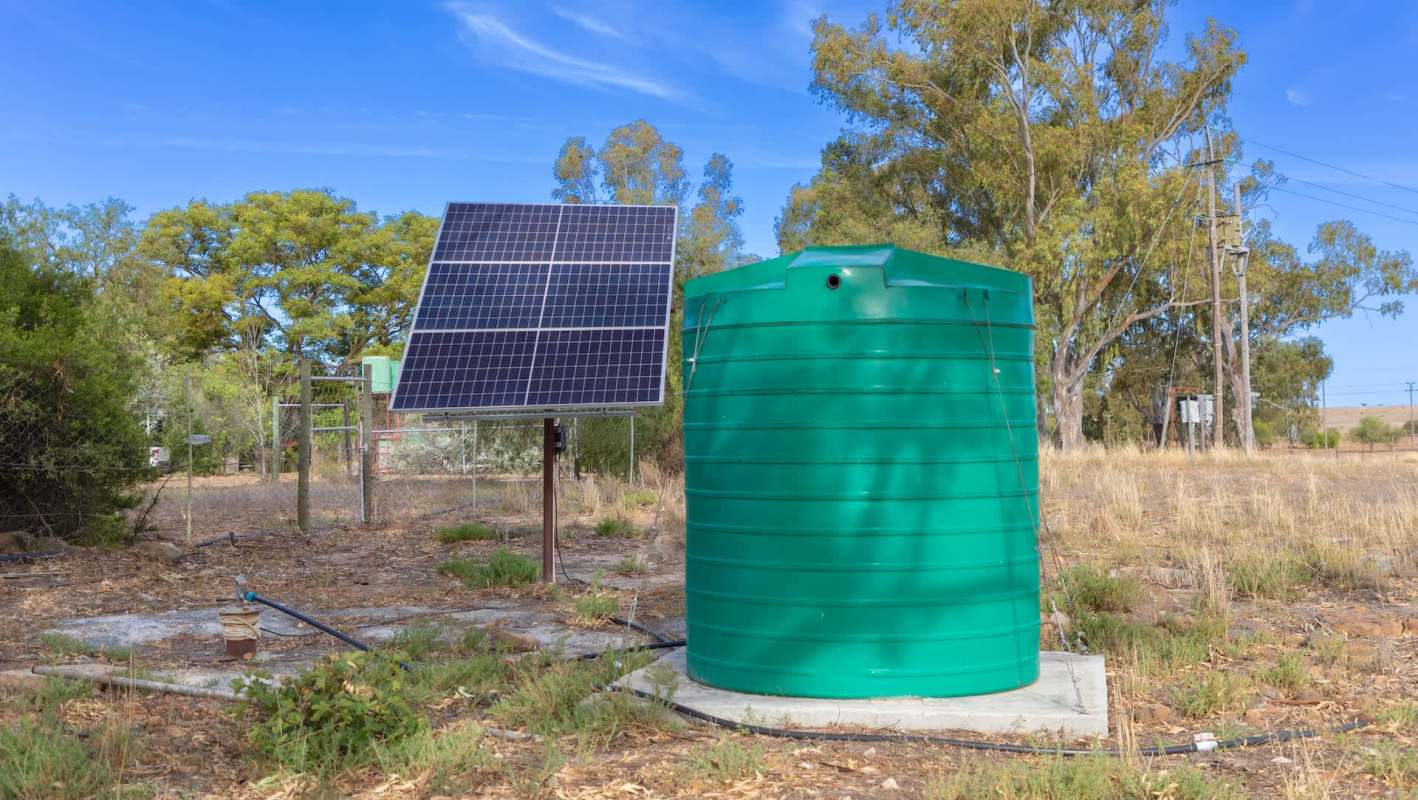
A weekend-only owner of a small country house asked how to run well water on solar, and the strongest advice from other Reddit users was not to overbuild, advising that the lowest-cost, simplest path is often choosing the smallest pump that can still meet the home's needs.
Here's what to know
On a post in Reddit's r/offgrid community, the homeowner described "a little house in the fields" and said the well sits 328 feet (100 meters) from the home and about 16 feet (5 meters) lower. They asked what kind of solar pump and panel setup they would need.
The poster explained in a comment that the house is not occupied full time: "We do use the house for weekends not for permanent living. We need water for the toilet and do the dishes mainly with a small gas heater."
Advice quickly turned to keeping the equipment small. "First, the pump should be the smallest one possible that does the job. No need for an oversized pump," one commenter wrote, also saying a soft-start model would help. That same reply mentioned solar generator brands such as EcoFlow, Bluetti, and Jackery, along with standard residential panels in the 450W range.
Storage became a key theme once the homeowner said toilet use after dark mattered. As another commenter put it, "Solar only produces electricity while the sun shines. Solar powered water pump system does not pump water at night."
More background
A recurring point in the replies was that occasional, low-volume use should shape the design. For a house used only on weekends, building around heavier assumptions could mean paying for a larger pump, inverter, and battery bank than the situation really calls for.
TCD Picks » Quince Spotlight
💡These best-sellers from Quince deliver affordable, sustainable luxury for all




Users also said the job cannot be judged by elevation alone. Along with the 328-foot pipe run and the 16-foot rise, performance can be affected by pipe friction, the well's recovery rate, and whether the setup uses a submersible pump or a jet pump. In other words, the system should be sized around total head and water demand, not distance by itself.
Based on the uses described, commenters viewed the likely water load as fairly small. One person said a suitable pump might average about 200 watts while running and that "the smaller roughly 1 kWh power stations will net you a couple hours of runtime." Another argued that "In a sunny week, a single 400w panel can easily gather over 8 kilowatt-hours" and would likely be more than enough for basic weekend pumping.
What can be done?
The idea that came up most often was to add stored water as a buffer. Instead of making one solar pump handle every toilet flush or faucet use on demand, commenters suggested slowly moving water into a tank or buried reservoir and then relying on a separate, smaller pressure pump near the house.
That arrangement was presented as a way to reduce both system strain and cost. Stored water could cover nighttime toilet use without requiring a much larger battery, while the solar pump could do most of its work during daylight.
Where can I learn more?
These stories all point back to the same practical takeaway from the Reddit thread: Match energy demand to the job. For a weekend house where commenters favored a small pump, stored water, and modest power needs, cutting waste elsewhere can help keep the whole setup simple.
• A homeowner found cleaning a hot water heater can improve efficiency and reduce wasted energy.
• A New Hampshire homeowner spent three years building solar backup for his well pump and insulin fridge.
• Another homeowner said cleaning the air conditioner made a noticeable difference in power use.

Get TCD's free newsletters for easy tips, smart advice, and a chance to earn $5,000 toward home upgrades. To see more stories like this one, change your Google preferences here.






