


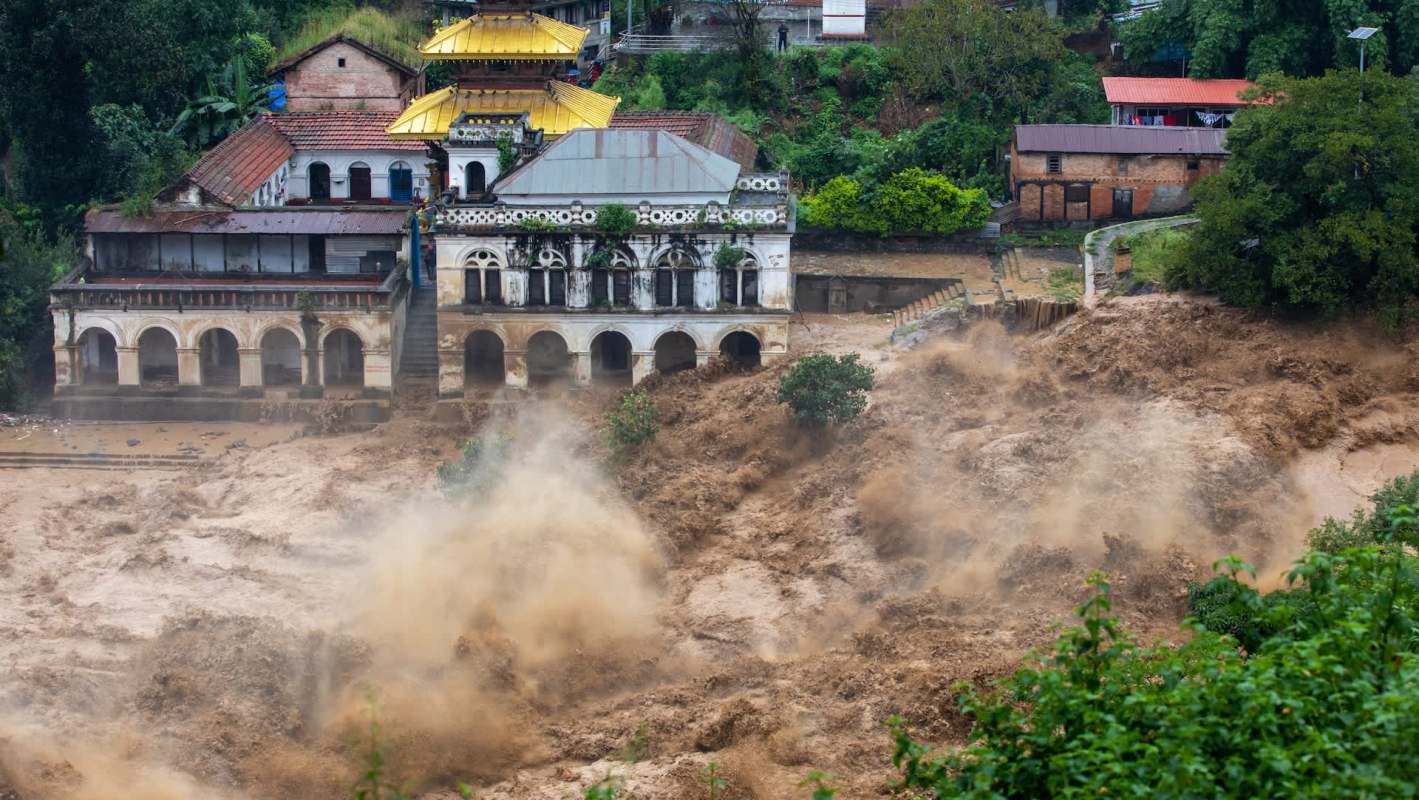
Deadly floods in Nepal, punishing heat waves across the United States and Europe, and wildfire-conducive drought in the American West all show that extreme weather is becoming harder to ignore, according to Inside Climate News.
But even with mounting scientific evidence that a hotter planet is intensifying these events, many people still do not see climate change as part of the story.
Here's what to know
Research summarized by Inside Climate News highlights that extreme weather is happening more often and hitting harder. But public recognition of its connection to climate change has not kept pace.
Anthony Leiserowitz, director of the Yale Program on Climate Change Communication, said many people do not arrive at that link on their own.
"Most people do not automatically, intuitively, on their own, connect that event — a flood, a heat wave, a wildfire — to climate change," Leiserowitz said. "Climate change is still a relatively abstract idea for many, many people."
Research has found an uneven relationship between lived experience and climate views. A 2019 review of 73 papers found mixed results on whether extreme weather changes public opinion on climate change.
TCD Picks » Quince Spotlight
💡These best-sellers from Quince deliver affordable, sustainable luxury for all




A 2024 study found that among climate-fueled weather events, only fires produced a modest but meaningful increase in recognition of global warming and support for action, and even that boost faded quickly.
Leiserowitz said a key obstacle is "psychological distance," meaning how near or personal a crisis feels. When people do not view an event as touching them, their relatives, or their community, they are less likely to treat it as urgent.
More background
That disconnect could also weaken people's ability to prepare for and adapt to climate risks.
Leiserowitz said responses can range widely, and they do not all require the same level of awareness or motivation, whether someone is making smaller household changes or pressing elected officials for larger climate measures.
He also said extreme weather can become a "teachable moment."
"Suddenly, the public, the media and political leaders all focus their very scattered and limited attention on the same event. A lot of this is just about helping people connect the dots for the very first time. And once you've done that, you've taught them something, and they are now primed to make that connection themselves in the future," Leiserowitz said.
The University of Colorado Boulder's Media and Climate Change Observatory found that worldwide climate news coverage has fallen 38 percent from its 2021 high.
Another report from 2025, based on surveys in eight countries, found widespread agreement that climate coverage matters, but only about four in 10 people said the media does a good job explaining the causes of climate change and possible solutions.
Max Boykoff, a professor of environmental studies at the University of Colorado Boulder, told the university, "People typically do not start their day with a cup of coffee and the latest peer-reviewed journal article. Instead, they turn to media — television, newspapers, radio, social media — to understand how science and policies could impact their everyday lives. When the media fail to cover these pressing climate issues abundantly and accurately, people may not recognize how climate change shapes their daily lives, livelihoods and challenges."
What can be done?
Climate attribution science has advanced rapidly. Leiserowitz said that understanding can influence choices at many levels, from putting together an emergency go kit to urging public officials to take stronger climate action.
"If you don't know about climate change, you can't make decisions knowing that the events that you're already experiencing are going to become more frequent, more severe, and there's going to be more surprises," Leiserowitz said. "Now, if you understand that, you can start to take actions to both mitigate the risk to reduce and limit climate change, but you can also be taking the incredibly important actions now that are about preparing for and adapting to that future world."
Where can I learn more?
These stories make that disconnect easier to see. They show deadly heat, rising economic losses, and ecosystem damage playing out in specific places, bringing a global trend down to the local level.
• In global rankings, one country is bearing the brunt as extreme weather losses mount.
• Across the central United States, deadly temperatures envelop communities as millions remain under heat alerts.
• Across Western U.S. cities, history-making heat wave signals the punishing extremes scientists expect more often.
• In the United States, close to the limits of survivability, heat and humidity compound danger.
• In Ecuador and Colombia, disturbing consequences of recent extreme weather are threatening fragile páramo ecosystems.

Get TCD's free newsletters for easy tips, smart advice, and a chance to earn $5,000 toward home upgrades. To see more stories like this one, change your Google preferences here.






