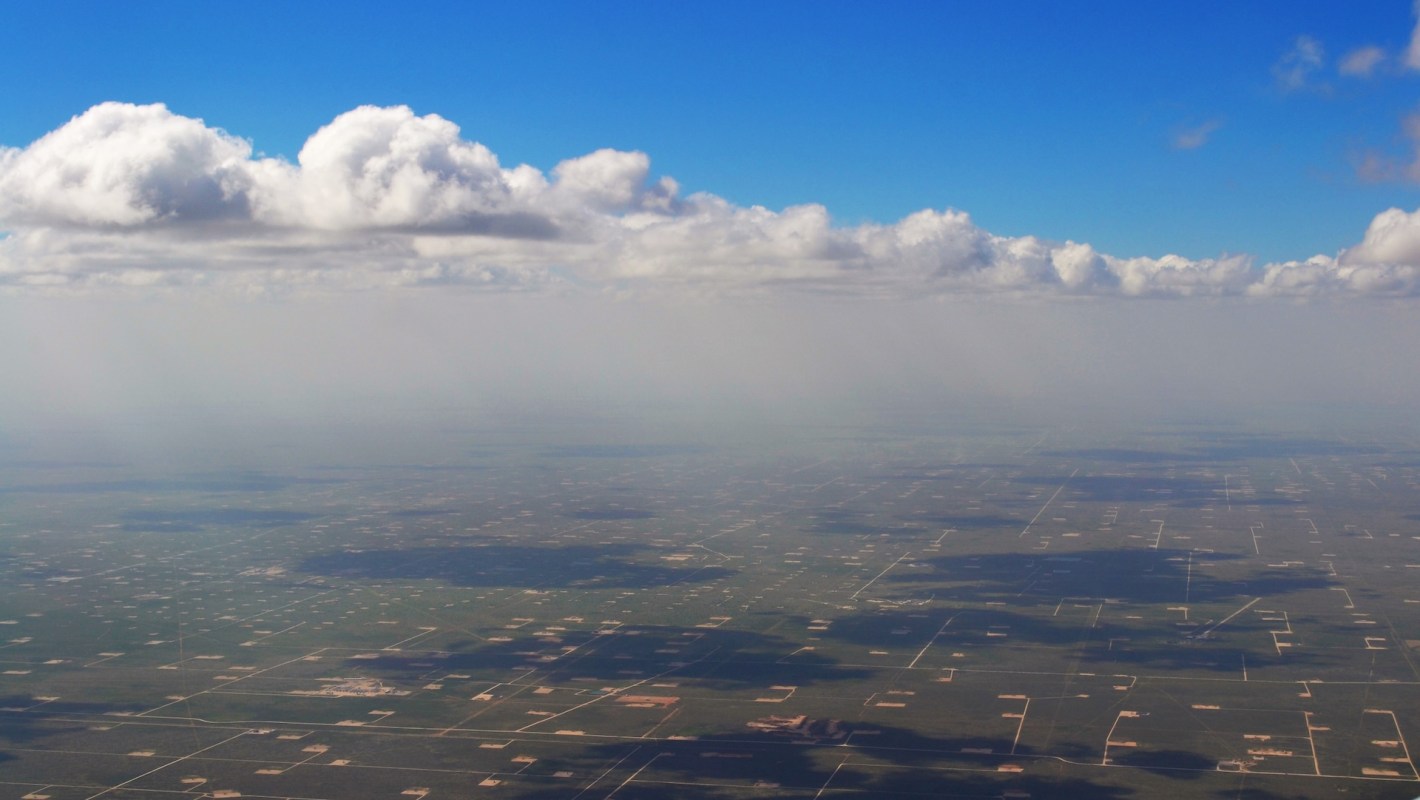
Two new studies tie oil and gas operations near Loving, New Mexico, to radioactive air pollution and high ozone levels.
For residents living among wells, flares, and processing facilities, the findings back up what many say they have been seeing and breathing for years in the Permian Basin.
Here's what to know
Readings from an air-monitoring station in Loving, collected between 2023 and 2024, showed airborne radiation "rising up to about five times normal background levels, depending on wind direction," according to Capital & Main's coverage of a new peer-reviewed study.
The study, published in the journal Elementa last month, relied on measurements from just one monitoring site, so the authors said they couldn't pin the pollution to a single source. But co-author and atmospheric scientist Detlev Helmig told the investigative outlet, "The analyses of our monitoring data provide evidence that oil and gas operations in the Loving area are a likely source of atmospheric releases of radioactivity."
The paper named several likely sources: flaring, gas-powered compressors, and ponds "used to store or manage the wastewater that is pulled from the ground during [oil and gas] extraction." Its co-authors noted the potential for exposures to airborne radiation to raise lung cancer risks.
Some of the co-authors on the radioactivity study also worked on a study exploring associated ozone findings, as yet unpublished but presented earlier this year. As Capital & Main highlighted, the researchers said the chemicals driving ozone formation around Loving appear to come mainly from oil and gas production rather than vehicle traffic or smoke drifting over from nearby cities.
TCD Picks » Quince Spotlight
💡These best-sellers from Quince deliver affordable, sustainable luxury for all




Ozone can damage the lungs and worsen conditions such as asthma and emphysema.
More background
Loving is surrounded by dense oilfield development. Hundreds of active wells sit within two miles of town, and processing facilities are nearby. Capital & Main reporter Jerry Redfern has been following the story of pollution associated with these operations in the hydrocarbon-rich Permian Basin for years.
Back in 2024, Loving resident Jodee Zuñiga told Redfern, "Growing up, the oilfield presence wasn't at our back doors like that. In these past few years, it really has pushed into our doors, and it's right, you know, in our homes at this point."
In 2021, Redfern spoke with families impacted by oil and gas operations and alleged contamination who said they had been calling on state officials to help address the problems.
What's being done?
New Mexico has begun upgrading its monitoring, though critics say the response has been slow.
The state received a $480,000 mobile radiation-monitoring van in April that officials say can measure radon and other radioisotopes, Capital & Main reported.
Jeremy Nichols of the Center for Biological Diversity told the outlet that the state should seek an ozone nonattainment designation, which could force tougher pollution controls on oil and gas operations.
Where can I learn more?
These stories cover more of what's driving Loving's pollution problems and the choices keeping fossil-fuel infrastructure running:
• Oil and gas emissions are already driving asthma and premature deaths well beyond the Permian Basin.
• New liquefied natural gas exports carry a climate footprint worse than coal, undercutting cleaner-fuel claims.
• Across the U.S., keeping old coal plants open is costing Americans hundreds of millions.
• Federal data show wind and solar produced more electricity than coal.
Communities closest to oil and gas operations are often the first to feel the effects.

Get TCD's free newsletters for easy tips, smart advice, and a chance to earn $5,000 toward home upgrades. To see more stories like this one, change your Google preferences here.