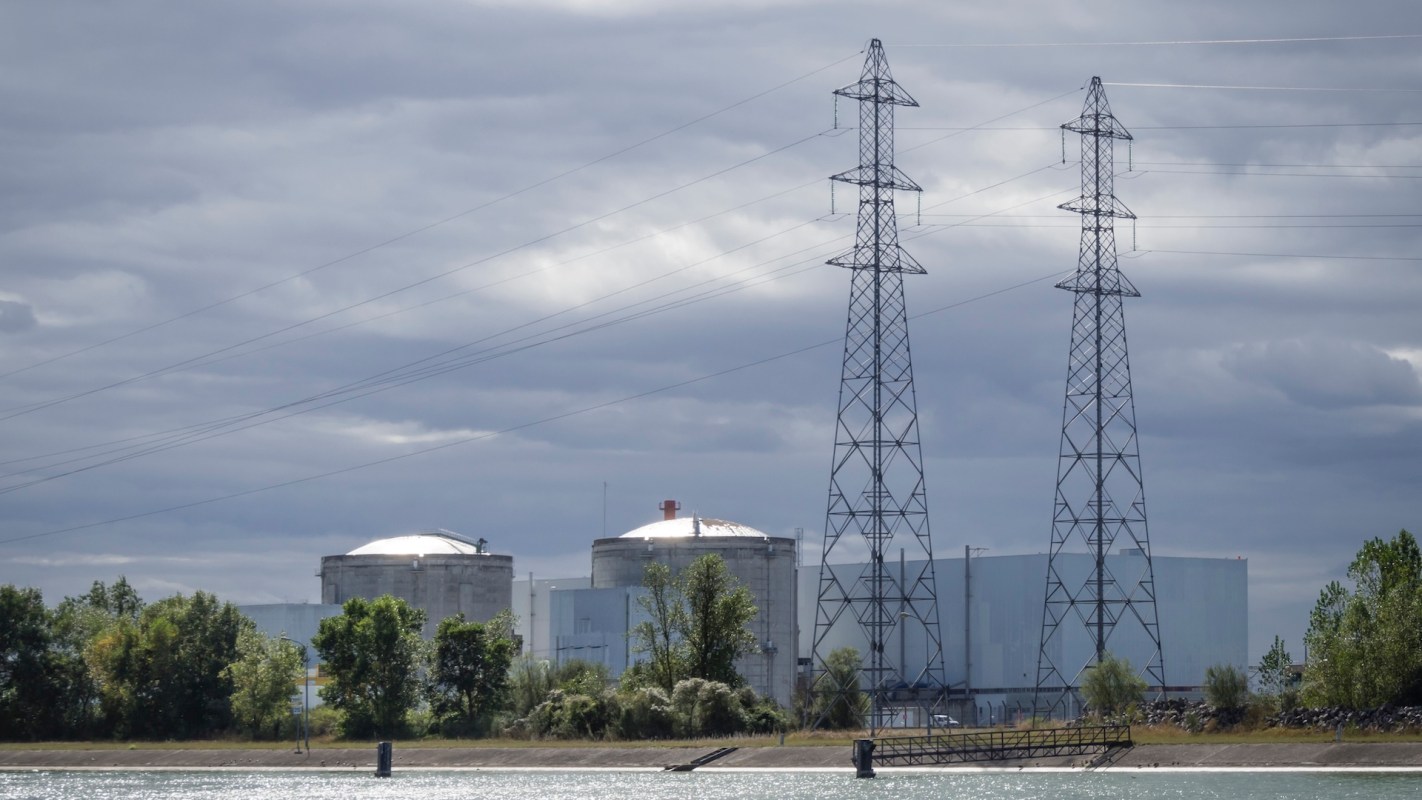
European heat waves have driven demand for air conditioning — but can the continent's nuclear plants handle it?
Here's what to know
Canary Media reported that reactors in France and Switzerland shut down when river water got too warm, while plants on the Danube in Romania, Hungary, and Bulgaria reduced output or stopped operating after drought pushed water levels below their intake pumps.
Cooling a nuclear plant takes huge volumes of water, and because many European reactors are sited along rivers, they can run into trouble when those waterways become too hot or depleted. Many cities have rules in place that protect aquatic ecosystems by capping how much heated water can be released back into the river.
Mark Z. Jacobson, a Stanford University professor who supports replacing nuclear power with renewable energy, wrote on X, "Strange that anyone would support new nuclear, which depends on cooling, in the face of an ongoing superlinear global temperature rise."
Supporters of nuclear power argue temporary heat-related cutbacks should not be treated as evidence that the technology itself is broadly unsound. In normal operation, reactors still supply large volumes of low-carbon electricity and can strengthen grid reliability.
More background
Specialists say the issue reflects the siting and design of certain facilities more than a fundamental flaw in nuclear energy. As Canary Media reported, many plants in Asia are located by the coast, and reactors in North America are more likely to use cooling towers to reduce reliance on overheated river water.
TCD Picks » Quince Spotlight
💡These best-sellers from Quince deliver affordable, sustainable luxury for all




However, Jacopo Buongiorno, who heads science and technology at MIT's Nuclear Reactor Laboratory, said the Danube plants were built for conditions that no longer hold, Canary Media reported. Of reactors constructed between the 1970s and 1990s, he said, "there was no awareness of the dramatic changes in river flow rates and temperatures that we are witnessing now."
When electricity supplies tighten during heat waves, households can face higher costs and greater strain on the grid at the very moment cooling becomes the most critical for health and safety.
There are still questions about the role nuclear energy should play in the shift away from dirty energy sources, considering its radioactive waste, safety concerns, extremely high upfront costs, and connections to weapons proliferation.
What's being done?
For plants where drought leaves too little water for existing pumps to reach, Buongiorno said "moving the intake is technically feasible, albeit expensive."
Madison Hilly, managing director of the nuclear consultancy Radiant Energy Group, said, "There are multiple solutions to this," per Canary Media.
A resilient clean energy system will likely depend on a mix of approaches, including efficiency improvements, stronger grid planning, and a range of lower-pollution power sources rather than reliance on any one technology.
Buongiorno said, "One has to put things in perspective. Even a severe heat wave like the one experienced by Europe this summer reduces the average capacity factor of these plants by only a few percent on an annual basis. And while all the attention goes to a handful of struggling facilities located on problematic rivers, the vast majority of nuclear power plants go through the summer heat without any issue. Nuclear plants remain the most reliable power generators on the planet."
Where can I learn more?
Europe needs to discuss how the continent should balance reliable power, affordability, and climate goals. For context, the following articles look at the EU politics around clean energy targets, the basics of nuclear power, and the public backlash that still shapes reactor debates.
• Across the EU, member states have pushed back crucial plans for a new energy goal.
• Nuclear plants still supply large volumes of electricity without the smokestack pollution of fossil fuels.
• Across Europe, an anti-nuclear movement drastically impacted the energy sector and still shapes policy.

Get TCD's free newsletters for easy tips, smart advice, and a chance to earn $5,000 toward home upgrades. To see more stories like this one, change your Google preferences here.