


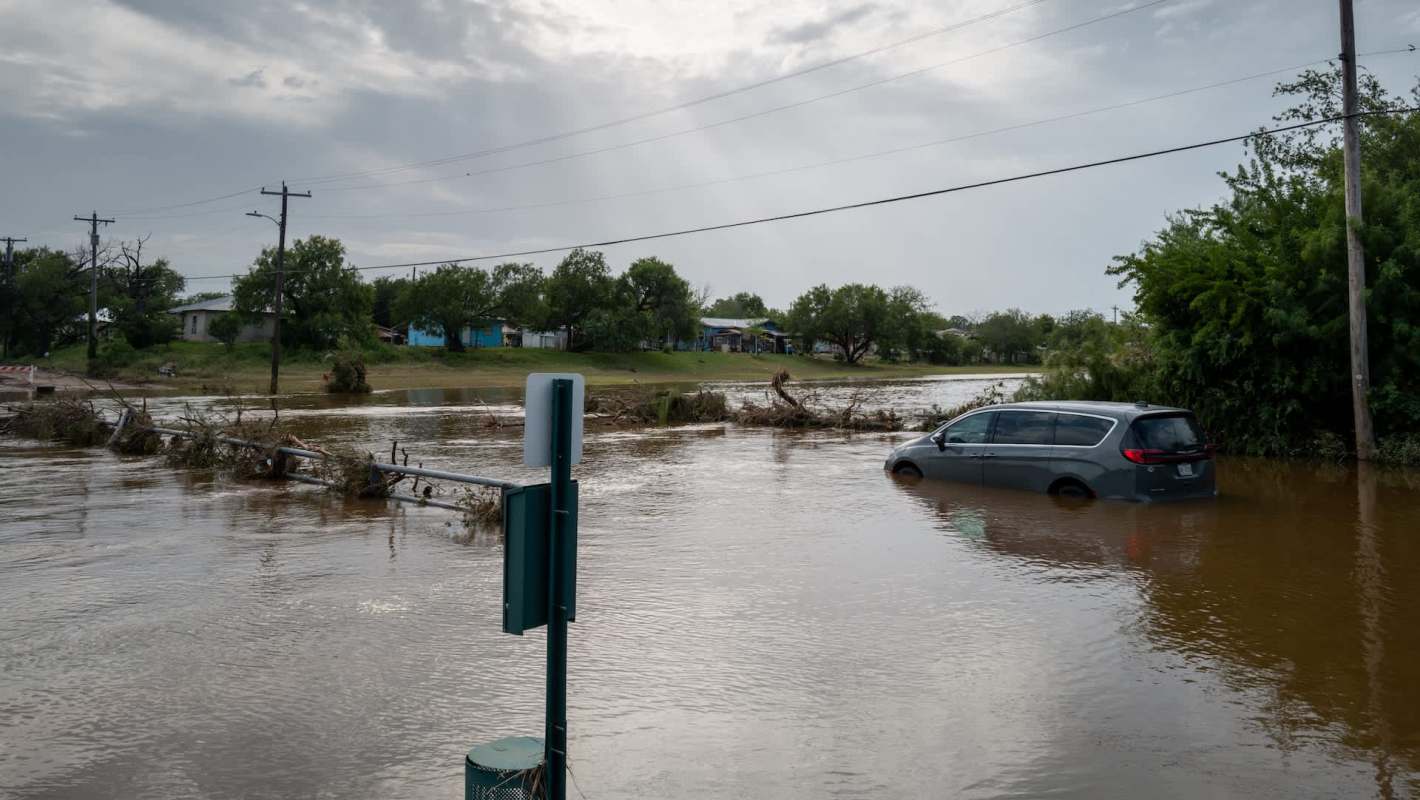
Many families and local governments in southwest Texas say they are still without the federal disaster aid needed to rebuild homes, roads, and bridges after July's destructive floods.
Here's what to know
President Donald Trump has yet to approve most of Texas' requested major disaster aid. While the president approved more limited emergency funding on July 18, the broader declaration needed to unlock Federal Emergency Management Agency support for individuals and long-term public repairs was still pending, according to KWTX News.
For communities including Uvalde County and Kerr County, the delay is more than a bureaucratic holdup. It means unsafe housing, damaged infrastructure, and mounting strain on local budgets that were already limited.
The state's initial estimate put costs at $489.7 million — far beyond the kind of assistance covered by a limited emergency declaration. FEMA's website showed that it had authorized direct federal emergency work, but not the larger funding categories for permanent infrastructure repairs or direct aid to households.
Local leaders say the effects are already being felt. Acting Uvalde County Judge Jerry W. Bates said, "That's what we're looking for: help." In Kerr County, Todd Bock, who leads the Kerr Economic Development Corporation, explained, "We're in desperate need of that (federal aid) in order for us to start on what we call a full recovery."
Research by Andrew Rumbach, a senior fellow at the Urban Institute, found that under the current administration, communities have waited about nine-and-a-half weeks on average for Washington to make a final call on major federal disaster aid — about three times longer than the average since 2000.
TCD Picks » Quince Spotlight
💡These best-sellers from Quince deliver affordable, sustainable luxury for all




More background
Rural counties often face steeper recovery challenges because they have fewer resources, smaller labor markets, and weaker tax bases. When federal assistance is delayed, residents can be left repairing homes piece by piece, replacing vehicles on their own, or going without essentials needed for work and school.
Maddie Sloan, who directs the Disaster Recovery and Fair Housing Project at Texas Appleseed, warned that without major FEMA assistance, some residents may be left in unsafe homes or unable to replace a child's computer or tools needed for a job. She said local governments are also left wondering whether they will ever be reimbursed for debris removal and infrastructure work.
That uncertainty can slow progress across the region. Texas is dealing with repeated extreme weather, and Governor Greg Abbott wrote that the state was already confronting "an unprecedented frequency of disasters." Climate change is making heavy rain more likely and extending fire seasons, meaning delays in recovery today can leave communities even more exposed when the next disaster hits.
Kerr County Commissioner Rich Paces wrote on July 30 that 384 homes were confirmed destroyed or heavily damaged, and that nine of Kerr County's 11 bridges had damage.
What's being done?
Texas officials have continued pushing for a federal declaration. Abbott asked for government assistance in 28 counties on July 17 and later said the state would seek individual assistance in 30 counties. U.S. Senators Ted Cruz and John Cornyn also pressed Trump on July 21 to approve the declaration.
The White House defended the pace of the review. Spokesperson Lauren Bis said Trump responds to disaster-funding requests "with great care and consideration" and conducts "a more thorough review of disaster declaration requests than any Administration has before him." FEMA similarly said it must closely review each request and consider both disaster damage and state and local capacity.
Still, experts interviewed in the report said the stakes are high if states are expected to shoulder more of the burden without stronger support systems in place first. Texas does not have a program to provide direct disaster recovery assistance to individuals and families in the way federal aid can.
Preparation can only do so much when entire communities face washed-out roads, damaged bridges, and homes made unlivable by floodwater.
Uvalde Mayor Hector R. Luevano said he is living through the same reality as many of his neighbors after his own home flooded. "It's FEMA's turn to act," Luevano said. "We just kind of wait and see."
Texas is not alone, as communities in North Carolina, Connecticut, Florida, and elsewhere also face delayed aid, slow rebuilding, and the pressure of preparing for the next disaster before the last one is behind them.

Get TCD's free newsletters for easy tips, smart advice, and a chance to earn $5,000 toward home upgrades. To see more stories like this one, change your Google preferences here.






