


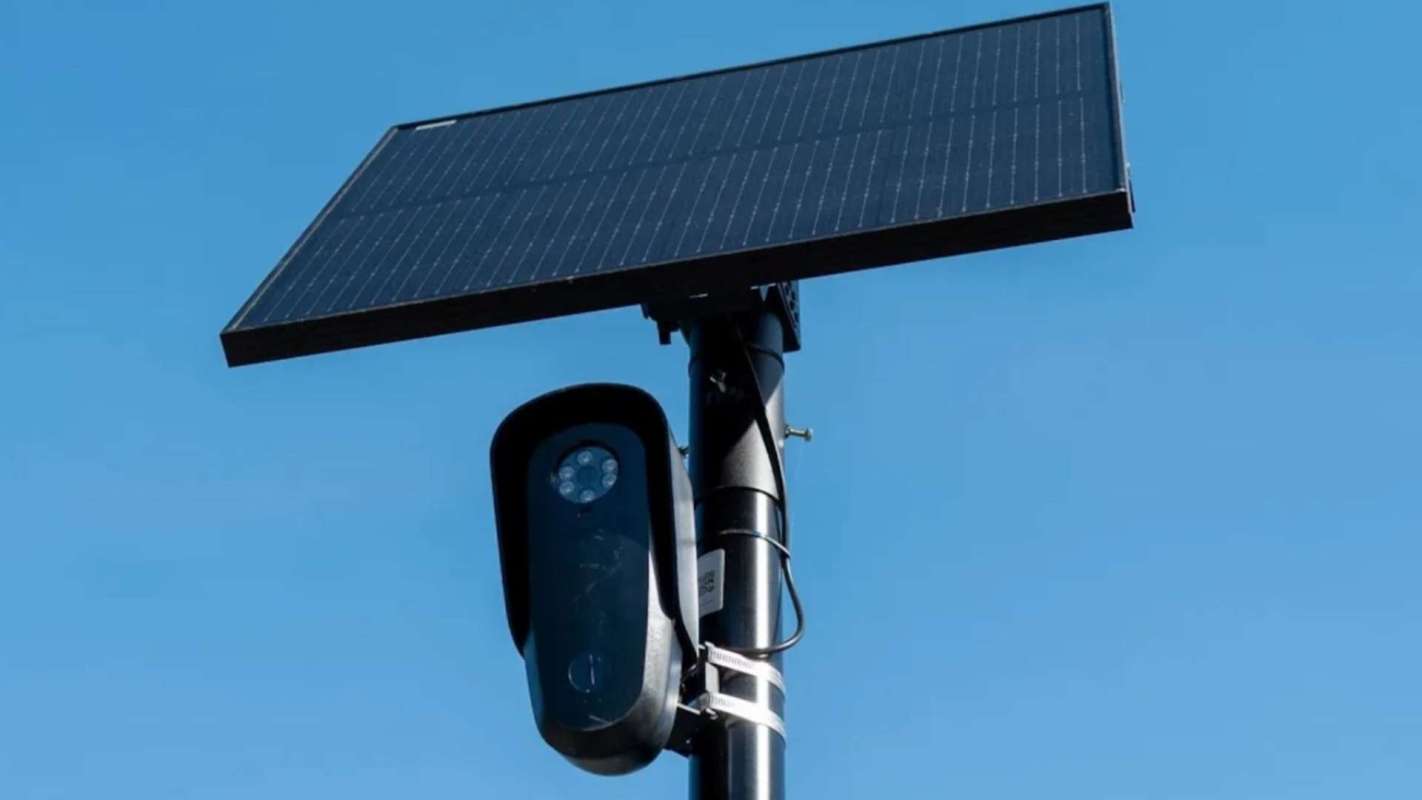
A leaked training video is adding to a growing list of concerns about how surveillance technology can be used far beyond emergency response.
The footage shows police being trained to use surveillance tools at a No Kings protest, including watching surrounding traffic and identifying particular vehicles as demonstrators move through public areas.
Here's what to know
Shared on Instagram by The Progressive Pulse (@officialprogressivepulse), the video appears to show a Flock employee outlining a protest scenario for officers in Denver.
In the presentation, an incident commander is described as using live feeds to keep tabs on a No Kings protest from a distance and decide when police should get involved.
"I've got this live video footage to monitor, and I know when things are starting to go sideways. I know when the environment is starting to shift," the speaker says in the clip.
It also refers to checking for traffic backups around the protest and relying on nearby technology to maintain broad visual coverage.
TCD Picks » Quince Spotlight
💡These best-sellers from Quince deliver affordable, sustainable luxury for all




The video then shifts to a separate example involving a car show.
There, the speaker says officers could follow a live drone feed, let cars linked to "bad behavior" leave the area, and then pull them over.
The training also suggests identifying certain vehicles beforehand, saying, "if you see these types of cars, there's a good chance that this event is going to start to turn in a direction we don't want it to turn."
The video's caption reads, "To increase 'safety' and 'security' through surveillance means to stifle personal liberty."
"You mean protesters exercising their constitutional rights?" one commenter responded.
More background
As presented in the training, large-scale surveillance of a political demonstration is treated as a standard part of protest management.
That kind of monitoring does not just capture people suspected of causing problems; it can also draw in peaceful attendees, bystanders, and nearby drivers.
What can be done?
Public agencies can adopt clearer rules limiting the use of cameras, drones, and vehicle-tracking systems at First Amendment-protected events.
These systems are often approved far from public view, even though their impact falls directly on communities.
As one commenter put it: "We need a constitutional right to privacy NOW."
From the training itself, it was stated, "I want to make sure that I have as many tools to make myself dangerous if and when I need it."
Where can I learn more?
The Denver training clip is one example of a much wider pattern. Other reporting has shown police, companies, and investigators using cameras, drones, and coordinated surveillance in ways that raise the same questions about who gets watched, why, and what safeguards are actually in place.
• In Minnesota, coordination between Enbridge and police fueled arrests of Line 3 protestors.
• In Russellville, Arkansas, police used surveillance cameras to monitor and arrest an illegal dumper.
• In Florida, a woman spent 13 days in jail after a Flock camera alert pointed police to the wrong vehicle in a fatal hit-and-run.
These cases show how quickly monitoring tools can stretch beyond narrow public-safety justifications. That feels especially relevant when watching a protest is framed as just another routine police function.

Get TCD's free newsletters for easy tips, smart advice, and a chance to earn $5,000 toward home upgrades. To see more stories like this one, change your Google preferences here.






