


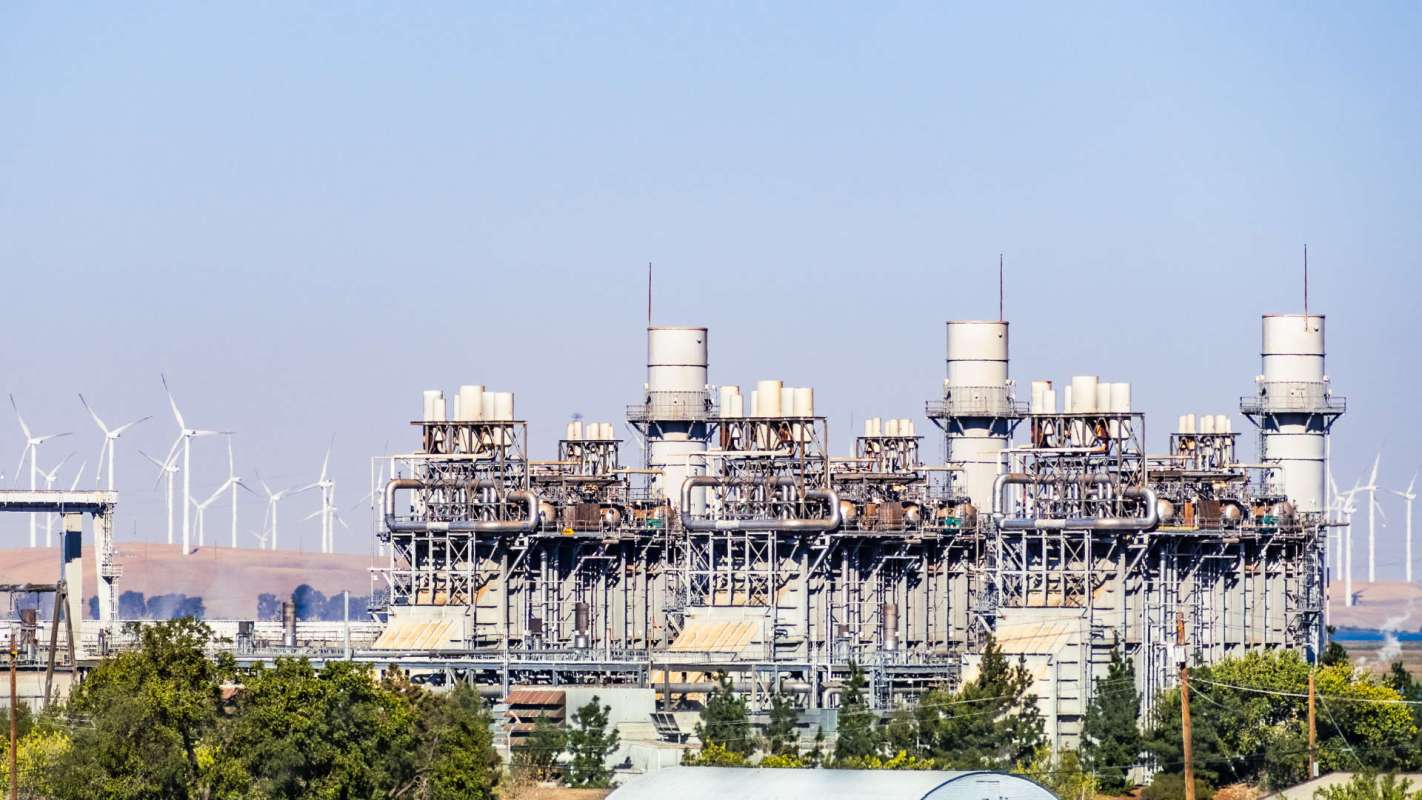
A fight over how to power the AI boom is spilling into federal climate policy, as nonprofit electric cooperative executives urged the government to scrap an Environmental Protection Agency rule to allow for new gas-fired power plants.
The executives claim it has been harder to keep up with rising electricity demand from data centers and other large users — but a repeal would mean more planet-warming pollution for communities already bearing the costs of a hotter, less stable climate, as Utility Dive reported.
Here's what to know
Under the EPA's 2024 greenhouse gas rule, expected operating levels determine how tightly a new gas plant is regulated.
That benchmark is the plant's capacity factor. Electric cooperative leaders say the framework is too restrictive at a time of rapidly rising power demand.
A new gas-fired plant expected to run more than 40% of the time would have to use efficient combined-cycle equipment and carbon-capture technology designed to remove 90% of its carbon dioxide emissions by 2032.
Jim Matheson, CEO of the National Rural Electric Cooperative Association, called both the 40% threshold and the capture requirement "untenable."
TCD Picks » Quince Spotlight
💡These best-sellers from Quince deliver affordable, sustainable luxury for all




Matheson indicated that his trade group supports the Trump administration's effort to repeal the rule in full and asserted the regulation posed "a significant threat to our ability to do our job."
He also claimed that natural gas remained "the go-to for new generation in this country" as power demand increased.
Speaking at the same event, Oglethorpe Power Corp. chief executive Annalisa Bloodworth described the rule as "deeply flawed" and "genuinely … the most irrational environmental regulation I've personally encountered in my career."
More background
The dispute centers on a growing tension in the energy transition: how to add enough power for data centers and other large loads without locking in more fossil fuel pollution for decades.
That debate has reached the federal level.
In June 2025, EPA Administrator Lee Zeldin moved to scrap every greenhouse gas standard for the power sector, according to Utility Dive.
The agency also sent a proposed "Carbon Pollution Standards Repeal" rule to the Office of Management and Budget in May 2025, but the 90-day review period ended without a decision.
For electric cooperatives, the current policy affects long-term planning. Bloodworth asserted that a full repeal was "what [they] need to be able to plan and to invest with confidence."
David Tudor of Associated Electric Cooperative, identified by Utility Dive as its CEO and general manager, stated that the systems run by his co-op, Basin Electric, and Oglethorpe represent "about 60% of the cooperative family across the United States."
However, rolling back the rule would hinder progress toward a cleaner grid.
Standards aimed at reducing carbon dioxide emissions from power plants are designed to limit the pollution that fuels more destructive heat, storms, and other climate-related disruptions that raise costs for households and strain local infrastructure.
What's being done?
At the federal level, the administration is weighing whether to finalize the repeal.
Matheson admitted that he does not think the rule can be revised "in a way that makes sense," while also acknowledging he lacked "insight on what goes on behind closed doors."
Co-op leaders also argued that not every fast-growing load can be reliably served by renewables alone.
Todd Brickhouse of Basin Electric Power Cooperative, whom Utility Dive identified as the co-op's CEO and general manager, said renewables account for 30% of Basin's portfolio, but data centers' "very high load factor" made backup-heavy systems less appealing.
Policymakers are weighing how to maintain reliability and affordability without giving up on future pollution cuts. The outcome could shape monthly power bills and the pace of the shift to cleaner energy.
"We are anxious to see action on this," Matheson remarked.
Where can I learn more?
The fight over gas-plant standards is part of a bigger struggle over who sets the rules for the power sector, how the grid absorbs rising demand, and who ends up paying for it.
The stories below add context, from court action and federal grid proposals to state fights over energy incentives.
• In Washington, the Supreme Court let President Joe Biden's power plant mandate move ahead for coal and gas units.
• Across the U.S., a government proposal on grid access could reshape demand pressures and electricity bills.
• In Texas, lawmakers advanced limits on renewable incentives that experts warned could raise power costs.
Each of these battles touches on the same core questions about reliability, emissions, and electricity costs, and helps explain why the dispute over new gas-plant rules carries such big stakes.

Get TCD's free newsletters for easy tips, smart advice, and a chance to earn $5,000 toward home upgrades. To see more stories like this one, change your Google preferences here.






