


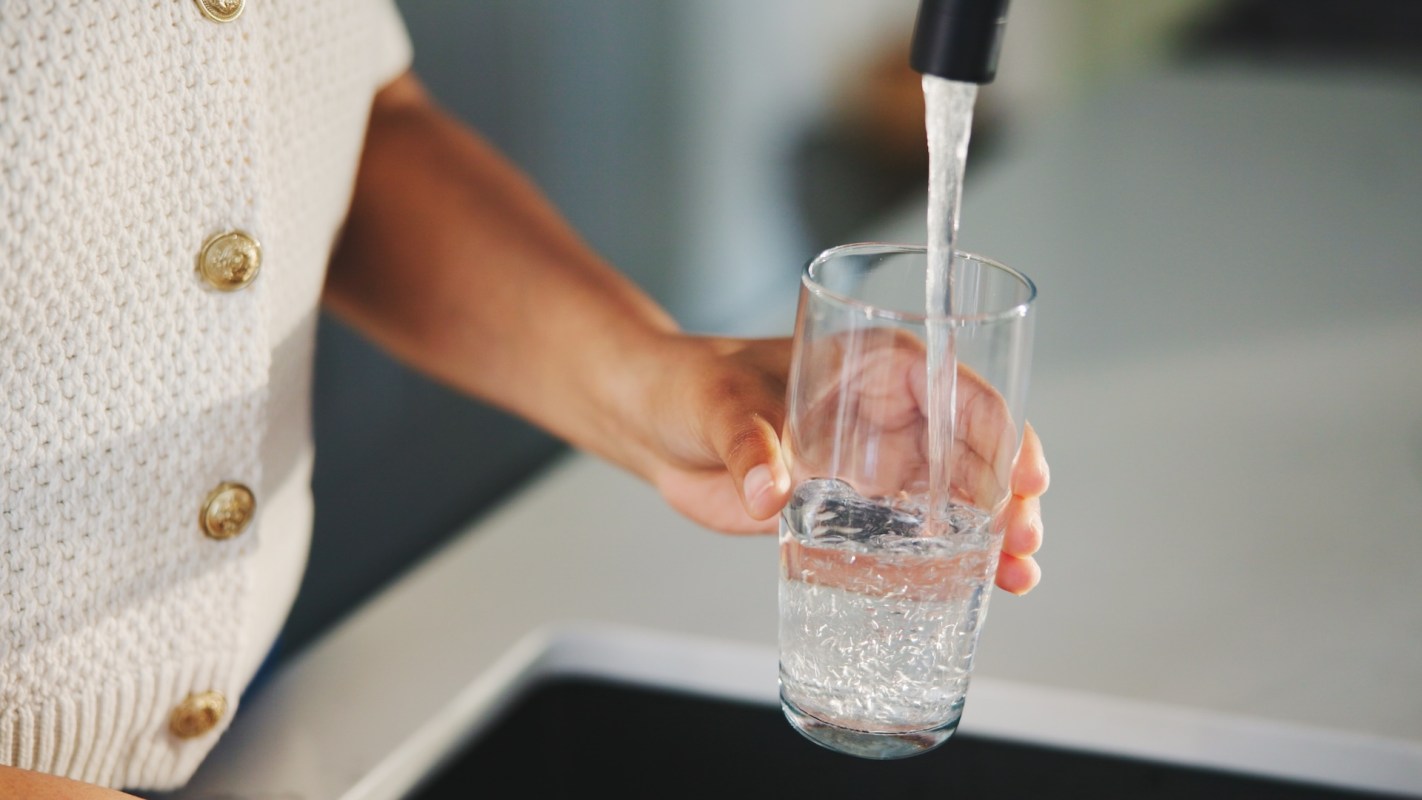
Chippewa Falls, Wis., now spends about $200,000 each year to keep agricultural nitrate pollution out of its drinking water, a striking development for a place long associated with exceptionally clean brewing water.
Residents served by the city system receive water that remains below the federal nitrate limit through filtration and access to deeper, cleaner aquifers, but many nearby residents who depend on private wells do not have the same protection.
Here's what to know
Roughly 16,000 customers in Chippewa Falls continue to receive water below the federal nitrate ceiling of 10 parts per million because, after utility managers found concerning nitrate levels in a city well in 1997, officials upgraded treatment and began drawing from deeper, cleaner aquifers, as Circle of Blue reported.
Nearly 67,000 people in Chippewa County rely on private wells, many of them pulling groundwater polluted by nitrates from fertilizer and manure, while the city spends about $200,000 a year to maintain its treatment system.
Matthew Boos, supervisor of Chippewa Falls' water treatment plant, sees that contrast in his own life. His home outside the city relies on a private well with rising nitrate levels.
"It was 10 when I got there," he said, per Circle of Blue. "Now it's 20."
TCD Picks » Quince Spotlight
💡These best-sellers from Quince deliver affordable, sustainable luxury for all




Across the Corn Belt, industrial agriculture continues to send nutrient waste into groundwater, leaving communities that did not cause the pollution to cover the cost of making water safe.
More background
Nitrates form when nitrogen from fertilizer or manure is exposed to oxygen, and they can move easily into groundwater. Researchers have linked nitrate in drinking water to cancers affecting the blood, brain, breast, bladder, and ovaries. Studies cited by Circle of Blue showed higher risks of colorectal cancer, thyroid disease, and congenital disabilities even at around five parts per million.
The federal nitrate cap dates to 1962, when it was set to prevent blue baby syndrome in infants. It was later treated as a temporary standard in 1975 and formalized in 1992, but it has not changed despite growing evidence of broader health risks.
An Environmental Working Group analysis cited by Circle of Blue found nitrate readings of three parts per million or higher in the drinking water of more than 62.1 million people across 6,114 community systems. Another study found that 85% of the nation's 50,000-plus water utilities lacked any nitrate-treatment capacity.
In Wisconsin, state data showed the nitrate health standard was exceeded in almost one in 10 private wells tested. Meanwhile, in 2019, farmers used about five times as much nitrogen fertilizer as in 1960.
What's being done?
Chippewa Falls is one of the few places in the region investing directly in treatment. Boos said the city treats about 4 million gallons of water every day, giving residents on the municipal system a level of protection many rural households still do not have.
For families outside the city water system, the options are often costly and uneven: install reverse osmosis systems, test wells regularly, or pay to drill deeper wells into cleaner aquifers. Boos chose the first option at his home, while his parents received a state grant for a replacement well reaching a deeper, cleaner aquifer.
Chippewa County has also set up four refill stations where residents can collect cleaner drinking water in bottles or larger containers. It remains a workaround rather than a lasting solution.
Advocates say voluntary runoff controls will not be enough to solve the problem. Tyler Lobdell, staff attorney with Food & Water Watch, pointed to the underlying issue: widespread fertilizer and manure pollution that continues with limited oversight.
"We treat 4 million gallons a day," Boos said, per Circle of Blue. "It's safe to drink. I tell people I would take city water, municipal water, over well water here any day, especially in this region."
Where can I learn more?
What's happening in Chippewa Falls is part of a much wider fight over water — who keeps it safe, and who gets stuck with the bill when it isn't. Around the country, other communities are confronting projects, industries, and farming practices that put local water quality or supply at risk.
• In Cochise County, Ariz., locals are resisting draining rural communities' water to protect farms and homes.
• As the Colorado River dries up, Cave Creek, Ariz., is employing measures many drought-hit places hope to avoid, from reactivating unused wells to slowing development and striking new water deals.
• In Pennsylvania, a retiree lost household water as heavy data center use strained local supply.
Water disputes like these rarely stop at a single well, neighborhood, or utility boundary. Cleanup costs, supply strain, and long-term oversight can shape daily life in places like Chippewa Falls.

Get TCD's free newsletters for easy tips, smart advice, and a chance to earn $5,000 toward home upgrades. To see more stories like this one, change your Google preferences here.






