


Michigan's fight against gas pipelines in the Great Lakes has reached a boiling point, with a pipeline operator citing treaties and pipeline safety legislation and the governor fighting to end an easement.
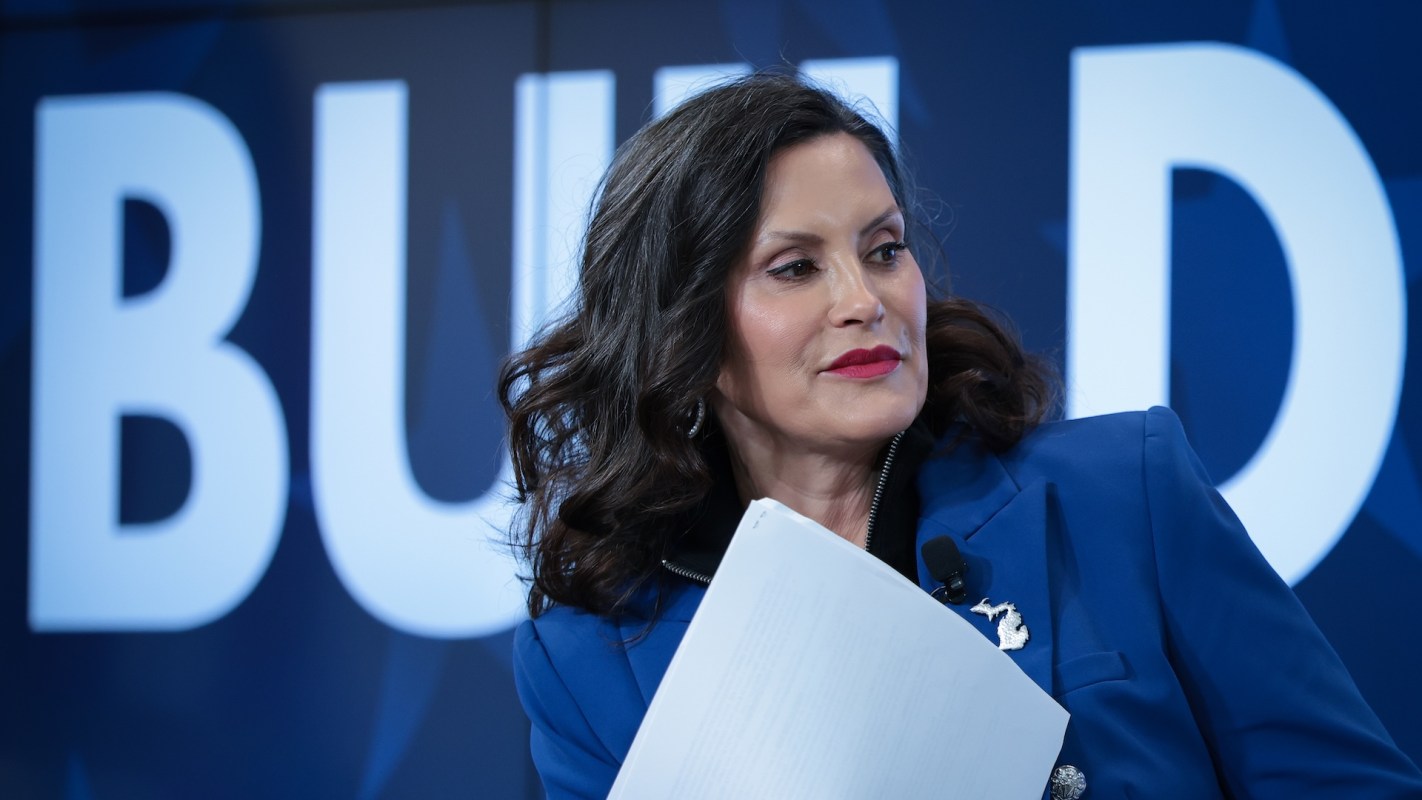
Gov. Gretchen Whitmer and Michigan Department of Natural Resources Director Scott Bowen are asking the 6th Circuit Court of Appeals to restore the state's bid to cancel Enbridge's easement for the Line 5 pipeline beneath the Straits of Mackinac, keeping alive one of the Great Lakes' most controversial fossil fuel fights after a federal judge ruled Whitmer's easement termination could not be enforced.
Here's what to know
On Aug. 28, Whitmer and Bowen asked the 6th Circuit Court of Appeals to overturn U.S. District Judge Robert Jonker's decision that the governor's easement termination could not be enforced, according to the Michigan Advance.
At the center of Michigan's appeal is its claim that Jonker improperly accepted Enbridge's position that the federal Pipeline Safety Act and foreign affairs concerns stop the state from ending the company's use of state-owned bottomlands.
In its brief, the state argued that the ruling would effectively force Michigan to give up control of its own land indefinitely. "In the district court's view, it does not matter whether Enbridge has any valid property rights: Congress forced states, having once granted permission to use state land, to forever surrender their rights in that land regardless of whether the occupier complied with the terms under which the state granted access — an endless, congressionally compelled occupation. No law remotely supports that outcome," according to the filing.
Enbridge says Whitmer's effort to shut down Line 5 is really about pipeline safety, which the Canadian company argues is regulated by the federal government. It has also relied on a 1977 treaty between the United States and Canada that governs cross-border oil and gas transport.
TCD Picks » Quince Spotlight
💡These best-sellers from Quince deliver affordable, sustainable luxury for all




Michigan, however, says those authorities do not give Enbridge the right to keep using state land without a lawful property interest. "Enbridge is wrong: Neither the Pipeline Safety Act, the Foreign Affairs Doctrine, nor the 1977 treaty entitles it to use Michigan's land without consent or a valid easement," the state's attorneys wrote.
More background
Line 5 runs from Superior, Wisconsin, to Sarnia, Ontario, passing through the Straits of Mackinac, where Michigan says it has authority over the lakebed. Whitmer has cast that authority as essential to protecting the Great Lakes, which supply drinking water to millions and play a major role in the state's economy.
Michigan's filing also points to another exchange between Enbridge and the state. In a case involving the Bad River Band of Lake Superior Chippewa, the 7th Circuit affirmed that Enbridge had been trespassing after easements on the reservation expired in 2013. State attorneys argued that the same principle applies in Michigan.
Coal and natural gas-fired power plants contribute to air and water pollution linked to asthma, heart disease, cancer, and premature death. Reliance on fossil fuels can also keep household energy costs high compared with power from abundant sources such as sunlight and wind. Additionally, industry lobbying has slowed the shift to cleaner, cheaper energy options that could better protect families while lowering bills.
Even as pipeline opponents support the legal appeal, they have continued to press Whitmer. Her administration has approved permits for Enbridge's proposed Line 5 tunnel project, drawing criticism from environmental advocates and tribal leaders who want the pipeline fully decommissioned.
What's being done?
Michigan wants judges to decide whether federal law or the 1977 treaty can override the state's move to terminate an easement on public bottomlands.
In a statement to the Advance, Enbridge spokesperson Ryan Duffy said the state has spent years trying to shut down the pipeline over "unsupported claims about its safety." He added: "The Court affirmed that the Pipeline and Hazardous Materials Safety Administration is the exclusive federal regulator of pipeline safety. PHMSA has taken no action against Line 5, underscoring its safe operation. Enbridge has always worked closely with PHMSA and will continue to do so."
Liz Kirkwood, executive director of Flow Water Advocates, urged supporters in Lansing to push Whitmer to "finish the job" she started in 2020, when she revoked the easement. David Holtz, coordinator of the Oil and Water Don't Mix Coalition, was skeptical, calling Whitmer's statement "message management."
"The Great Lakes power Michigan's economy, supply drinking water to millions, and define our way of life," Whitmer said in a statement. "Protecting these natural treasures is a top priority. My brief continues my seven-year fight to stop Enbridge from pumping oil through the Great Lakes. Michigan must have a say in what runs through our waters. We must get Line 5 out of the water and work together to protect our precious Great Lakes for generations to come."
Where can I learn more?
Stories out of Michigan, Montana, and Washington, D.C., show how legal clashes are influencing pipelines, power plants, and the fight for a cleaner future.
• In Michigan, lawmakers pushed a rollback of local zoning for renewable projects.
• Montana officials asked justices to overturn young activists' win on state climate policy.
• Federal judges let challenges to coal-plant emissions rules proceed, keeping utilities in limbo.
Cases such as these are used as reference points in legal battles and could shape the future of clean energy.

Get TCD's free newsletters for easy tips, smart advice, and a chance to earn $5,000 toward home upgrades. To see more stories like this one, change your Google preferences here.






