


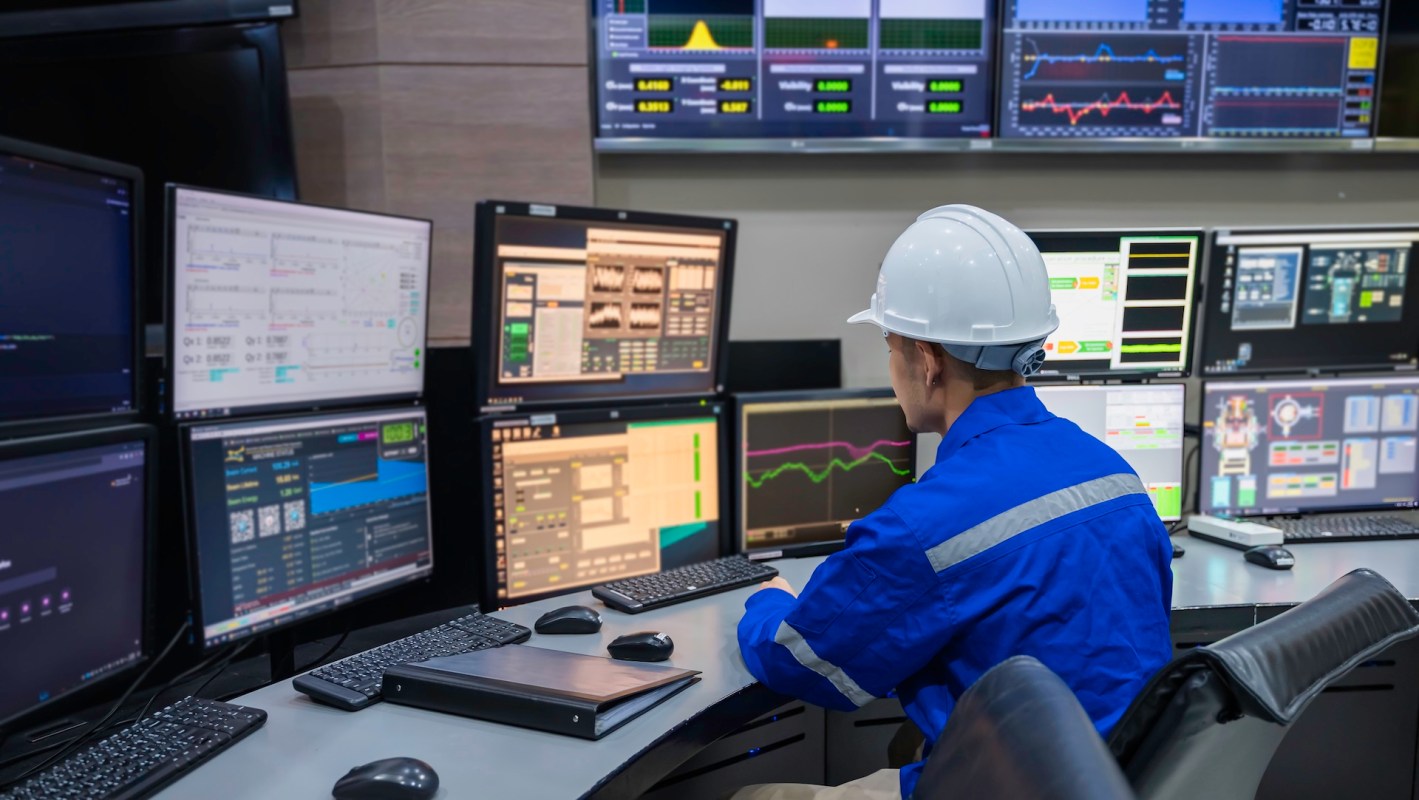
AI data centers have become serious enough for North America's chief grid reliability body to issue its strongest warning, driven by the risk that electricity demand at these facilities can rise or fall almost instantly.
That risk is already moving beyond theory: some AI campuses use as much power as a city, yet their load can shift on millisecond timescales the grid was never built to handle.
Here's what to know
According to Energy Storage News, the North American Electric Reliability Corporation released a Level 3 Essential Action Alert and set a 3 August response deadline for utilities and other registered entities.
The notice included seven required actions and warned of "customer-initiated large load reductions and significant oscillations that occur in seconds, leaving little or no room for real-time responses, threatening bulk power system (BPS) reliability."
For Thomas Sisto, co-founder and CEO of flow battery company XL Batteries, incidents show the problem has grown far beyond minor disturbances: "We're not talking about small fluctuations anymore — we've seen events where 1,000MW or more dropped off the grid in a matter of seconds."
Dr. Hooman Ghaffarzadeh, director of power systems engineering at Wärtsilä Energy Storage, said AI-focused facilities do not behave like conventional industrial customers.
TCD Picks » Quince Spotlight
💡These best-sellers from Quince deliver affordable, sustainable luxury for all




"They can go from zero to 100% in just a few milliseconds," he said, adding that such shifts can repeat every 10 milliseconds.
More background
For decades, grid operators mostly dealt with electricity demand that followed far more predictable patterns.
Utilities could lean on years of historical consumption data to prepare for peaks, but AI facilities are bringing load behavior that is both harder to model and much faster-moving.
AI is also closely tied to the future of the grid in both promising and concerning ways.
The technology can help optimize clean energy systems, improve forecasting, and make batteries and power networks work more efficiently. At the same time, the infrastructure behind AI can consume huge amounts of electricity and water, strain transmission systems, raise security and misuse concerns, and potentially push costs higher for other customers.
Another part of the issue, said Matthew Williams, founder and CEO of IONATE, is that utilities often lack sufficiently clear real-time visibility into these disturbances.
"Utilities today may be able to see broader system conditions, but they often lack a real-time picture of voltage fluctuations and other power quality disturbances," he said.
That could bring greater reliability risks, slower infrastructure planning, and upward pressure on energy bills.
What's being done?
Many in the industry see the alert as an early step toward tougher interconnection and performance rules for large data centers, similar to the standards that developed around renewable energy projects.
Ghaffarzadeh said he expects "more standardised or mandatory packages for dynamic studies" to begin early in the data center design process.
Experts also expect the technical answer to involve a layered set of tools rather than any single device.
Williams said IONATE's transformer intelligence can respond in under a millisecond, while batteries can support stability over longer stretches.
Sisto put it simply: "There isn't one piece of equipment that fixes it."
Many experts are pointing to battery energy storage systems as a practical near-term tool.
Storage can sit between a large facility and the wider grid, absorbing abrupt load swings instead of passing them straight through and creating time for longer-duration systems to react. With transmission upgrades often taking years, deployable options are attracting more attention.
The alert points to a need for grid operators and data center developers to move before formal mandates are in place.
As Sisto said, "Whatever NERC ultimately requires, the operators who build this in now will already be ahead of it, and ahead of competitors still treating this as tomorrow's problem."
Where can I learn more?
The strain described here is already showing up across the U.S., from requests for backup generators during peak demand to higher electricity bills and mounting warnings that AI expansion is outrunning grid capacity. Read together, these articles place those millisecond-scale load swings in a broader reality of surging demand, limited utility visibility, and a narrowing window to adapt.
• Across the Eastern U.S., operators are asking AI data centers to run generators before demand peaks.
• Nationally, AI facilities have hit a tipping point, consuming about 6% of U.S. electricity.
• Big Tech's AI expansion is outrunning the power grid as infrastructure spending accelerates toward 2026.
That's why regulators and utilities are moving faster on AI-related grid risks. The same growth behind these reliability alerts is already changing how the power system is operated, planned, and paid for.

Get TCD's free newsletters for easy tips, smart advice, and a chance to earn $5,000 toward home upgrades. To see more stories like this one, change your Google preferences here.






