


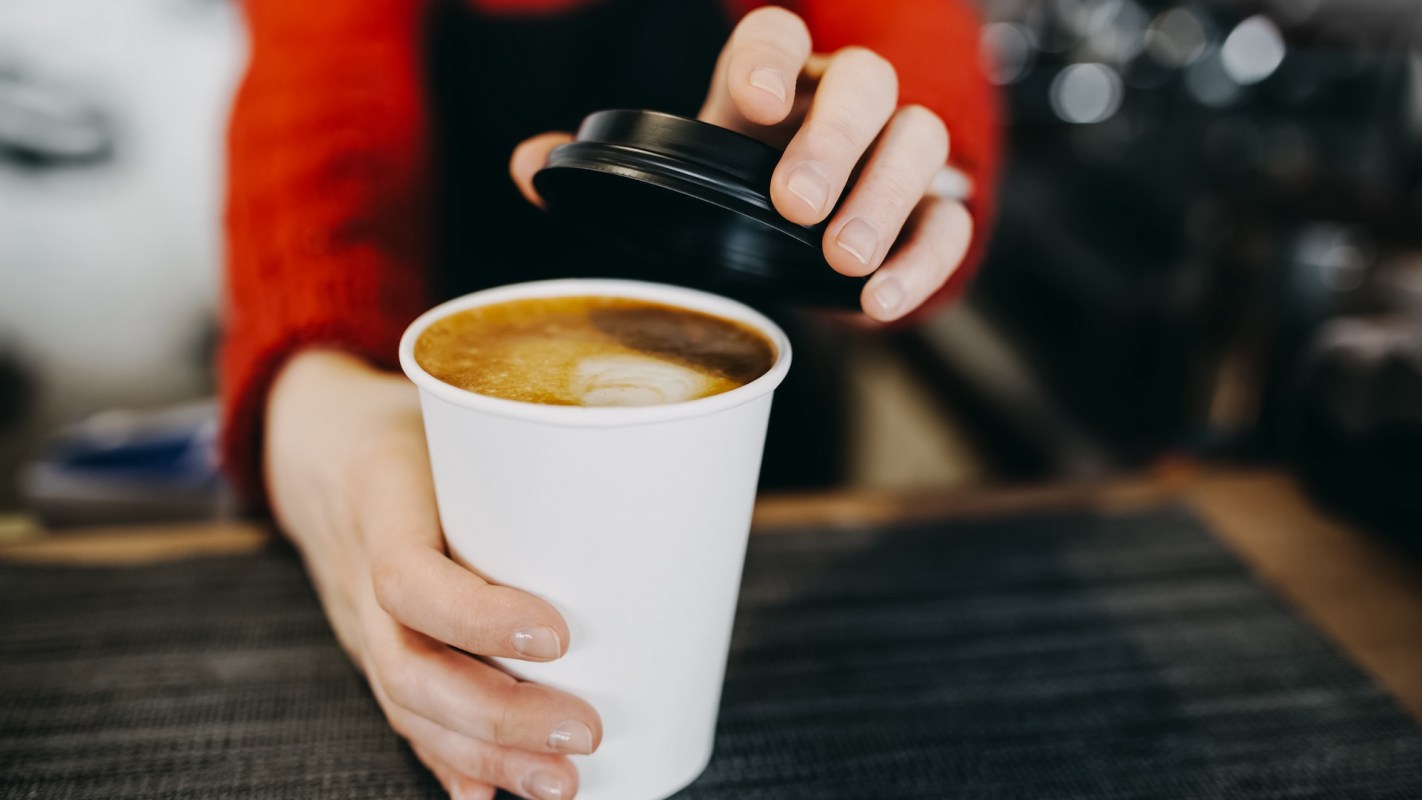
A new study is raising questions about one of the most common grab-and-go beverage items: the paper coffee cup.
Hot drinks served in single-use cups may also contain plastic particles, researchers found, even when the cups use linings promoted as alternative and biodegradable.
Here's what to know
Researchers at the University of Queensland in Australia tested paper cups with two kinds of plastic linings: polyethylene (PE), which is made from fossil fuels, and polylactic acid (PLA), which is often described as biodegradable.
In both cases, the linings were found to release tiny plastic particles after coming into contact with hot liquid, according to a UQ news release.
In the experiments, PLA-lined cups released about 4.3 million nanoparticles per milliliter, while PE-lined cups released about 2.7 million per milliliter. Overall, the total particle mass from the PLA-lined cups was around 12 times higher.
"A cup made mostly of paper does not mean that the cup is plastic-free because many contain a thin plastic lining that provides water resistance and structural integrity," Elvis Okoffo, a study co-author and university research fellow, said in the release.
TCD Picks » Quince Spotlight
💡These best-sellers from Quince deliver affordable, sustainable luxury for all




More background
The study findings add to a growing body of research suggesting that plastics may be shed into foods and drinks not only from water bottles and plastic storage containers but also from products that are marketed as paper-based, biodegradable, or eco-friendly.
Such descriptors may not always tell the full story about what is actually touching food and beverages. And everyday contact between consumables and packaging may be creating a route for people to ingest plastic particles that consumers and regulators may not be accounting for on a daily basis or at a policy level.
The implications could become more significant as scientists continue to explore the potential health impacts of nano- and microplastics — the plastic particles, smaller than 5 millimeters, that have been found throughout natural habitats, food systems, and human bodies.
What can be done?
One takeaway from this research is that shoppers may need better information. Okoffo said consumers should be given clearer details about the materials used in paper-cup linings so they can make more informed choices about the everyday products they use.
The study also suggests a role for regulators.
"Policymakers and regulators could consider whether testing for micro- and nanoplastic release should form part of the safety assessment of food-contact materials, particularly products designed for hot beverages," Okoffo said in the release.
Of course, another possible response would be for manufacturers to develop lining designs that release fewer particles when heated.
Meanwhile, using your standard reusable food-safe mugs remains one practical way to reduce exposure to cup linings while also cutting down on single-use waste.
Where can I learn more?
If you want to read more about how microplastics can get into foods and drinks, you may want to take a look at the following articles, which show how the particles can be shed into our coffee, tea, and more:
• Scientists found microplastics in coffee from another everyday single-use drinkware item.
• In the UK, hot tea carried the most microplastics, with disposable cups adding more.
• Tea drinkers also face microplastics from tea bags when convenience replaces loose leaves.
• Across the food system, plastic packaging sheds microplastics into meals and drinks
The materials that come into contact with hot drinks and foods deserve closer scrutiny from regulators and manufacturers. More research, clearer labeling, better alternatives, and safe reusable products are likely to keep coming up in the conversation as scientists learn more.

Get TCD's free newsletters for easy tips, smart advice, and a chance to earn $5,000 toward home upgrades. To see more stories like this one, change your Google preferences here.






