


Researchers have identified a surprising use for plastic pollution by turning it into glowing nanomaterials that can help shield food from ultraviolet light.
Here's what to know
According to a study relayed by Phys.org, researchers at Saitama University converted polyamide microplastics into carbon quantum dots — small fluorescent carbon materials with possible uses in packaging and other fields. In other words, material already known to show up in water, soil, air, and even the human body could eventually be redirected into packaging.
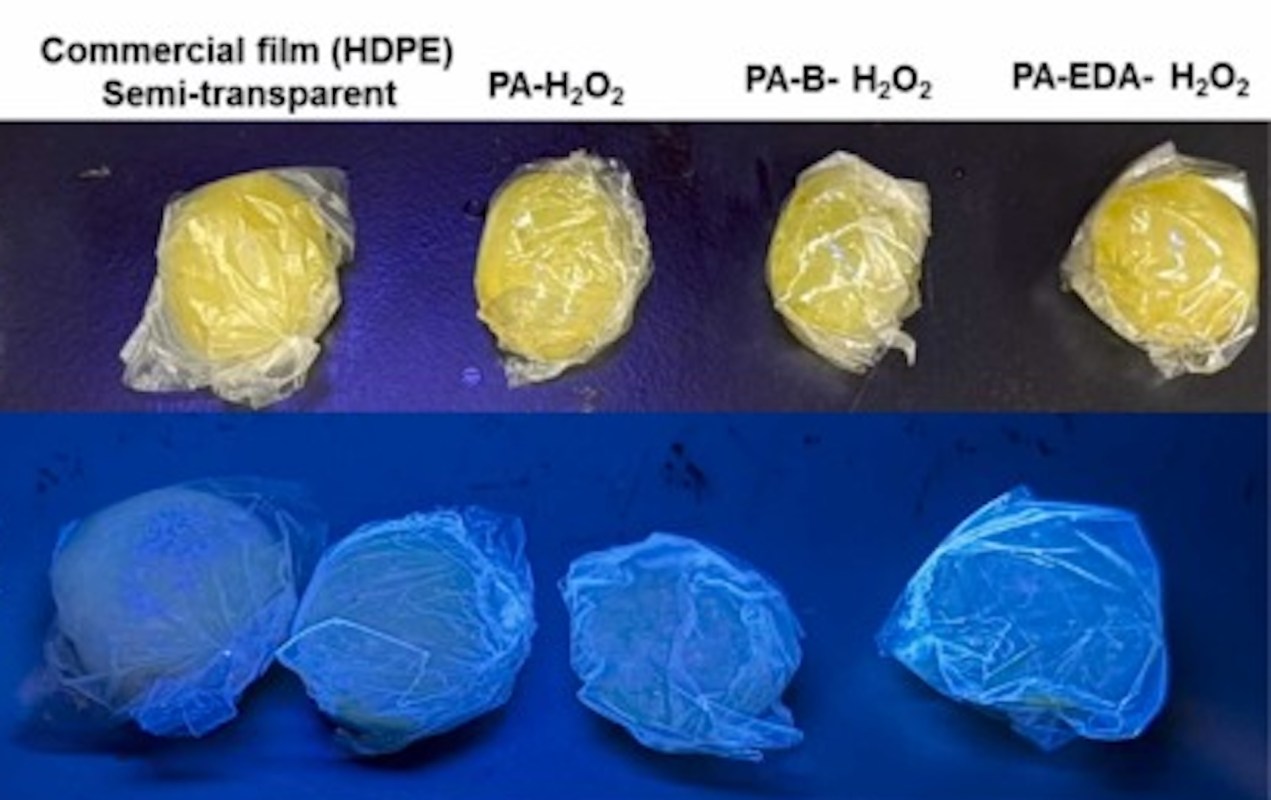
Led by Dr. Christian Ebere Enyoh and Wang Qingyue, a professor emeritus at Saitama University's Graduate School of Science and Engineering, the group used a one-pot hydrothermal carbonization process to create four kinds of carbon quantum dots from polyamide. Those particles were then added to poly(vinyl alcohol), or PVA, yielding clear, flexible films that emit light and help block UV radiation.
The choice of PVA is notable because it is already seen as a promising sustainable packaging material thanks to its biodegradability, biocompatibility, transparency, and film-forming ability. Its drawback is weak UV protection, which limits how well it works for light-sensitive products such as fruits, dairy products, edible oils, and pharmaceuticals.
Using upcycled plastic waste to improve that limitation could reduce pollution while adding a higher-value material.
More background
Polyamide appears in textiles, fishing gear, packaging, and engineering materials, so the microplastics it produces are becoming a bigger concern. At the same time, common disposal and recycling methods — including landfilling, incineration, and mechanical recycling — have struggled to keep up with the scale and complexity of plastic waste.
TCD Picks » Quince Spotlight
💡These best-sellers from Quince deliver affordable, sustainable luxury for all




Rather than concentrating only on removing microplastics after they disperse, this study examines whether they can serve as a useful feedstock. Carbon quantum dots are valued in areas such as sensing, bioimaging, optoelectronics, and environmental technologies because they are photostable and their optical properties can be tuned, which also gives them potential in food packaging.
Improved UV-blocking packaging could help protect light-sensitive products and preserve quality for longer. If materials like this can eventually be produced at scale, they could help reduce spoilage and waste while giving manufacturers a more sustainable packaging option.
What's being done?
The researchers said the key breakthrough is not just making carbon quantum dots from waste, but tailoring them for a particular function. By producing pristine, oxidized, boron-doped, and nitrogen-doped versions, they demonstrated that emission, bandgap, photostability, and UV-blocking performance can be adjusted based on the intended application.
That kind of customization could make waste-derived materials more practical for industry, particularly in packaging applications that require transparency, flexibility, and safety alongside stronger protection from damaging light.
As Enyoh said, "Our study provides a practical example of how defect-engineered carbon nanomaterials can bridge environmental remediation and materials innovation." He added, "The ability to tune the emission, bandgap, photostability and UV-blocking performance of polyamide-derived CQDs means that waste-derived nanomaterials can be designed for specific functions rather than used only as generic fillers."
Work like this points toward technologies that could support human health, cut food loss, and recover value from materials that might otherwise remain an environmental burden. Reducing waste at home can start by choosing plastic-free options for everyday products, which can help lower demand for hard-to-manage plastics in the first place.

Get TCD's free newsletters for easy tips, smart advice, and a chance to earn $5,000 toward home upgrades. To see more stories like this one, change your Google preferences here.






