


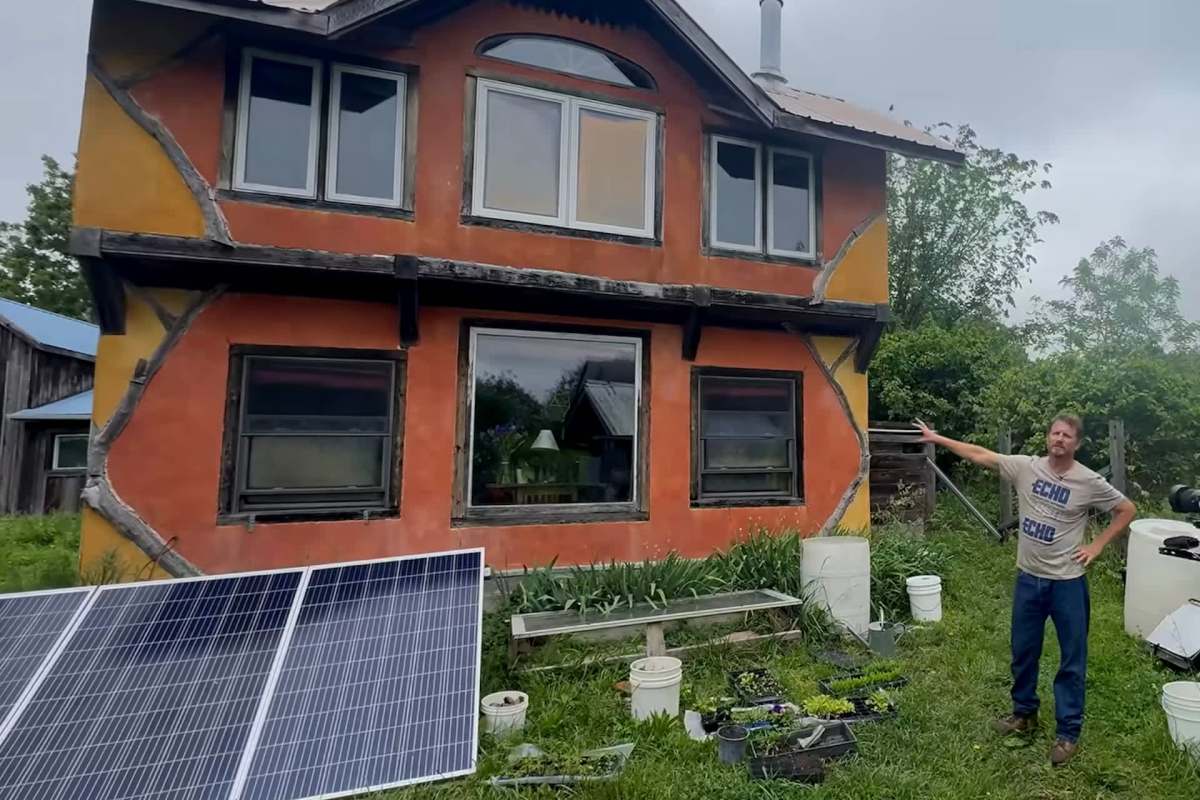
Dan Durica, a longtime resident of Dancing Rabbit Ecovillage in Missouri, built his own straw bale home for about $15,000 and said he still pays only around $50 a month to lease the land — offering a rare look at what low-cost living can look like 20 years after construction.
Here's what to know
Content creator Kirsten Dirksen (@kirstendirksen) featured Durica in a home tour on YouTube, highlighting how inexpensive the setup has remained long after the build was finished.
In the video's caption, Dirksen wrote that Durica "built his off-grid straw bale home for just $15,000, including solar panels and batteries, and 20 years later he's still refining the system."
Asked about the cost, Durica said, "I probably spent like $15,000 on my house, materials, and a big chunk of that was the power system."
He said his regular expenses are mainly the lot lease and a small fee for the village micro-grid, which is also connected to the larger utility grid as backup.
Because his electricity use is so low, he added, "My last electric bill was like $3."
TCD Picks » Quince Spotlight
💡These best-sellers from Quince deliver affordable, sustainable luxury for all




Much of that savings comes from how the house is designed. Durica uses passive solar principles, strong insulation, insulated curtains, and an earthen floor that absorbs heat during the day and releases it at night.
In warmer months, those same curtains help block heat and keep the interior cooler, reducing the need for conventional heating and air conditioning.
Food is part of the equation too. Durica grows much of his own produce, preserves it through canning, fermenting, and dehydrating, and makes cheese with milk from the community milk co-op.
More background
Many low-cost housing stories focus on the build itself, but this one offers a longer view of what happens after 20 years of daily use, maintenance, and adjustment.
Durica's arrangement also depends on circumstances many people may not be able to copy. Durica lives in an ecovillage built in a county without building codes, uses a composting toilet system, and relies on nearby shared shower facilities.
By installing better insulation, creating smaller spaces, using sunlight strategically, and growing some food, homeowners can lower costs while also reducing strain on the grid.
One commenter summed up that appeal this way: "It just shows how little we truly need, and how little of an impact we can have on the environment when properly managed."
What can be done?
Most people are not going to build a straw bale house from scratch, and they do not need to in order to borrow useful lessons from Durica's example. Lowering utility bills can start with simpler steps such as sealing drafts, adding insulation, using window coverings to manage heat, and choosing efficient appliances.
Durica's home also shows the value of designing around local resources and conditions by using local straw bale and earth and planning for Missouri's seasonal temperature swings. He also shifted his diet toward crops he can reliably grow, including corn and beans.

Get TCD's free newsletters for easy tips, smart advice, and a chance to earn $5,000 toward home upgrades. To see more stories like this one, change your Google preferences here.






