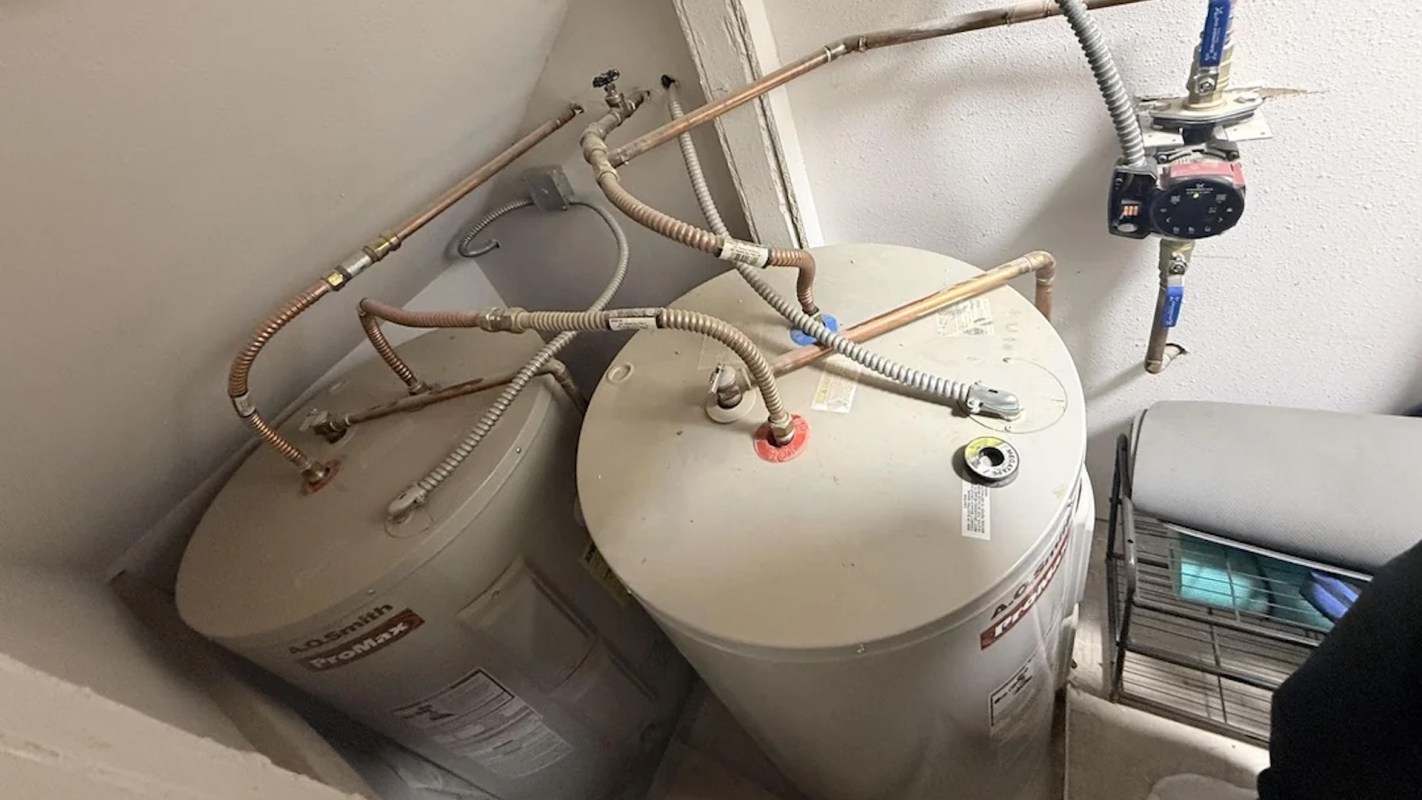
A homeowner with two aging water heaters tucked beneath a staircase turned to Reddit with a basic question: Were they plumbed correctly?
Commenters said the arrangement may have been working as intended, but there was concern about what replacement would look like when one of the aging tanks gave out.
Here's what to know
According to the post, the house dated to 1992, and both units were located in a utility closet beneath the staircase.
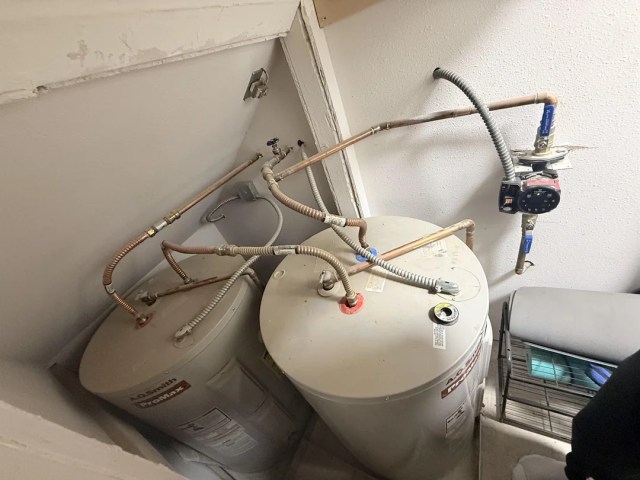
The owner noted that the system had not caused problems — "They have worked just fine for us, and ultimately I am just curious," the original poster wrote — but also raised questions about energy efficiency and the lifespan of the units. "Are my water heaters plumbed correctly?" they asked.
Users did not agree on the setup, though several said the system appeared to be workable.
"No, but do they work?" one user asked.
The homeowner answered: "Yeah, they work. Is it because both of the hots and both of the cold lines should be teed off of the same lines?"
Not everyone thought the plumbing was incorrect.
Save $10,000 on solar panels without even sharing your phone number Want to go solar but not sure who to trust? EnergySage has your back with free and transparent quotes from fully vetted providers in your area. To get started, just answer a few questions about your home — no phone number required. Within a day or two, EnergySage will email you the best options for your needs, and their expert advisers can help you compare quotes and pick a winner. Solar panels can save you more than $50k over their 25-year lifespan, and EnergySage can help you save as much as $10k on installation. Which begs the question — isn't that worth an email or two? |

"Nope," one person said. "Based on the visual evidence provided, they are both wired up. They are run in series."
The first commenter focused on the workmanship.
"The piping itself is terrible," they said.
More background
A system can be messy, outdated, or inefficient but still deliver hot water every day, which can make it easy to put off replacement until something goes wrong.
Such a delay can get expensive. Water heating is one of the largest energy loads in many homes, and old tanks typically use more electricity than new, more efficient models.
If a setup includes recirculation lines, awkward placement, or access problems, it can also create added maintenance headaches.
Access was perhaps the most significant issue here. "I know that they are way beyond the manufacturer's recommended lifespan, but I don't foresee getting these out of this area without having to remove framing and drywall," the homeowner said.
That would turn a standard appliance replacement into a much bigger home project.
What can be done?
A licensed plumber can confirm whether water tanks are piped in series or parallel; check circulation components; and flag issues such as missing valves, poor materials, or limited service access.
For homeowners who do need a replacement, Cala offers a modern option. Homeowners looking for a smarter long-term swap may want to consider Cala.

Get TCD's free newsletters for easy tips, smart advice, and a chance to earn $5,000 toward home upgrades. To see more stories like this one, change your Google preferences here.