


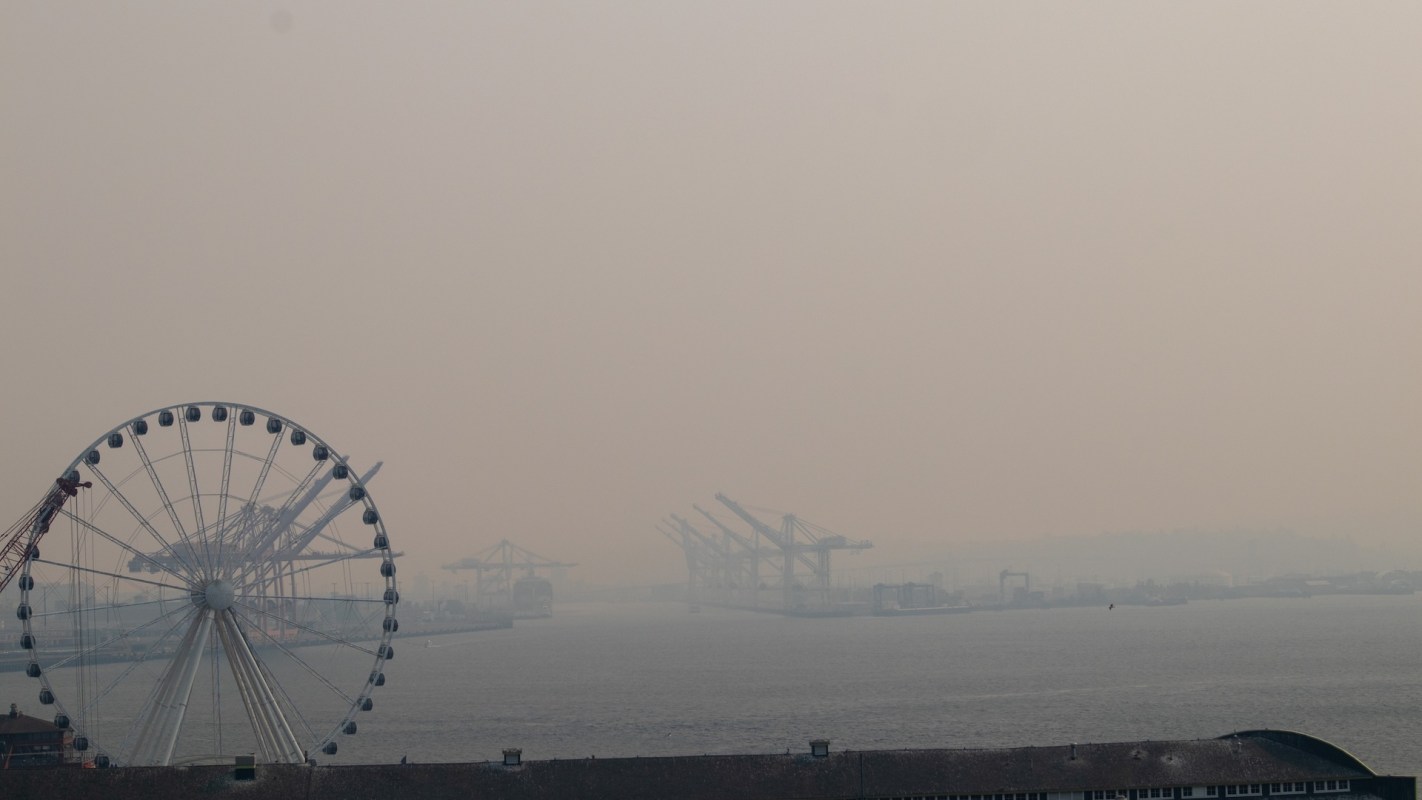
Wildfire smoke drifting across Washington is causing more than irritated eyes and scratchy throats.
Public health experts say exposure during poor air quality can worsen breathing problems, stress the cardiovascular system and potentially affect mental health, with some communities facing more of that harm than others, The Seattle Medium reported.
Here's what to know
University of Washington experts warned that children, older adults, people with chronic health conditions, and outdoor workers are especially vulnerable when wildfire smoke sets in.
UW public health experts also noted that parts of South Seattle may face added danger because residents already live with pollution from highways, industrial sites and the airport.
At the UW School of Public Health, epidemiology associate professor Anjum Hajat explained that the people most affected often fall at "both ends of the life course."
Hajat said "kids' lungs and stuff are still developing," while people who already have health issues can see those conditions worsened by "an additional environmental hazard."
TCD Picks » Quince Spotlight
💡These best-sellers from Quince deliver affordable, sustainable luxury for all




Joan Casey, an associate professor of public health at the University of Washington School of Public Health, cautioned that short-term smoke exposure is associated with more emergency department visits, especially when asthma or COPD symptoms flare up.
She added that there has "been some indication that cardiovascular disease exacerbation can pick up" and that newer research is examining mental health effects too.
More background
One of the biggest health threats in wildfire smoke is PM2.5, the fine particulate matter carried in the air.
Casey indicated that those tiny particles can reach deep into the lungs and the bloodstream, where they can contribute to "inflammation, oxidative stress, potentially DNA damage or epigenetic changes."
Researchers say the inflammation linked to wildfire smoke is linked to health problems beyond the lungs, making exposure particularly risky for people who already have heart or lung disease.
Impacts are not felt equally.
Lower-income communities and communities of color often have less tree cover and green space and are located closer to major pollution sources, per Hajat, who used South Seattle as an example.
"In South Seattle, where lower-income communities live, tend to be more point source pollution, and the airport is there, right? So it's like everything is compounded in certain communities," she commented.
Casey emphasized that the smoke's effects extend beyond physical symptoms.
"From a mental health perspective, the kind of anxiety and dread that comes from living in a place that's really affected by smoke impacts our mental health," she observed.
What can be done?
Rather than waiting until smoke is visible or easy to smell, experts recommended that residents monitor the Air Quality Index.
"Once you can smell smoke, things are already pretty bad," Casey stated.
When conditions worsen, spending time indoors and filtering indoor air can reduce exposure, and Hajat advised that such protection does not have to be expensive.
"You can create some very low-cost air filters by using a box fan, and then just taping on a filter on the back," she said.
For outdoor workers, avoiding smoke is often much harder. Casey said people who must work outdoors should ideally wear a KN95 or N95 mask during periods of poor air quality, and employers can help by reducing activity levels and allowing more breaks.
Washington residents may need to consider these steps a more routine part of life, experts agreed.
"I think with climate change, we are seeing just increasing wildfire smoke every year, and the seasons are getting longer and longer," Hajat said.

Get TCD's free newsletters for easy tips, smart advice, and a chance to earn $5,000 toward home upgrades. To see more stories like this one, change your Google preferences here.






