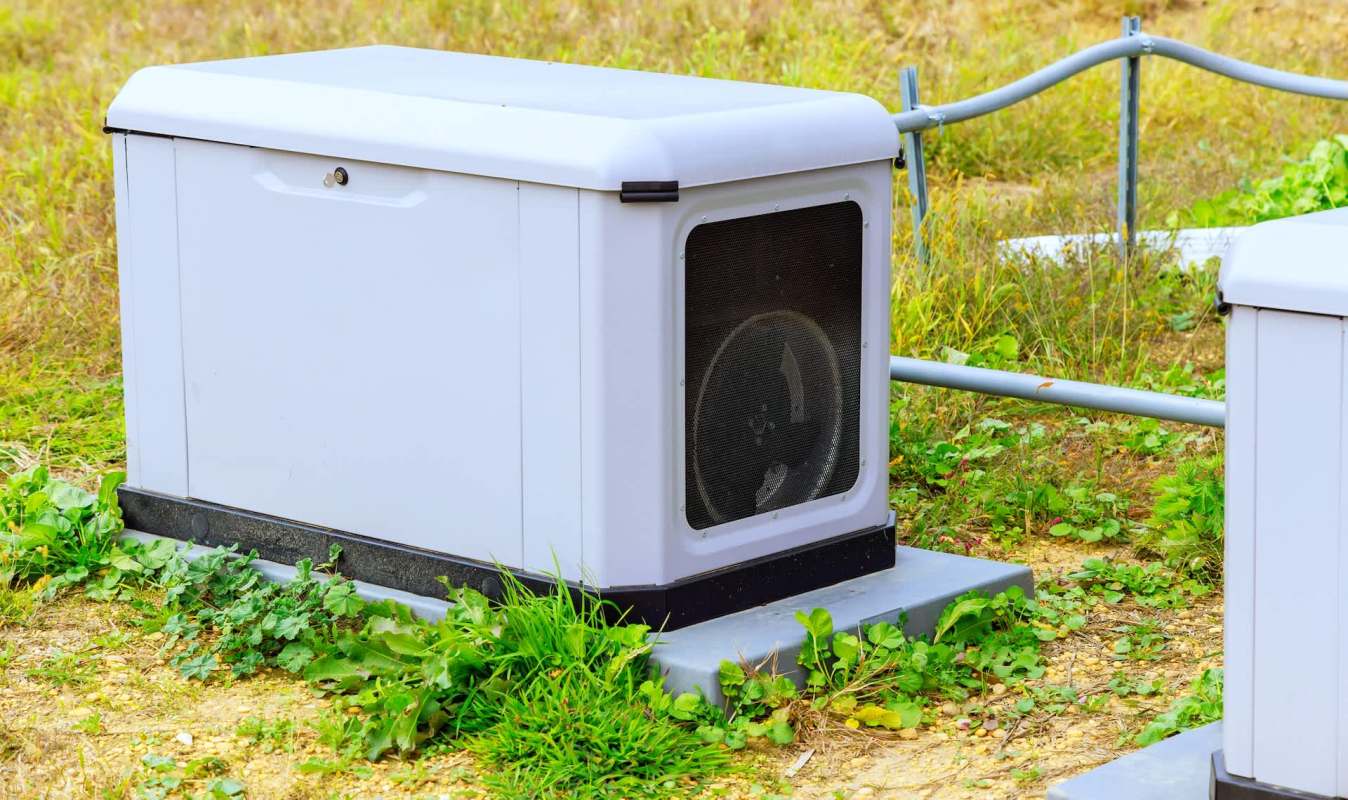
For homeowners considering backup power, the price gap between an automatic standby generator and a portable setup may be far wider than many expect.
The question came from a North Carolina resident with a 1,500-square-foot home who wanted a rough idea of how much more a whole-home standby system might cost than a portable generator set up with the proper connections.
Here's what to know
In a Reddit thread, the homeowner said they didn't want to manage individual circuits during an outage. The post said the house is connected to natural gas, has an accessible crawlspace, a 2.5-ton air conditioner and a gas furnace. "I'm not really interested in finagling breakers/appliances/devices to try and get by with a 4kw generator or anything," the poster wrote.
"Obviously I'll need to get some quotes, but I was wondering what you all thought would be a rough estimate for the cost difference between a standby solution and a portable solution," the homeowner added.
Luckily, commenters shared their thoughts, giving the homeowner a clearer picture of what the upgrade will cost.
One commenter offered a straightforward rule of thumb: "Standby will be 3-4 times the cost of a portable."
TCD Picks » Quince Spotlight
💡These best-sellers from Quince deliver affordable, sustainable luxury for all




The same commenter said that a properly sized portable system for whole-home use can still require substantial upgrades. "I just updated the inlet and generator breaker and purchased a larger generator with the intent of running the whole house and AC. The whole project cost $5000."
A portable setup capable of powering an entire home and central air is not necessarily inexpensive, and a permanently installed standby system may cost far more.
More background
The difference between the two options goes beyond convenience. Standby generators are permanently installed, usually connected to a fuel source such as natural gas, and designed to turn on automatically when grid power goes out. Portable generators, by contrast, require manual setup, though they can cost significantly less upfront.
Safety is another major consideration. As the commenter noted, "For the portable you will need a breaker interlock so that your main breaker is off when the generator is powering the house. That prevents your generator from delivering power outside your house."
Although backup power can be a pricey upgrade, more and more homeowners are investing in backup solutions in the face of increasing power outages.
While generators are one option, solar panels paired with batteries are another. When paired together, the tech not only provides backup power during emergencies, but also long-term savings on energy costs.
When exploring options, it's best to contact professionals to ensure you're getting the best deal for your home and budget.
A formal load calculation can show whether a home actually needs a large whole-house generator, would pair well with backup batteries, or whether a smaller system with more targeted coverage would meet most needs.

Get TCD's free newsletters for easy tips, smart advice, and a chance to earn $5,000 toward home upgrades. To see more stories like this one, change your Google preferences here.