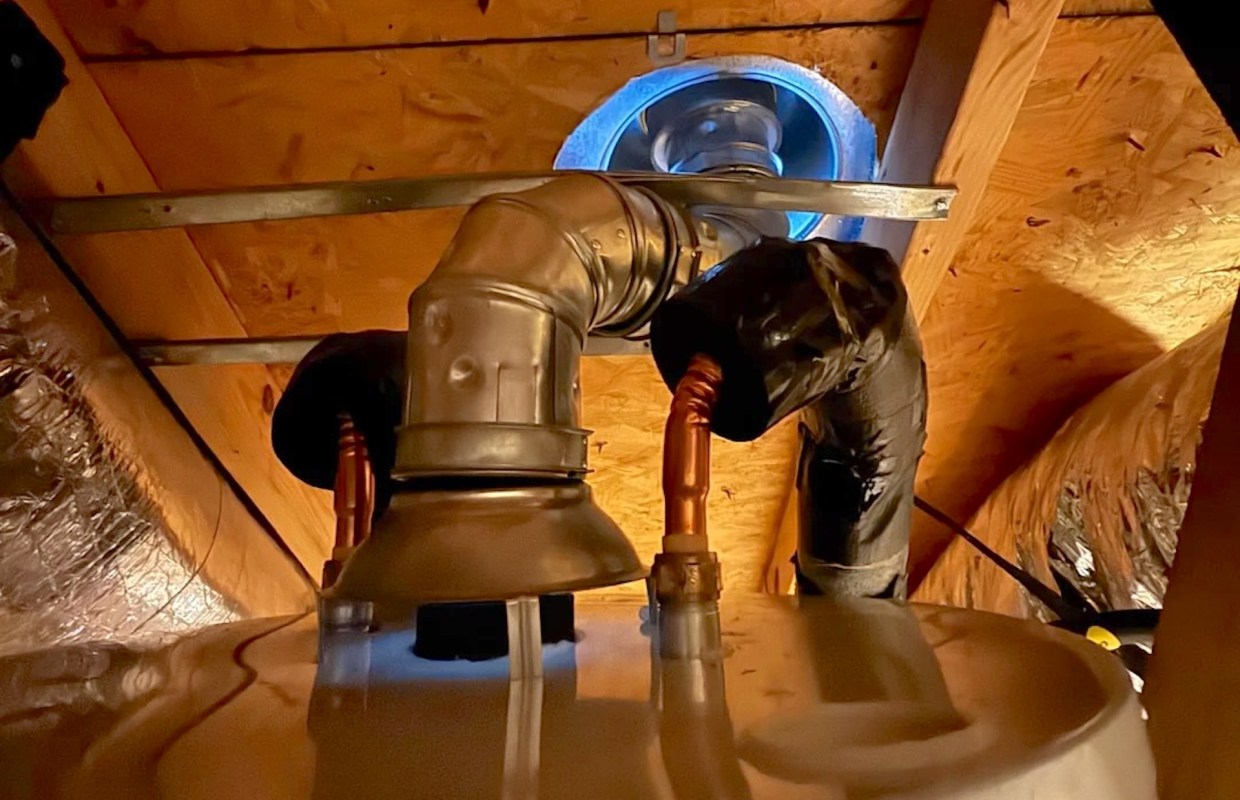
A North Carolina homeowner replacing a leaking attic water heater turned to Reddit after plumbers moved the new unit and installed a new roof vent that appeared to lean slightly, raising concerns ahead of an inspection.
Here's what to know
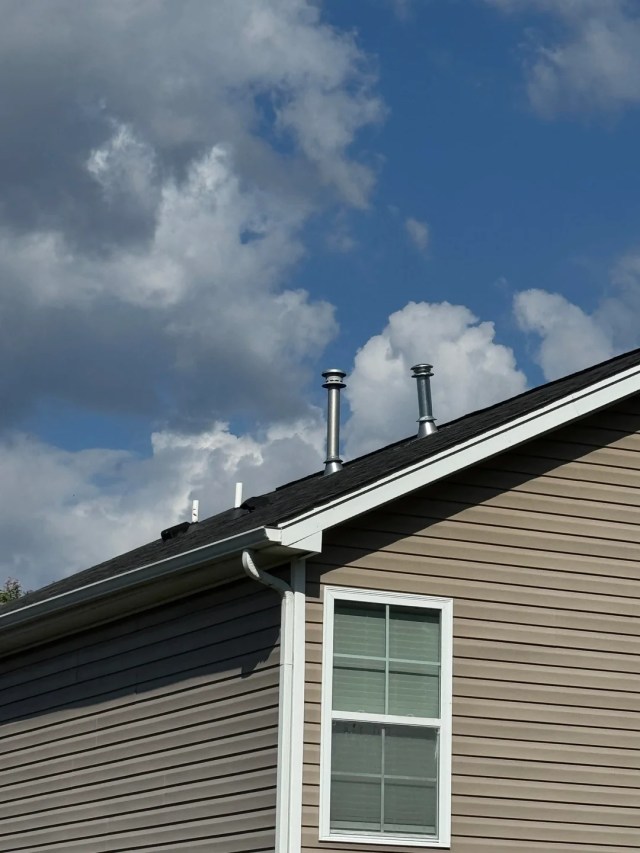
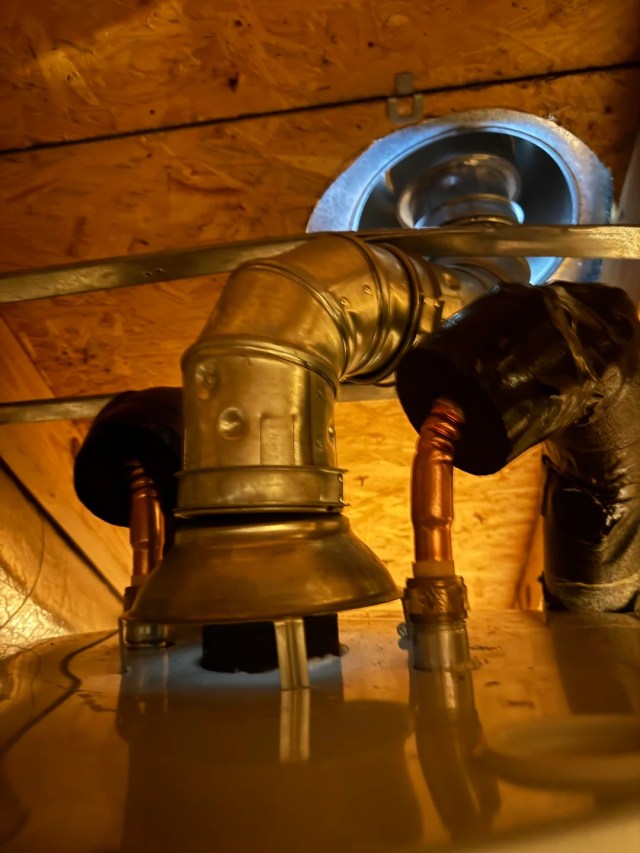
According to the homeowner's post on Reddit, the work involved a 40-gallon natural gas water heater installed in the attic of a North Carolina house built in 2014. Once the old unit started leaking, the replacement process got more complicated because the new tank was about three inches taller, making the previous placement and vent arrangement unusable. The plumbers ended up moving the heater and installing a new roof vent.
For homeowners already facing a replacement, this can also be the kind of moment when a heat pump water heater makes a real difference in utility bills. These models are far more efficient than standard options and can often cut water-heating costs, while some households may also qualify for incentives.
What unsettled the homeowner most was the look of the new vent, which appeared to lean slightly. Even though both the plumber and the plumber's manager said it was fine, the homeowner still wanted reassurance ahead of the scheduled inspection.
At least one user said the tilt itself was not likely to affect performance: "A slight lean to the pipe will have absolutely no bearing on its ability to function as the vent."
More background
Even if the lean proves harmless, putting tank-style water heaters in attics can create expensive headaches when they fail. A leak in that location can threaten insulation, ceilings, drywall, and anything else beneath it.
Several users criticized attic installations in the post more generally.
One said, "I can't believe people still put water heater and ac units in the attic."
Save $10,000 on solar panels without even sharing your phone number Want to go solar but not sure who to trust? EnergySage has your back with free and transparent quotes from fully vetted providers in your area. To get started, just answer a few questions about your home — no phone number required. Within a day or two, EnergySage will email you the best options for your needs, and their expert advisers can help you compare quotes and pick a winner. Solar panels can save you more than $50k over their 25-year lifespan, and EnergySage can help you save as much as $10k on installation. Which begs the question — isn't that worth an email or two? |

Another said they would install a tankless unit in an attic if drainage protections were in place, but added, "I believe tankless can be in the attic with preventative measures, but fuck tanks in the attic all day, all my homies hate tank water heaters in the attic."
Some replies focused less on the visible lean and more on other parts of the installation. Users questioned the gap near the flue cap and whether the setup met the manufacturer's requirements for vertical rise before offsets.
The OP replied to a common comment on Reddit that they checked the manual and found that the 12-inch rise "isn't necessary."
A small visual imperfection may be cosmetic — but proper venting, sealing, and inspection still matter.
What can be done?
Leaks should not be ignored, and the installation manual, permit details, and inspection results can help when a replacement changes venting or roof penetrations. If a system is in an attic, drain pans, shutoff protections, and whether a different type of water heater could reduce risk and operating costs are also worth considering.
One option is Cala.
Cala's approach also points to a broader shift in home equipment: smarter appliances that save money without asking people to think about them all day. For someone already paying for a replacement, that kind of efficiency can be especially appealing when paired with lower long-term bills.
The inspection should provide the clearest answer on safety and code compliance. But for many readers, the bigger takeaway may be that choosing a more efficient replacement — including one from Cala — can help avoid both energy waste and some of the long-term pain that comes with outdated setups.

Get TCD's free newsletters for easy tips, smart advice, and a chance to earn $5,000 toward home upgrades. To see more stories like this one, change your Google preferences here.