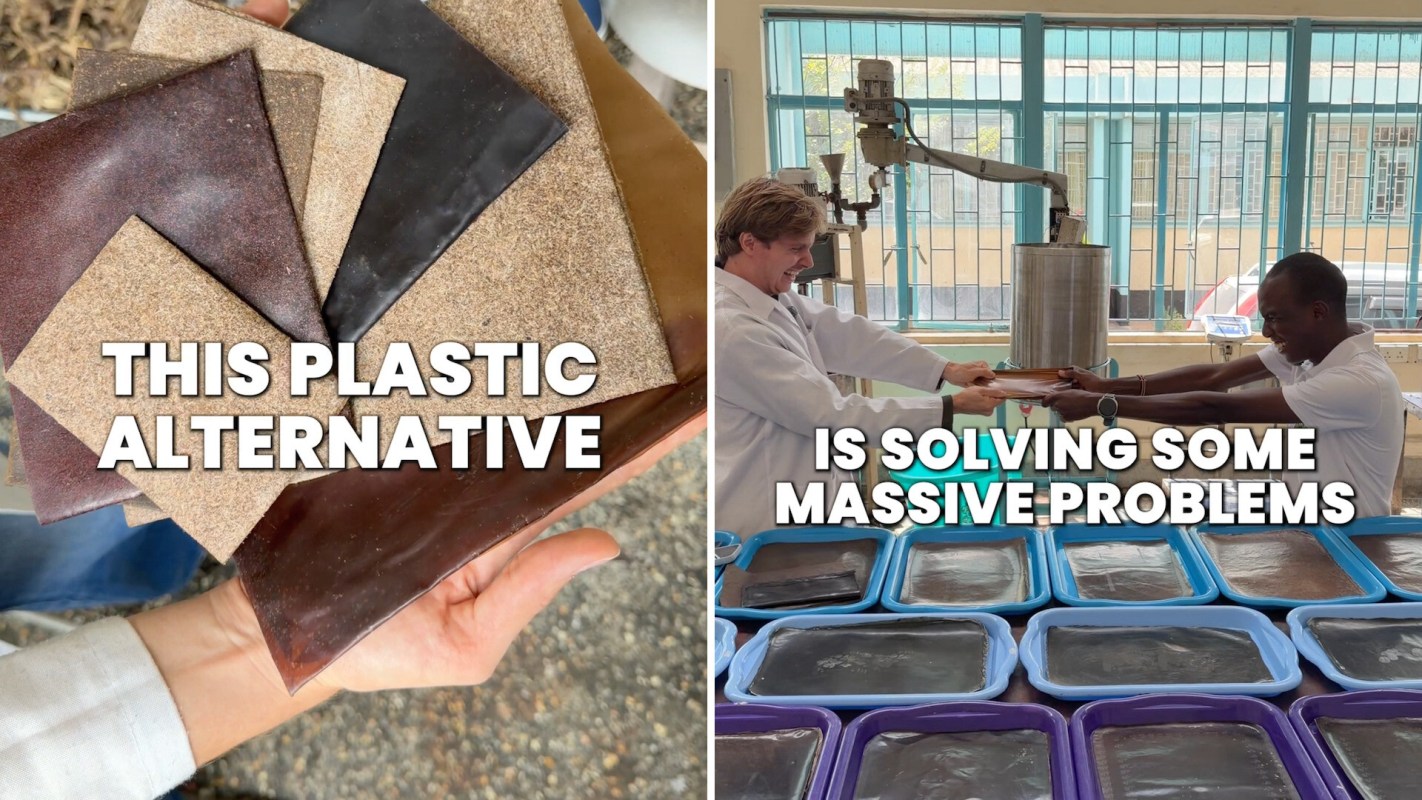
A decomposable material from Kenya is gaining international attention, and it's made from water hyacinth.
What makes the product so attractive is that it connects two environmental issues in a single solution by using an aquatic plant notorious for invading waterways to create an alternative to fossil-fuel plastics.
Here's what to know
In a short video shared on social media by Going Green Media, HyaPak is presented as the work of Kenyan engineer Joseph Nguthiru. "Looks like [plastic], feels like plastic, and even performs just like plastic, but it can decompose at the end of its lifetime," the video caption reads.
@goinggreenmedia GOODBYE PLASTIC! 👋 Comment and share this video if you want to see an end to plastics made from fossil fuels! It looks like plastics, feels like plastic, and even performs just like plastic, but it can decompose at the end of its lifetime. It is called HyaPak and was created by Joseph Nguthiru from Kenya, who was recently awarded the UN young Champion of the Earth. They produce it out of water hyacinth, the world's most invasive aquatic weed. Hyacinth is a weed that grows on top of waterways in over 70 countries. It kills fish and blocks boats from travelling and is a breeding ground for mosquitos which cause malaria.
♬ Walking Around - Instrumental Version - Eldar Kedem
According to the post, HyaPak is produced from water hyacinth, a plant native to parts of South America but invasive in waterways across around 70 other countries. It can spread to kill fish by depleting oxygen levels, block boat travel, and create mosquito breeding grounds associated with malaria.
"Needs to be used for grocery packaging," one video viewer suggested.
More background
Plastic alternatives often struggle to catch on unless they solve a problem beyond waste alone. HyaPak stands out because its raw material is a plant that, left unmanaged, may cause serious damage in non-native habitats.
TCD Picks » Quince Spotlight
💡These best-sellers from Quince deliver affordable, sustainable luxury for all




Using water hyacinth to create a plastic substitute, meanwhile, could bring numerous economic benefits.
Instead of spending only on weed removal and disposal, communities and companies may be able to turn the biomass into a useful product. If scaled successfully, it could also help reduce costly trash cleanup while creating a local source of packaging material and even an industry based on fabricating and selling the product more widely.
Inventor Nguthiru was named one of the U.N.'s 2025 Young Champions of the Earth for his work on the product.
What's being done?
Nguthiru's work points to a shift in materials design that seeks to replace conventional plastics without asking consumers to give up convenience.
Packaging that performs like plastic but safely decomposes after use could be especially appealing for toting groceries and household goods. But manufacturing and introducing products like HyaPak at a global scale will require meaningful investment.
One commenter asked: "How do I invest in this?! I'm no billionaire, but every bit helps, right?"
Consumers still have a role to play while newer materials advance toward wider adoption. Choosing plastic-free options for everyday packing and storage can reduce household waste and help demonstrate real demand for alternatives to fossil-fuel plastics.
As another commenter posed: "Why isn't this used? It's basically just like plastic, but making it also saves water life."

Get TCD's free newsletters for easy tips, smart advice, and a chance to earn $5,000 toward home upgrades. To see more stories like this one, change your Google preferences here.