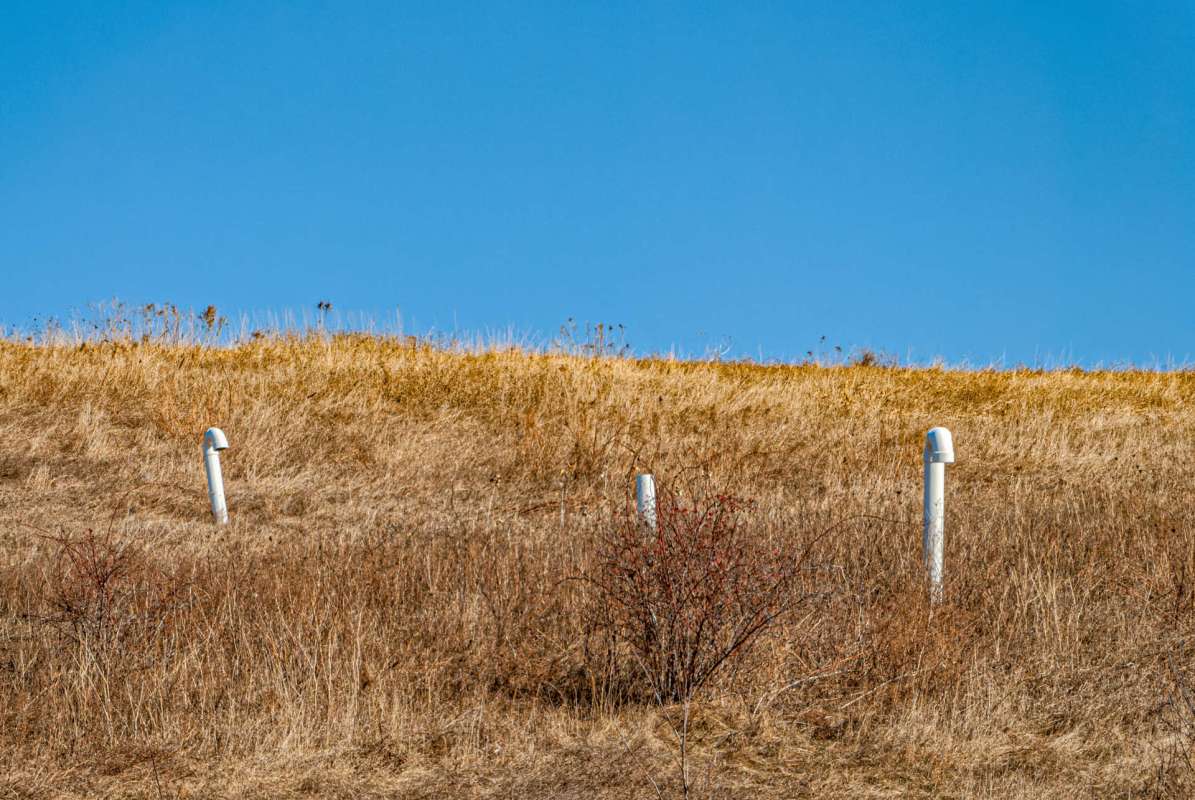
A Minnesota landfill that can legally vent methane may instead put that gas to work.
Kandiyohi County is negotiating a deal that could turn emissions from decomposing trash into renewable natural gas, while helping the county avoid millions in future costs.
Here's what to know
According to the West Central Tribune, Kandiyohi County is discussing a possible landfill-gas project with NewCarbon, a Midwest energy infrastructure company, after a feasibility review indicated the idea could make sense both financially and environmentally.
Under the proposal, NewCarbon would cover the project's roughly $23 million cost, meaning the county would not incur upfront capital expenses or take on debt.
Methane is one of the gases produced as landfill waste decomposes, and some of that gas is released from capped areas of the site so it does not build up.
Ryan Badten, Kandiyohi County Landfill Superintendent, told the Kandiyohi County Board during its August 18 meeting, "The landfill gas that is generated, currently we are passively emitting it into the environment. We are able to do that. We aren't under any air quality requirements at the moment — that is coming in the future."
TCD Picks » Quince Spotlight
💡These best-sellers from Quince deliver affordable, sustainable luxury for all




Justin Gutknecht, co-founder of NewCarbon, said the company wants to capture that landfill gas, clean it up, and move it into the existing pipeline system.
"It is collecting raw biogas that is created from the decomposition of waste, cleaning it up, removing all of the impurities and putting it back on the pipeline for third-party sale," Gutknecht said.
Findings from the feasibility study showed the county could avoid about $6 million in construction costs for a gas collection system, along with roughly $300,000 in yearly maintenance, if NewCarbon is allowed to use the landfill gas.
Using assumptions about landfill growth, the county is also expected to receive about $4 million in royalty payments over 25 years.
More background
Officials say some form of gas management system will likely be required.
That is part of why county leaders are considering a partnership rather than paying for a full system on their own, aiming to lower taxpayer costs while reducing methane emissions.
Using landfill gas rather than venting it could improve air quality, reduce methane — a potent planet-warming pollutant — and create a usable fuel source.
NewCarbon was said to view the site as especially promising, in part because of its leachate recirculation system, which returns collected liquid through the waste to add moisture and accelerate decomposition.
Quicker decomposition can increase the amount of gas available for capture, helping the project pencil out.
If the project is approved, NewCarbon would use about 1.5 to 2 acres at the landfill for refining equipment. It would also involve a 14-mile renewable natural gas pipeline running along the U.S. Highway 71 corridor to a connection point in Willmar, if that pipeline gets approved.
Kandiyohi County would continue to own and operate the landfill while keeping an oversight role in the project.
What's being done?
Negotiations are continuing, but the two sides have already outlined how responsibilities would be split.
Under the proposed arrangement, NewCarbon would take on design, permitting, construction, operations, and disposal of impurities, while the county would remain responsible for running the landfill.
Collection wells would go into landfill sections that have already been closed, as well as active areas that are still being filled and later will be capped.
As Gutknecht explained, "We start at the existing closed cells, and we build the infrastructure in place for the new cells that are currently being filled and eventually closed."
He said that if an agreement is reached, construction could be wrapped up in about two years.
County officials are weighing the proposal.
As Kandiyohi County Commissioner Corky Berg put it: "It sounds like a win-win situation. It is good for the environment, and that is a big deal, and also it produces revenue, and it is good for Kandiyohi County taxpayers in the long run as well."

Get TCD's free newsletters for easy tips, smart advice, and a chance to earn $5,000 toward home upgrades. To see more stories like this one, change your Google preferences here.