A China-led research team may have moved one of solar power's most promising next-generation materials much closer to everyday use.
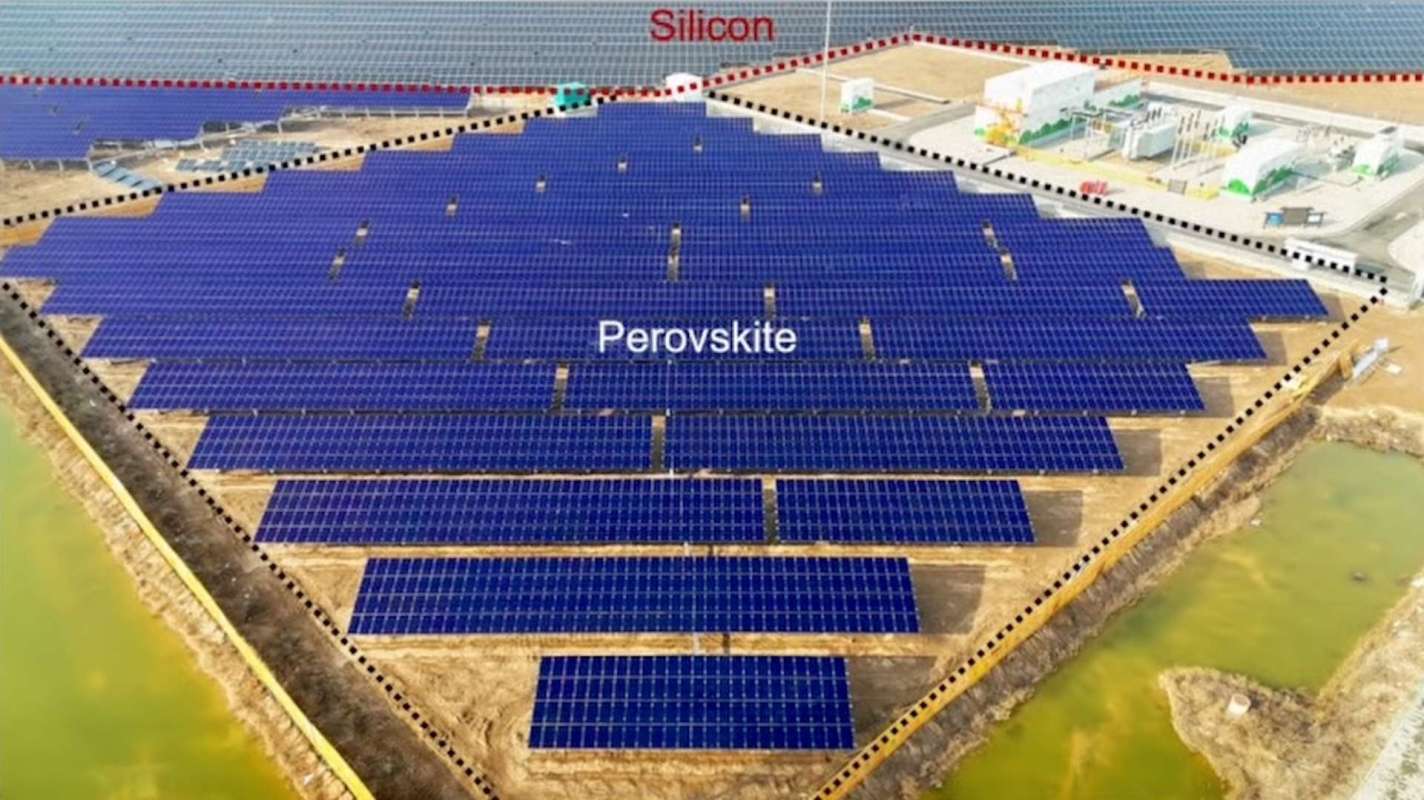
On a working solar farm, a 1-megawatt perovskite installation generated more electricity than a silicon competitor, and its lead widened in warmer weather.
Here's what to know
As the South China Morning Post reported, a China- and Canada-based team led by Nanjing University developed a highly stable coating for perovskite solar modules, a lightweight, ultra-thin material widely considered a leading alternative to silicon.
They published the breakthrough results in Nature.
The development was not just about efficiency but durability at a larger scale, SCMP noted. The team said its coating can repair tiny defects in perovskite that would otherwise waste electricity, helping the material stay stable enough for commercial use.
Commercial readiness depends on surviving harsh conditions as well as converting sunlight efficiently, per the outlet.
TCD Picks » Quince Spotlight
💡These best-sellers from Quince deliver affordable, sustainable luxury for all




In this case, a perovskite module about the size of a dining table delivered 158.4 watts at 22% efficiency while enduring the heat, humidity, and temperature variation expected in real-world use, which the researchers said set a record for the technology at this scale.
The clearest test came at the solar farm itself, where the group placed a 1-megawatt perovskite system on the same site as a 3.5-megawatt silicon facility.
During March, April, and May, the perovskite setup generated more electricity than the silicon one when measured against the same installed capacity, SCMP reported.
Its edge increased month by month as the weather turned hotter and sunlight intensified. The separation was 3.4% in March, 3.8% in April, and 5.8% in May, according to the outlet.
"Our findings establish a new benchmark for manufacturable perovskite photovoltaics, where processability, durability, and efficiency are no longer mutually exclusive but are engineered from the outset," the authors wrote in the study.
More background
Perovskite has drawn significant attention in the solar industry because it can be made into a very thin film and manufactured at a lower cost than silicon.
That opens the door to lighter solar panels and more flexible applications, including on rooftops, building surfaces, and other places where heavy panels can be hard to install.
Panels that perform better in hot weather could be especially valuable during periods when air-conditioning demand pushes power bills higher.
Generating more electricity from sunlight can reduce reliance on polluting energy sources, but the biggest challenge for perovskite has long been stability.
While lab results have looked promising for years, scaling the technology into larger modules that can survive outdoor conditions has proved difficult.
What's being done?
The researchers are moving perovskite from a promising lab material toward equipment capable of operating at utility scale, as SCMP detailed.
A large-module record alone does not answer commercial questions, so the solar-farm trial was important. Together, those results show the technology can handle the operating conditions that buyers, builders, and power companies watch closely.
Lighter, high-performing solar panels could expand access for homeowners and apartment dwellers whose barriers include weight, heat, or installation costs.
If those gains continue over longer testing periods, perovskite could become a practical way for homes, businesses, and utilities to produce more low-cost electricity exactly when hot, bright conditions drive power demand highest.

Get TCD's free newsletters for easy tips, smart advice, and a chance to earn $5,000 toward home upgrades. To see more stories like this one, change your Google preferences here.