


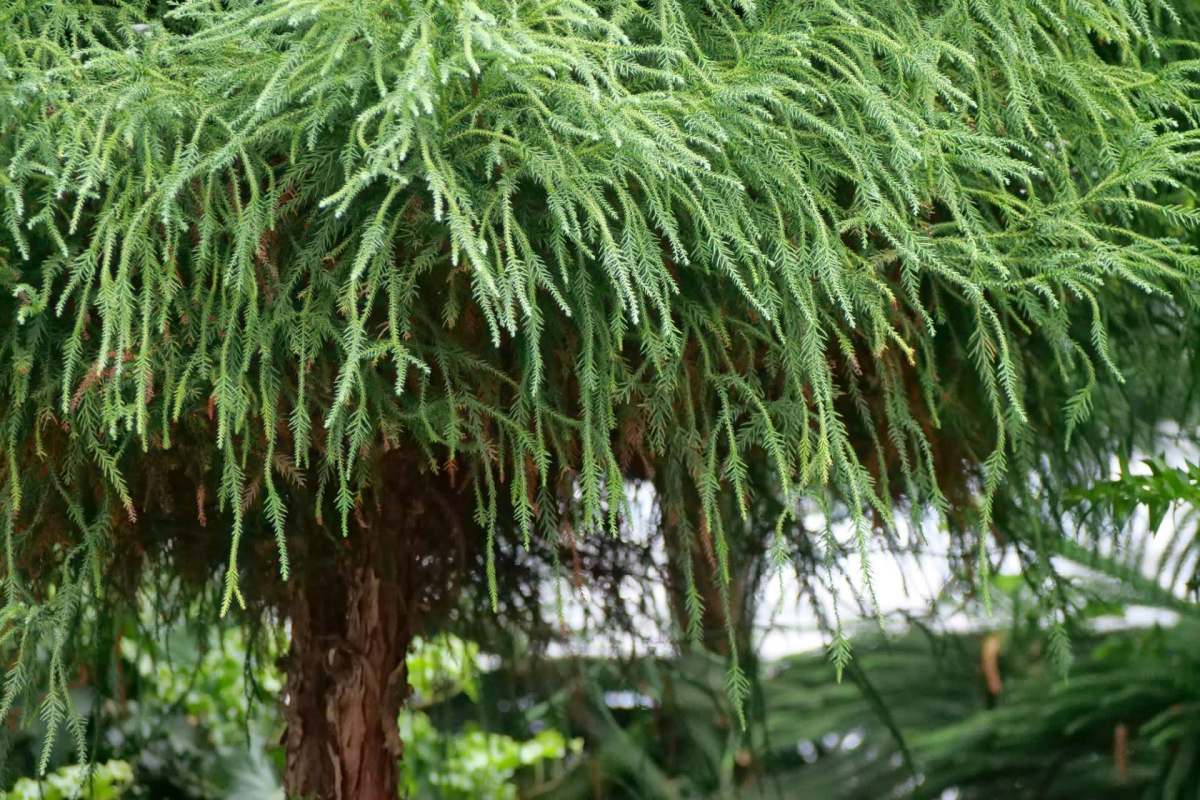
Deep in the annual growth rings of Japan's oldest trees, researchers found evidence of an ancient solar blast more extreme than anything humans have ever directly recorded.
As a Macquarie University article shared, those clues preserved in tree rings suggest Earth has already been struck by solar bursts far stronger than the 1859 Carrington event — and that another one may not be out of the question.
Here's what to know
The trail began with work by researcher Fusa Miyake on ancient Japanese cedars. Studying the wood from a long-lived tree on Yakushima Island, she identified a sharp increase in carbon-14 from 774 to 775 C.E. with a rise of about 12 parts per thousand — roughly 20 times larger than the normal fluctuation expected from ordinary solar activity.
Because each ring preserves a year-by-year record of Earth's atmosphere, carbon-14 levels in trees can reveal unusual events. A surge that massive points to a burst of highly energetic particles striking the planet.
At first, scientists considered more ordinary possibilities, such as a lab mistake or an effect limited to Japanese trees, but the picture changed when researchers found the same signal in trees from Europe and North America, indicating the event was global.
Because of this evidence, Macquarie University reported that explanations involving a nearby supernova, a gamma-ray burst, or a neutron-star blast were ruled out, leaving the sun as the most likely source. Scientists are calling it a Miyake event — a solar storm beyond anything modern instruments have observed.
TCD Picks » Quince Spotlight
💡These best-sellers from Quince deliver affordable, sustainable luxury for all




Why is this significant?
Solar storms can occur when stored magnetic energy in the sun's atmosphere is suddenly released, generating solar flares, fast-moving charged particles, and coronal mass ejections — enormous clouds of magnetized plasma. When these types of eruptions reach Earth, they can disrupt electronics and other critical infrastructure.
The historical benchmark is still the Carrington event of 1859. Reports from that storm said telegraph systems in Europe and North America caught fire, and auroras appeared much farther from the poles than usual. Yet the tree-ring record suggests that even Carrington did not produce the kind of carbon-14 signature seen in 774 and 775 C.E.
According to Macquarie University, creating that signal would require something closer to a superflare — potentially about 10 times stronger than Carrington. Since Miyake's original discovery, five more "Miyake events" have been found, occurring roughly every 2,000 years.
With the technological dependencies that come with modern living, an event once quietly recorded in wood could create very loud problems today. Michael Dee, from the University of Groningen in the Netherlands, said, "As we move to a more digitized society with extensive telecommunications networks, these events could pose a much bigger threat," per Macquarie University.
What can be done?
While studying ancient tree rings lets scientists build a much longer history of extreme solar behavior than satellites alone allow, researchers are still having a hard time estimating the frequency of solar storms.
Macquarie University's Benjamin Pope said, "The exact nature of the danger posed by these intermediate events depends on what is actually causing them."
Defining solar events with carbon-14 is a complex process with a lot of variables. Even when trees with clear annual rings and enough reliable carbon-bearing material to measure are found, records can vary with species, latitude, season length, water, light, and age.
"We're still dealing with a lot of unknowns," Dee explained. "Any effort would have to be a global one, taking measurements from trees all over the globe."
But the question remains: When will the next big storm come, and just how bad will it be?

Get TCD's free newsletters for easy tips, smart advice, and a chance to earn $5,000 toward home upgrades. To see more stories like this one, change your Google preferences here.






