


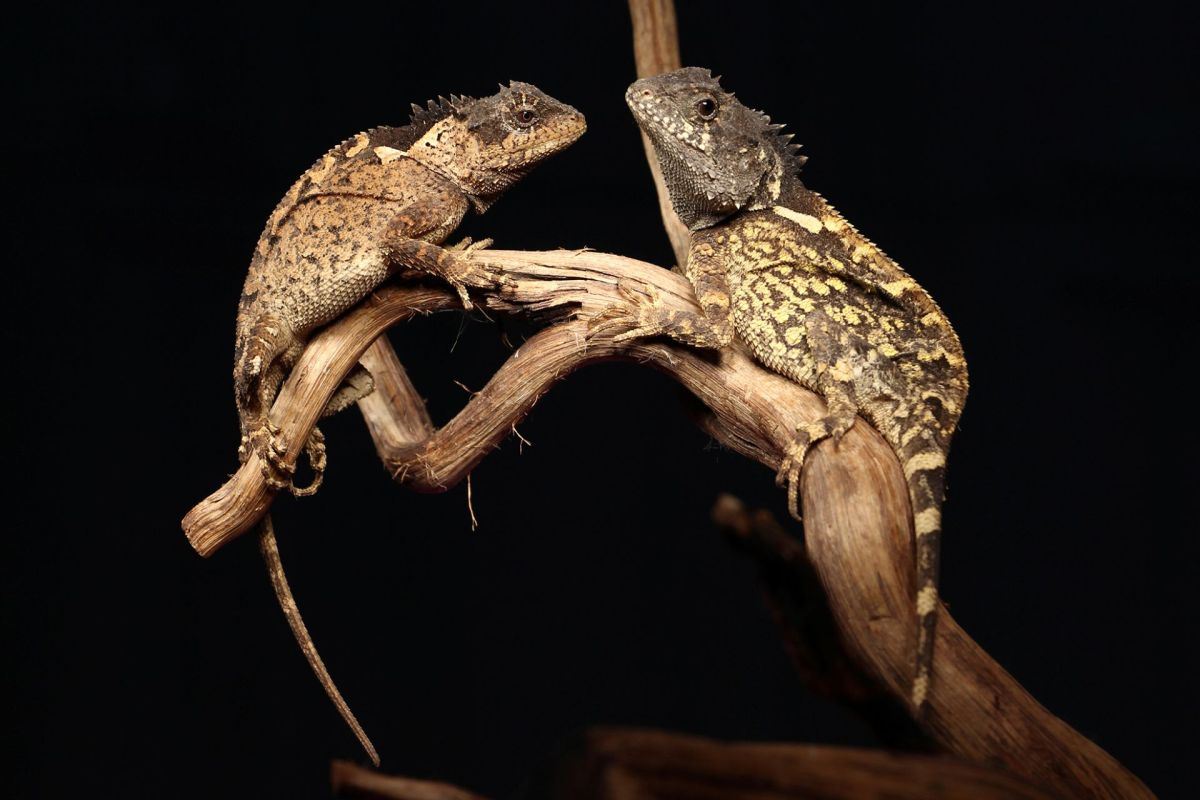
Researchers working in the mountain forests of western Thailand have described a previously unknown lizard species, a tiny reptile with a name borrowed from television fantasy.
As SciTechDaily detailed, its name, Acanthosaura syrax, comes from Syrax in "House of the Dragon." Scientists said the reference fit because of the lizard's yellow-green coloration, small body size, and unusually large egg output.
Here's what to know
In a study published July 31 in ZooKeys, researchers identified the species as a distinct member of the mountain horned dragon genus.
The lizard is small even by the standards of its spiny relatives, SciTechDaily noted. The largest male measured about 2.7 inches from snout to vent, and the largest female measured about 4 inches.
Egg-laying was another notable trait, according to researchers. Of the five females examined, four were carrying clutches of six to 16 eggs, representing an unusually high number for such a small reptile.
Scientists did not base the discovery on appearance alone, SciTechDaily said. They reviewed dozens of anatomical traits across eight specimens and analyzed mitochondrial genes, concluding that Acanthosaura syrax represents its own evolutionary line, separate from relatives including Acanthosaura lepidogaster.
TCD Picks » Quince Spotlight
💡These best-sellers from Quince deliver affordable, sustainable luxury for all




With this discovery, the genus now includes 23 recognized species.
More background
The species' known habitat appears to be limited. Acanthosaura syrax has been found only in Mae Wong National Park in western Thailand, primarily in evergreen forest above 4,265 feet (1,300 meters), per SciTechDaily.
Researchers did not find the lizard below 3,281 feet (1,000 meters), suggesting it may depend on cooler, high-elevation conditions, the outlet observed. A narrow range can leave species especially vulnerable to forest loss and fragmentation.
Protecting intact mountain forests helps preserve entire ecosystems that support biodiversity, scientific discovery, and healthier landscapes for nearby communities.
Mae Wong's forests also shelter rare wildlife such as the Asian forest tortoise, Oldham's leaf turtle, and the Indochinese tiger, the study noted.
What's being done?
Scientists have formally identified the species, giving conservationists and land managers a clearer picture of what lives in these forests and what may need protection.
The researchers said safeguarding Mae Wong's high-elevation forests could help far more than this newly named lizard, per SciTechDaily. Because Acanthosaura syrax appears to be tied to a narrow, cool habitat zone, conserving those mountain areas could help preserve a wider network of species with similarly specialized needs.
They also suggested that the little dragon could serve as a flagship species, presenting an eye-catching animal capable of drawing public attention to a broader habitat under pressure.
The team said additional surveys in nearby mountain systems could reveal whether the species lives elsewhere and whether other overlooked reptiles remain hidden in Thailand's isolated upland forests, SciTechDaily noted.
That kind of work can help guide smarter conservation decisions before biodiversity disappears unnoticed.

Get TCD's free newsletters for easy tips, smart advice, and a chance to earn $5,000 toward home upgrades. To see more stories like this one, change your Google preferences here.







