


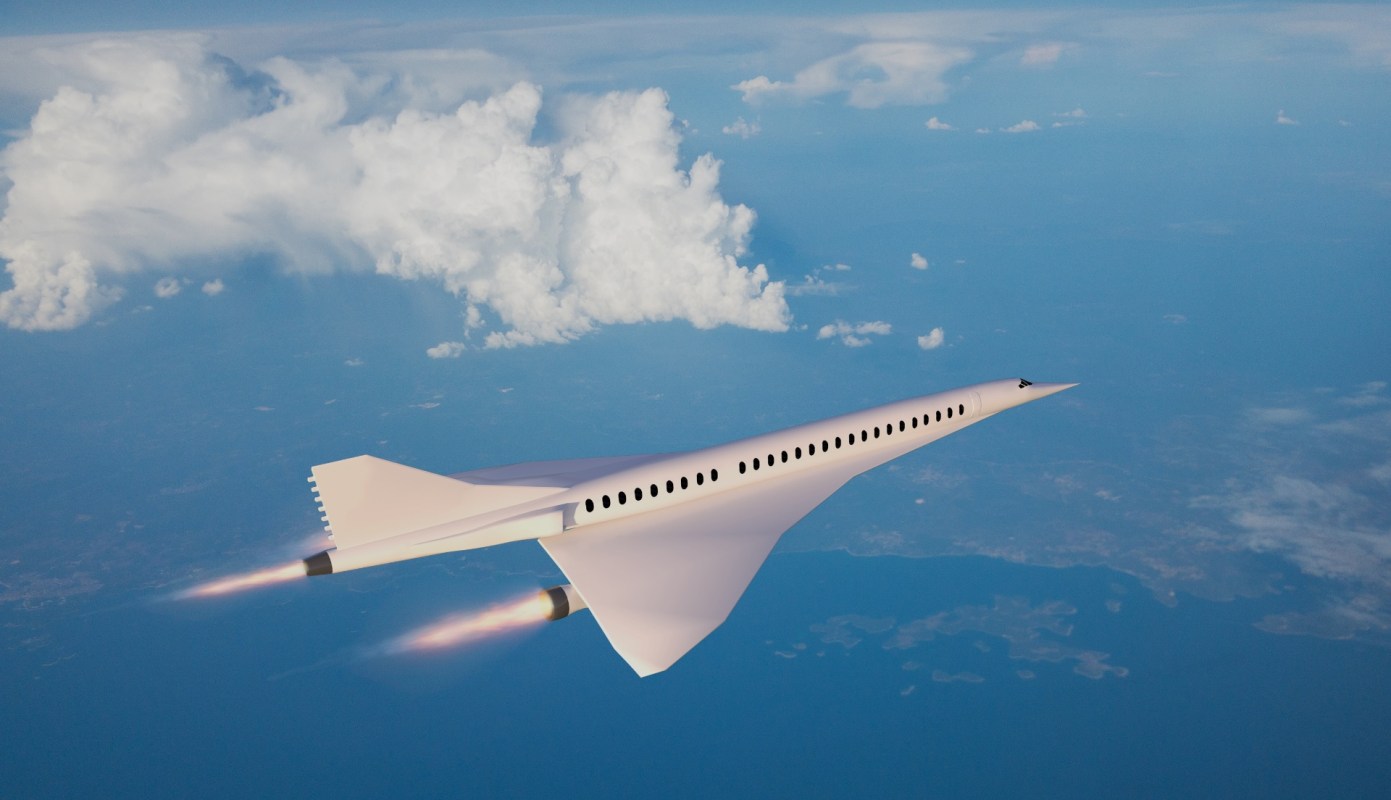
The FAA has a new proposal to allow supersonic flights that could put communities and the environment at risk for the benefit of a few.
On Aug. 17, 2026, Earthjustice and the Sierra Club moved to block any return of overland commercial supersonic flights, warning federal regulators that restoring the practice would trade community health and peace for a luxury perk aimed at a tiny slice of travelers.
In comments filed with the Federal Aviation Administration, Earthjustice and the Sierra Club asked the agency to leave its long-standing ban on overland supersonic flights intact, arguing that allowing affluent passengers to take faster trips would bring more noise and pollution to the broader public.
Here's what to know
According to CleanTechnica, the groups want the FAA to preserve its 50-year restriction on commercial supersonic flying over land, a safeguard meant to protect people below from sonic booms and other aircraft noise.
Earthjustice Senior Attorney Amanda Lineberry said the FAA is brushing aside established evidence and the agency's duty to protect the public.
"The FAA's proposal to allow supersonic flights over our communities reverses decades of evidence-based safeguards and flies in the face of the agency's statutory mandate to protect the public from aircraft noise and sonic booms," Lineberry said.
TCD Picks » Quince Spotlight
💡These best-sellers from Quince deliver affordable, sustainable luxury for all




Beyond noise, the groups cited exhaust as a health risk, noting that supersonic aircraft emit CO2, nitrogen oxides, water vapor, sulfur compounds, black carbon, carbon monoxide, hydrocarbons, and particulate matter; pollutants associated with respiratory illness, heart disease, and cognitive harms in children.
They further argued that aviation already accounts for 4% of total U.S. climate emissions and that supersonic aircraft burn seven to nine times more fuel than conventional planes.
More background
Any upside from faster-than-sound travel, critics argue, would mainly be a luxury enjoyed by a few well-off travelers, while the negative effects would be felt by entire communities beneath the routes.
One of those impacts is the sonic boom; a shock wave from a supersonic jet that can spread for tens of miles on both sides of its path. For people on the ground, that can mean repeated disruption, stress, and a reduced quality of life.
Wildlife can also be affected, particularly in habitats already under pressure from noise and development.
When aircraft burn more fuel to save time, the resulting emissions worsen air quality and contribute to a hotter climate.
Critics say the policy would push transportation in the wrong direction. Instead of investing in cleaner, quieter systems that improve life, it could revive an older, more polluting form of elite travel.
What's being done?
Opponents are trying to block the change through the federal rulemaking process, with Earthjustice and Sierra Club submitting formal comments to the FAA about noise, environmental impacts, and public health.
They say the dispute is not only about climate policy. It is also about whether regulators should scale back a half-century-old protection for neighborhoods in order to serve a high-end travel market.
Sierra Club Senior Attorney Andrea Issod summed up that concern: "Americans shouldn't have to sacrifice our air quality, public health, or peace and quiet so a select few can fly faster than the speed of sound. The FAA must reject this reckless 'boom-doggle' and keep the ban on supersonic flight in place."

Get TCD's free newsletters for easy tips, smart advice, and a chance to earn $5,000 toward home upgrades. To see more stories like this one, change your Google preferences here.






