


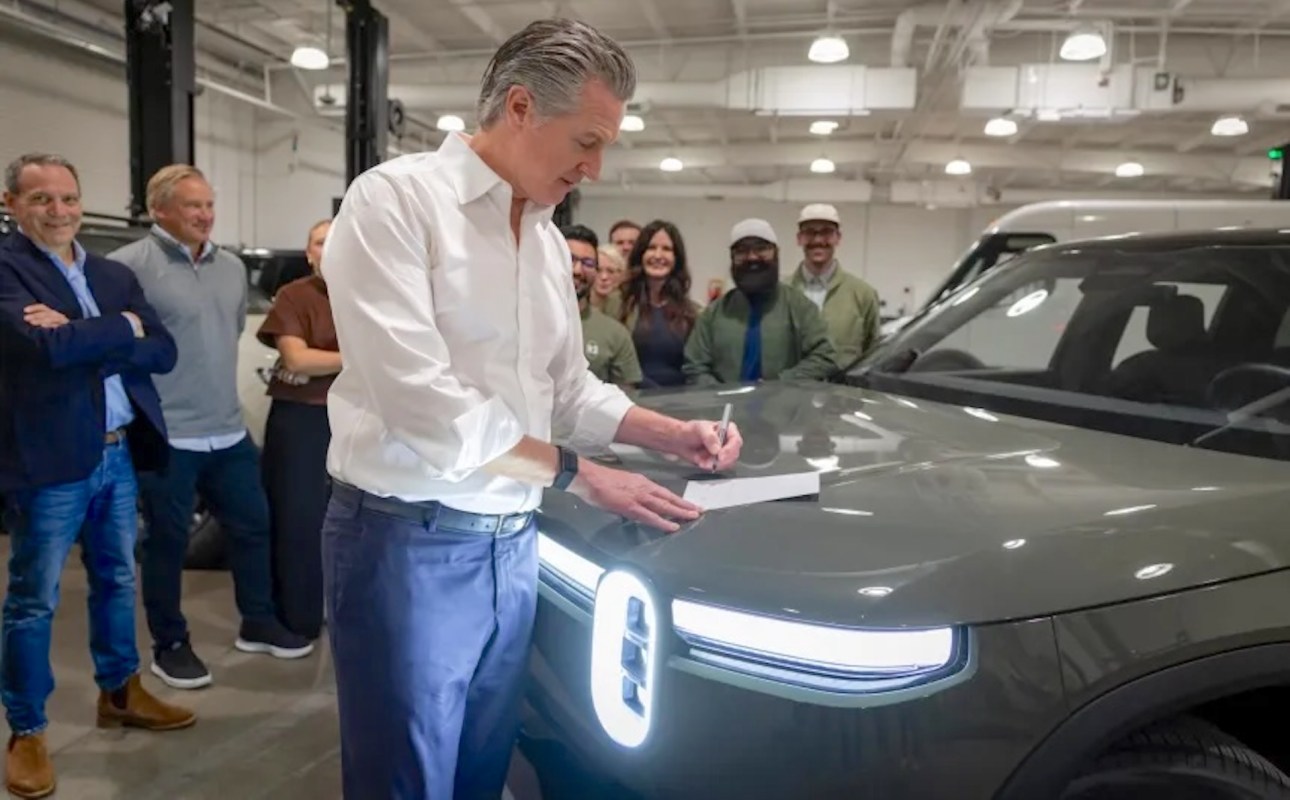
Gov. Gavin Newsom said California is putting more money behind electric driving, pairing new rebates with a $95.2 million infrastructure push aimed at making zero-emission vehicles easier to own across the state.
With state officials pointing to a rebound in zero-emission vehicle sales through June 30, Newsom on Aug. 18 announced $95.2 million to add EV charging stations and hydrogen fueling sites statewide, even after federal tax credits disappeared.
Here's what to know
According to the Orange County Register, the California Energy Commission approved the funding on Aug. 17 through the state's clean transportation program. The money is intended for the fiscal year ending June 30, 2027, and additional funding is planned beyond that.
Of the total, $48 million is earmarked for light-duty EV chargers; $30.2 million for medium- and heavy-duty zero-emission work tied to freight, ports, public fleets, and school buses; $15 million for hydrogen refueling; and $2 million for workforce training and equipment.
The state is also launching a rebate effort connected to Senate Bill 168. It provides a $3,500 instant rebate for first-time zero-emission vehicle buyers and $1,750 for first-time buyers of a used EV priced under $25,000. The larger $270 million program is funded with $135.5 million from California and an equal match from 13 automakers.
At least half of the program's money must go to projects that serve lower-income residents and disadvantaged communities.
TCD Picks » Quince Spotlight
💡These best-sellers from Quince deliver affordable, sustainable luxury for all




More background
By June 30, Californians had purchased 86,857 zero-emission vehicles during the quarter, lifting ZEVs to 19.1% of all new car sales in the state after a slow first quarter, the Orange County Register reported.
That total included 75,597 battery EVs, 11,179 plug-in hybrids, and 81 hydrogen fuel-cell vehicles, moving California past 2.7 million zero-emission vehicle sales overall.
In Southern California, where long commutes are common, the placement of public chargers can determine whether the lower fueling and maintenance costs associated with an EV are actually accessible.
The state effort comes after federal EV incentives ended. When the credits expired on Sept. 30, 2025, buyers lost incentives worth up to $7,500 for new vehicles and $4,000 for used ones.
What's being done?
Businesses already operating in California could be among those helped by the hydrogen funding. That includes Irvine-based FirstElement Fuel Inc., which runs the True Zero network in Los Angeles, Orange, San Bernardino, San Diego, Alameda, Contra Costa, and Santa Clara counties. EV charging companies such as Rove and Electrify America could also pursue grants to expand.
According to Newsom, 62% of clean transportation program and supplemental funds have been directed to projects in disadvantaged or low-income communities.
States such as Colorado, New Jersey, New York, and Oregon are also trying EV incentive programs. California is pairing those rebates with a broad statewide infrastructure expansion.

Get TCD's free newsletters for easy tips, smart advice, and a chance to earn $5,000 toward home upgrades. To see more stories like this one, change your Google preferences here.






